


Sweden Turns to HIMARS for Long-Range Precision Fires
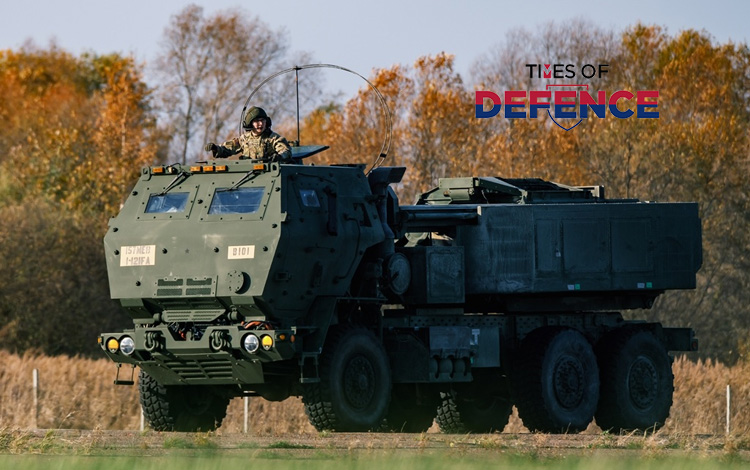
Sweden is moving to introduce the U.S.-made M142 High Mobility Artillery Rocket System (HIMARS) as part of a broader expansion of its long-range precision-fire capabilities.
On September 7, 2026, the Swedish government authorized the Swedish Armed Forces to procure HIMARS. The acquisition is valued at approximately SEK 7 billion, roughly $729 million or €620–630 million, according to Swedish and Reuters reporting. The first deliveries are scheduled to begin in 2027.
The decision is not simply about acquiring another artillery system. Sweden is building a new rocket-artillery capability designed to complement its existing Archer 155mm self-propelled artillery, while also increasing its ability to conduct precision strikes at significantly greater distances.
Sweden is simultaneously establishing a new rocket-artillery cooperation framework with neighboring Finland.
Why Does Sweden Need HIMARS?
The Swedish government says the new capability will allow its armed forces to operate across larger areas and provide substantially greater long-range capacity than its current systems.
The strategic logic is particularly relevant to Sweden’s geography.
Swedish forces need to be able to distribute combat power across large areas while maintaining the ability to rapidly concentrate fires against selected targets. A wheeled launcher such as HIMARS can relocate rapidly after firing, making it more difficult for an adversary to locate and engage the firing unit with counter-battery weapons.
This “shoot-and-scoot” concept is one of HIMARS’ defining operational characteristics.
The system is also compatible with the broader family of MLRS munitions used by several NATO countries, simplifying ammunition interoperability, training and logistics. Lockheed Martin specifically highlights HIMARS’ commonality with the M270 MLRS family.
HIMARS and Finland: A New Nordic Rocket-Artillery Network
One of the most significant aspects of Sweden’s decision is the parallel agreement with Finland.
Swedish Defence Minister Pål Jonson and Finnish Defence Minister Antti Häkkänen signed a Joint Declaration covering cooperation on rocket-artillery capabilities.
The agreement includes:
- Training and education
- Capability development
- Maintenance
- Security of supply
- Production cooperation
Finland already operates the M270 Multiple Launch Rocket System, which uses the same family of munitions and components as HIMARS.
That common ammunition ecosystem provides a foundation for deeper Swedish-Finnish cooperation without requiring the two countries to operate identical launch platforms.
For Sweden, this potentially creates a more integrated Nordic precision-fire network while reducing some of the logistical burden associated with maintaining completely separate ammunition systems.
HIMARS Technical Specifications
HIMARS is a wheeled derivative of the larger M270 MLRS.
Unlike the tracked M270, HIMARS uses a 6×6 tactical truck chassis, providing high road mobility and allowing the launcher to be transported by aircraft such as the C-130.
According to Lockheed Martin, the launcher can carry one complete six-round GMLRS pod, two PrSM missiles or one ATACMS missile.
| Characteristic | HIMARS |
|---|---|
| Manufacturer | Lockheed Martin |
| Configuration | 6×6 wheeled launcher |
| Crew | 3 |
| Primary mission | Mobile precision fires |
| GMLRS capacity | 6 rockets |
| ER GMLRS capacity | 6 rockets |
| PrSM capacity | 2 missiles |
| ATACMS capacity | 1 missile |
| GMLRS range | >70 km |
| ER GMLRS range | Up to 150 km |
| PrSM range | Up to 499+ km |
| ATACMS range | Approximately 300 km |
| Air transport | C-130 transportable |
| Reload concept | Rapid pod-based reload |
| Operational concept | Shoot-and-scoot |
The exact ammunition Sweden will initially receive has not been fully detailed in the Swedish government’s announcement, so it would be premature to assume that every HIMARS-compatible missile will immediately be part of Sweden’s inventory.
GMLRS: The Weapon That Made HIMARS Famous
The traditional HIMARS loadout consists of a six-round GMLRS pod.
The Guided Multiple Launch Rocket System uses satellite-aided/inertial guidance to provide precision surface-to-surface fires.
Lockheed Martin lists the range of the current GMLRS Unitary and Alternative Warhead variants at more than 70 kilometers. The Unitary variant uses a 200-pound-class unitary warhead, while the Alternative Warhead is designed for area effects without traditional unexploded cluster-munition effects.
An important next-generation option is Extended-Range GMLRS.
ER GMLRS is designed to extend the range to approximately 150 kilometers while retaining compatibility with HIMARS and M270 launchers. Lockheed Martin says the weapon incorporates a larger motor and improved maneuverability and that the ER GMLRS Unitary variant has entered production.
This gives HIMARS a layered ammunition architecture rather than a single fixed engagement range.
PrSM Takes HIMARS Into Deep-Strike Territory
The other major development is the Precision Strike Missile (PrSM).
A HIMARS launcher can carry two PrSM missiles instead of a six-round GMLRS pod.
Lockheed Martin currently describes PrSM as a long-range precision-strike weapon capable of engaging targets at distances out to 499 kilometers. The missile is designed to attack, neutralize, suppress or destroy targets as part of multi-domain fires.
This is a fundamentally different mission from conventional artillery.
GMLRS is primarily a precision rocket-artillery weapon, while PrSM provides the launcher with a much deeper strike capability.
However, Sweden’s announcement does not confirm that PrSM will be included in its initial procurement.
Why Mobility Matters
HIMARS’ effectiveness is not based solely on range.
Its major advantage is the combination of:
Precision + mobility + rapid relocation + networked fire control + modular ammunition.
A launcher can move into a firing position, receive a target, launch its weapons and relocate before an adversary can complete the counter-fire cycle.
This becomes particularly important in a battlefield dominated by persistent surveillance drones and increasingly capable counter-battery sensors.
A fixed artillery position is relatively easy to identify once an enemy has established surveillance coverage.
A mobile launcher continuously changes the problem.
The Ukraine Lesson
HIMARS became globally associated with the war in Ukraine after Ukrainian forces began receiving the system in 2022.
Its employment demonstrated the value of combining precision fires with mobility and intelligence-driven targeting.
However, the battlefield has also evolved.
Russian electronic warfare, drone surveillance and improved counter-battery capabilities have made HIMARS employment more complicated. Launchers have had to operate with greater emphasis on concealment, mobility, dispersed logistics and rapid relocation.
That experience is relevant to Sweden because Stockholm is not buying HIMARS for a low-intensity expeditionary mission.
It is building a capability for a potential high-intensity conflict in a heavily monitored European battlespace.
HIMARS and Sweden’s Archer Artillery
HIMARS is not intended to replace Sweden’s Archer artillery system.
The two systems serve complementary roles.
Archer provides highly mobile 155mm tube artillery capable of rapidly delivering sustained fires at shorter ranges.
HIMARS adds a longer-range precision-fire layer.
This creates a potential Swedish fires architecture in which conventional artillery handles a large portion of tactical fire missions while rocket artillery provides deeper precision engagement.
The Swedish government explicitly describes rocket artillery as a complement to conventional systems such as Archer and grenade launchers.
Saab GLSDB Integration Could Become Important
Another major element of the Swedish procurement is the planned industrial cooperation between Lockheed Martin and Saab.
The two companies have signed a Joint Declaration covering potential integration of Saab’s Ground-Launched Small Diameter Bomb (GLSDB) into HIMARS and other platforms, including the Patriot air-defense system.
The Swedish government also highlighted potential cooperation on ammunition production as part of its effort to strengthen security of supply.
Importantly, the wording is “potential integration.”
That does not mean Swedish HIMARS launchers are already operational with GLSDB.
If integration is completed, however, it could provide Sweden with another precision-strike option inside the HIMARS ecosystem.
Sweden’s NATO Position
Sweden became a NATO member in March 2024, following Finland’s accession in April 2023.
The HIMARS acquisition therefore also has an alliance dimension.
HIMARS is already operated by multiple NATO members, while Finland’s M270 fleet uses the same MLRS family of ammunition.
This gives Sweden access to an established ecosystem rather than creating a completely independent rocket-artillery architecture.
Lockheed Martin emphasizes the system’s interoperability with the M270 family and NATO-compatible ammunition ecosystem.
A Larger Shift in Swedish Firepower
The HIMARS purchase is part of a broader Swedish effort to expand long-range fires.
The key change is not simply the number of launchers Sweden receives.
It is the creation of a new operational layer between traditional artillery and deeper missile strike capabilities.
With HIMARS, Sweden can potentially combine:
- GMLRS precision rockets
- ER GMLRS
- PrSM deep-strike missiles
- Potential GLSDB integration
- Swedish Archer 155mm artillery
- NATO fire-control networks
- Swedish-Finnish ammunition and maintenance cooperation
The result would be a more distributed and flexible precision-fire architecture across northern Europe.
The Bottom Line
Sweden is buying HIMARS because it needs a mobile, networked and long-range precision-fire capability that complements its existing artillery rather than replacing it.
The system’s greatest value is the combination of mobility and a rapidly expanding family of precision weapons.
For Sweden, the acquisition also provides something beyond the launcher itself: access to a common NATO fires ecosystem and a foundation for deeper cooperation with Finland.
The first Swedish HIMARS deliveries are expected in 2027, while the exact Swedish launcher quantity and initial missile mix have not been fully disclosed publicly.
Technical note: The frequently quoted figures of 7 meters length, 16-ton combat weight and a 94 km/h top speed should not be treated as the definitive specification of every current HIMARS configuration. The launcher has undergone successive modernization, and current Lockheed Martin material focuses primarily on launcher/munition compatibility rather than publishing a complete vehicle datasheet.
