


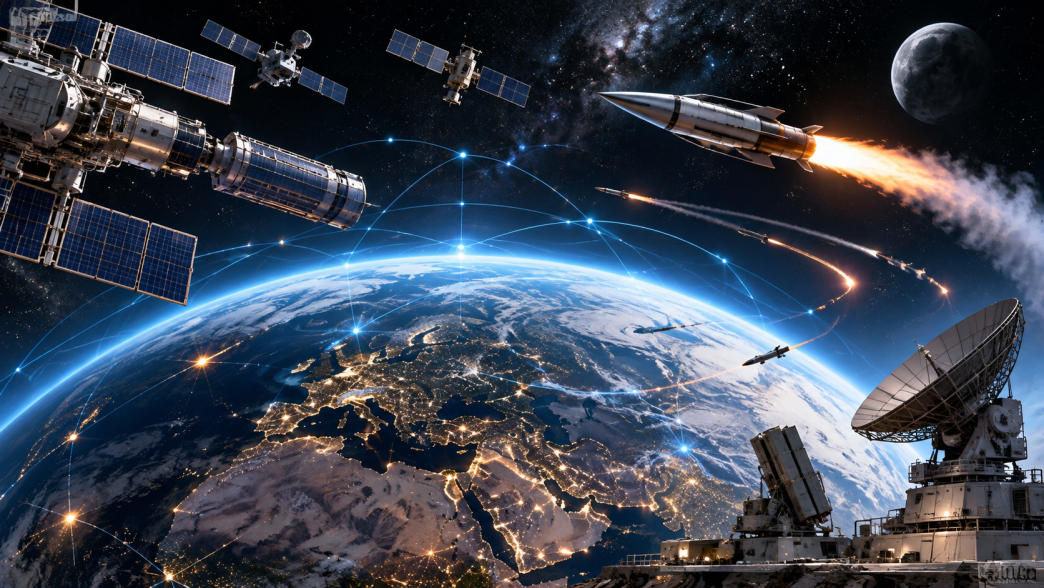
Space was long regarded as one of the primary fields for scientific research, technological development, and international cooperation. However, the deepening geopolitical rivalry among major powers is transforming space from an arena devoted primarily to exploration and economic activities into something much more consequential.
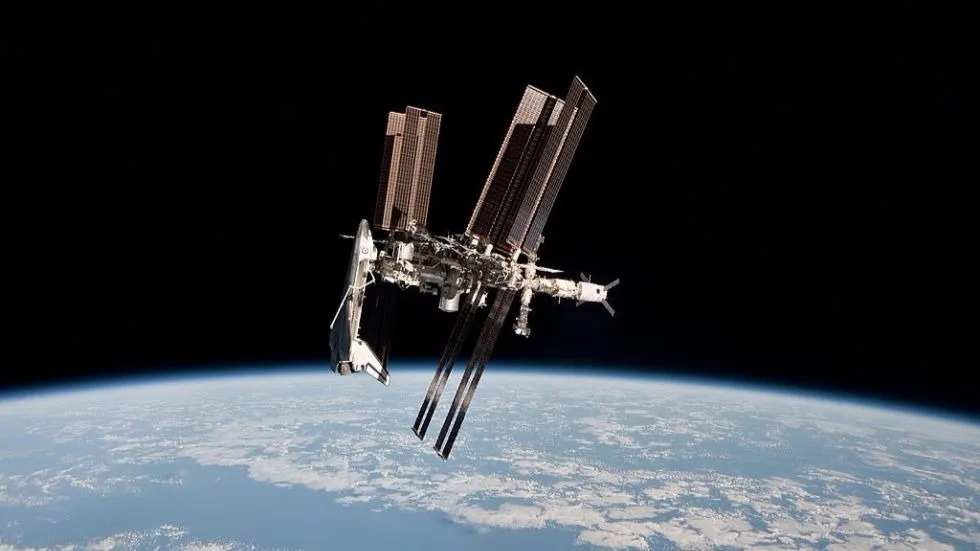
Today, satellites, space stations, orbital systems, and space-based communication networks play a critical role in a wide range of areas, from military operations and intelligence activities to missile defense and the functioning of the global economic system. As a result, technological superiority in space is increasingly becoming one of the fundamental factors determining countries’ military strength and strategic capabilities. 
In particular, the rivalry among the United States, China, and Russia demonstrates that space could become one of the major fronts in future conflicts. While major powers seek to protect their existing assets in space, they are also investing in technologies capable of neutralizing their adversaries’ satellite systems. This process goes beyond the military use of space and brings the direct weaponization of the domain into the spotlight.
The executive order titled “Ensuring American Space Superiority,” numbered 14369 and issued by U.S. President Donald Trump in December 2025, set out Washington’s strategic priorities in this field more explicitly. Under the order, the United States aims to develop new missile defense capabilities and produce prototypes by 2028, take measures against threats originating from orbital and lunar orbits, and restructure its national security space architecture.
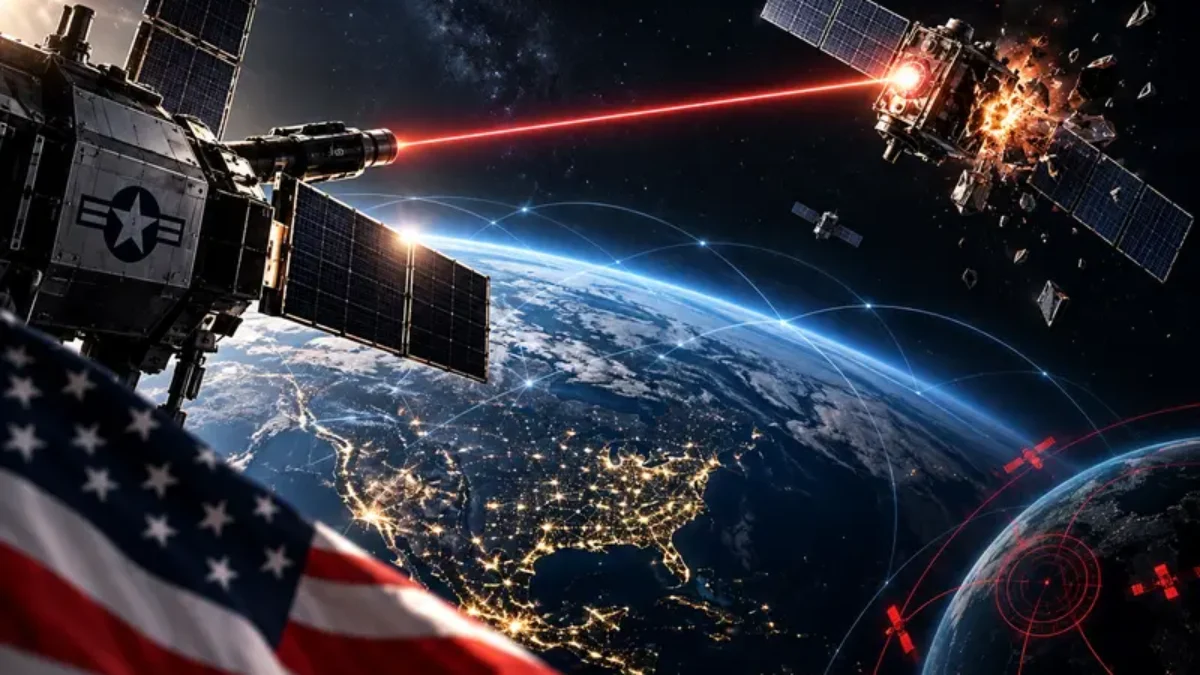
Statements made by U.S. officials at the 9th Space Security Conference, held in Prague in June 2026, further demonstrated that Washington intends not merely to protect its existing space assets but also to develop broader military capabilities in space. The announcement by U.S. Air Force Secretary Troy Meink on September 15, 2026, that American weapons had been deployed in space can be regarded as a significant indication that this approach has moved beyond political rhetoric.
These developments indicate that the United States is entering a new era in its space policy. Washington’s primary objective is not simply to ensure the security of its own satellites but also to establish a level of superiority that would enable it to restrict the military and technological capabilities of its rivals in space when necessary. Therefore, the deployment of weapons in space should not be viewed merely as a defensive measure, but rather as part of a broader strategy aimed at shaping the military balance of power in the future.
Space forces and the pursuit of military superiority
The strengthening of the United States’ military presence in space did not begin with the Trump administration. The establishment of the U.S. Space Force in 2019 was one of the clearest indications that Washington had begun treating space as an independent domain of military operations. With this organizational structure, protecting space systems, monitoring the space capabilities of rival countries, and developing technologies capable of countering those capabilities when necessary became priorities within American defense strategy.
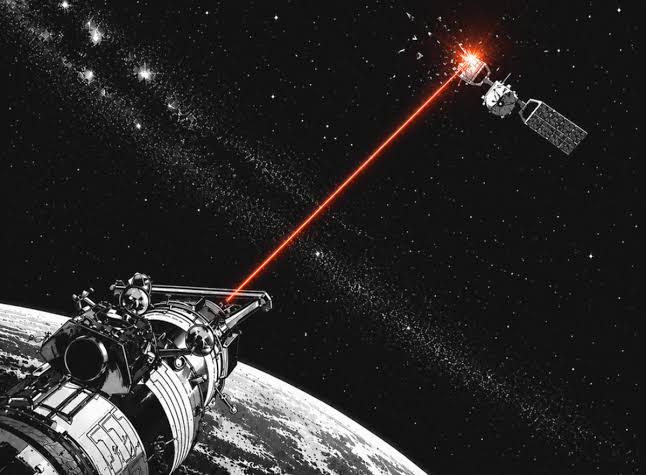
In subsequent years, increased funding for the Space Force, investments in satellite defense systems, and efforts to develop kinetic and non-kinetic counterspace weapons further reinforced this approach. The Trump administration’s Golden Dome missile defense initiative also highlights the role that space-based systems could play in the future defense architecture.
The fundamental issue is that space is no longer viewed merely as infrastructure supporting military operations. Precision-guided munitions, early warning systems, intelligence networks, unmanned aerial vehicles, and long-range missile systems used by modern militaries are heavily dependent on satellite technologies. Consequently, losing a country’s space capabilities would mean much more than disruptions to communication systems. It would also seriously undermine its military command-and-control capabilities, target detection capacity, and operational coordination.
The Russia-Ukraine War has clearly demonstrated the military consequences of this dependence. Satellite communications, positioning systems, intelligence sharing, and commercial space technologies have become decisive in monitoring developments on the battlefield and conducting military operations. The military confrontation between the United States and Iran has also brought the strategic importance of space-based intelligence and early warning systems back into focus.
Therefore, the major powers’ growing investments in space are not driven solely by technological prestige or economic competition. Their primary objective is to ensure that military systems remain operational in a potential high-intensity conflict in the future while preventing their adversaries from enjoying the same advantages.
The contradiction in U.S. space policy
For many years, the United States pursued a policy of opposing the weaponization of space. Washington based this position on diplomatic initiatives and international agreements, particularly emphasizing its support for the peaceful use of space as a signatory to the 1967 Outer Space Treaty.

However, the American administration’s position on this issue has not always been consistent. The United States strongly criticized China’s anti-satellite missile test in 2007 and Russia’s similar test in 2021. At the same time, it continued developing its own missile defense programs and military counterspace capabilities. This situation demonstrates that the distinction between opposing the weaponization of space and seeking military superiority in the domain is becoming increasingly blurred.
An important distinction needs to be made here. The 1967 Outer Space Treaty prohibits the placement of nuclear weapons and other weapons of mass destruction in Earth’s orbit. However, it does not contain a comprehensive provision prohibiting the deployment of conventional weapons in space or all military activities that could be conducted there. This legal gap allows major powers to continue their military programs based on different interpretations of the existing framework.
The international cooperation model developed by the United States through the Artemis Accords is also noteworthy in this context. Washington aims to establish a rules-based cooperation mechanism under its leadership for activities conducted on the Moon and other celestial bodies. However, such initiatives have also raised concerns that the influence of United Nations-centered multilateral mechanisms in the future governance of space could diminish.
The fundamental problem is the absence of a comprehensive, binding, and enforceable international mechanism capable of limiting the military use of space and monitoring states’ activities directed against one another’s space assets. As long as this gap persists in an environment where major powers distrust one another, military competition in space is likely to become increasingly difficult to control.
China’s and Russia’s space strategies
One of the most important reasons behind the United States’ efforts to establish superiority in space is the military capabilities being developed by China and Russia. From Washington’s perspective, Beijing’s and Moscow’s technological investments in space systems constitute a security threat that could directly affect the future military balance.
In recent years, China has made significant progress in satellite technologies, space stations, missile early warning systems, and anti-satellite weapons. Beijing’s anti-satellite missile test in 2007 was one of the important developments demonstrating that military competition in space had entered a new phase. China’s decision to develop its space program by simultaneously pursuing civilian, economic, and military objectives reveals the breadth of its strategic approach in this domain.
For Beijing, space represents an important strategic arena through which it can balance the United States’ global military superiority. Given the American military’s dependence on satellite-based communications, intelligence, and precision targeting systems, China’s investments in capabilities that could neutralize this infrastructure can be considered a rational military choice. Accordingly, China’s strategy is not limited to developing its own space assets; it also seeks to constrain America’s technological superiority in space.
Russia, meanwhile, approaches competition in space primarily from the perspective of developing asymmetric military capabilities. Moscow’s efforts to advance anti-satellite weapons, electronic warfare, cyber operations, and other technologies capable of disrupting satellite systems provide potential options for targeting NATO’s space-based military infrastructure. Russia’s 2021 anti-satellite test was one concrete demonstration of this capability.
Although Russia’s and China’s approaches differ in certain respects, the two countries share a common objective: neither wants to accept American military superiority in space. Washington’s announcement that it has deployed weapons in space could provide both countries with justification for expanding their own military programs. Consequently, a move by the United States intended to establish deterrence could accelerate countermeasures by its rivals and trigger a new arms race.
Why is deterrence in space more complicated?
One of the primary objectives of deploying weapons in space is to prevent rival countries from attacking American space assets. Washington wants to demonstrate its military capabilities openly and send a message to China and Russia that any potential interference with American systems in space could have serious consequences. This approach can be regarded as an adaptation of traditional military deterrence to the space domain.
However, deterrence in space does not have the same clear and predictable structure as nuclear deterrence. The concept of nuclear deterrence, which evolved during the Cold War, was based on the capacity for mutual retaliation and the devastating consequences of a nuclear attack. The doctrine of Mutually Assured Destruction became one of the fundamental factors limiting the likelihood of nuclear conflict because the damage that the parties could inflict on one another would reach unacceptable levels.
There is no equally clear deterrence mechanism in space. It may not always be possible to determine how an attack against a satellite occurred, which country was responsible, or whether the incident was a direct military intervention or simply a technical malfunction. Cyberattacks and electronic jamming activities, in particular, make identifying the source of an attack even more difficult.
Furthermore, most space systems are used for both civilian and military purposes. An attack against a country’s communications or navigation satellite could affect not only military operations but also civil aviation, maritime transportation, financial transactions, energy infrastructure, and emergency communications. Consequently, the effects of a conflict in space could extend to countries and societies that are not directly involved in the war.
Another significant problem concerns the uncertainty surrounding the limits of retaliation. Would an electronic jamming operation against a satellite be met with a cyberattack, economic sanctions, or conventional military intervention? Would the destruction of a country’s military satellite be regarded as a direct act of war? The international system has no commonly agreed answers to these questions.
For this reason, establishing deterrence in space cannot be achieved merely by developing weapons or publicly announcing military capabilities. What is needed is a strategic understanding that establishes in advance which actions states consider unacceptable, under what circumstances they would retaliate, and under which conditions a conflict could escalate. Otherwise, the deployment of weapons could increase mutual distrust rather than strengthen deterrence.
The space arms race will affect other countries as well
It would be unrealistic to assume that military competition in space will remain confined to the United States, China, and Russia. Advances in space technologies and declining launch costs are enabling an increasing number of countries to develop independent capabilities in this field.
The activities of countries such as Iran and North Korea in satellite launches and space technologies are developments that deserve close attention in this regard. Independent satellite launch capabilities do not necessarily mean that these countries can directly develop weapons in space. Nevertheless, they expand their access to certain space technologies and strengthen their technical expertise. Moreover, weapons deployed in space are not necessarily required to target satellite systems.
Direct-ascent anti-satellite missiles, electronic jamming systems, cyberattacks, and directed-energy technologies offer different methods of disabling or disrupting space assets. Since some of these capabilities can be developed and operated through ground-based systems, countries that have not reached the most advanced levels of space technology can still acquire a degree of counterspace capability.
These developments could also lead countries such as Israel, Japan, and South Korea to reconsider their military approaches to space security. Countries facing regional threats, particularly those benefiting from the United States’ security umbrella, may feel the need to invest in independent systems capable of protecting their own space assets.
In such an environment, space will cease to be merely an arena of competition among major powers and will become an increasingly important component of regional security policies. While seeking to protect their own satellites, states may simultaneously invest in technologies capable of targeting their rivals’ space infrastructure. This could expand military competition in space and extend the arms race across a much broader geographical area.
Is the future of space turning into a new struggle for military power?
The strategic plan behind efforts to deploy weapons in space is not limited to establishing defenses against existing threats. The primary objective is to secure control and superiority over the space infrastructure that will determine how military operations are conducted in the future. States that achieve this superiority will be able to monitor their adversaries’ military movements more closely, detect missile attacks earlier, and increase the operational effectiveness of their own forces.
Nevertheless, the pursuit of military superiority in space could develop into a process that mutually intensifies the security concerns of major powers. The United States’ deployment of weapons in space could encourage China and Russia to take similar steps. The new systems developed by Beijing and Moscow, in turn, could push Washington toward even more extensive military investments. In this way, measures taken by each side to protect itself could be perceived as threats by other countries, creating a security dilemma.
Moreover, the consequences of a potential conflict in space would not be limited to military targets. Given the dependence of global communications, navigation, trade, banking, energy, and transportation systems on satellite infrastructure, a major crisis in space could directly affect the global economy. In particular, the long-term danger posed by orbital debris could disrupt space activities even after the conflict itself has ended.
For this reason, the increasingly blurred distinction between the militarization and direct weaponization of space constitutes a serious risk to international security. Major powers may develop military capabilities to protect their presence in space; however, unless common rules are established to limit these capabilities, efforts to enhance security could generate new threats.
In conclusion, the United States’ deployment of weapons in space demonstrates that strategic competition with China and Russia is entering a new phase. While Washington seeks to establish deterrence in space and preserve its technological superiority, Beijing and Moscow are highly likely to respond to these developments. Yet there is no international consensus on the limits of space deterrence, how attacks should be assessed, or under what circumstances retaliation should take place.
Therefore, the main struggle in the coming period will not be limited to determining which country deploys more weapons in space. Equally important will be the rules governing space, where military activities begin and end, and how major powers interpret interventions targeting one another’s space assets. As space becomes one of the most important arenas of strategic competition in the 21st century, the military balance established in this domain will directly shape the future of the global security architecture.

