

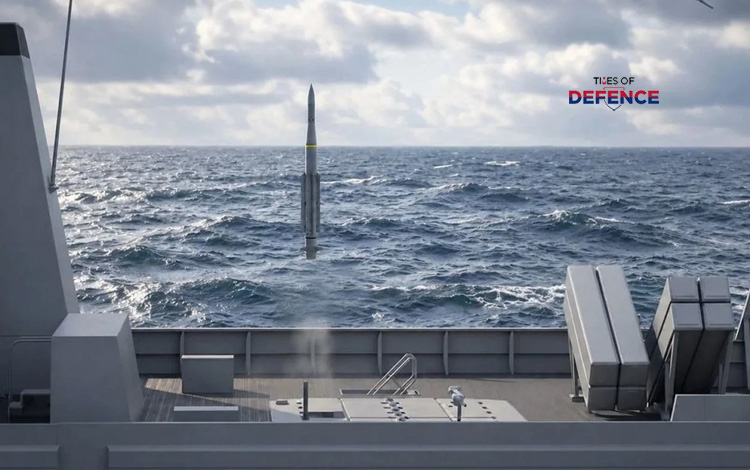
Poland’s Armament Agency announced on November 24, 2026, that Warsaw and London have signed a bilateral intergovernmental agreement establishing the legal and financial framework for the joint development of the CAMM-MR (Common Anti-Air Modular Missile – Medium Range) air defense interceptor, targeting an engagement range exceeding 100 km (62 miles) and aligning deliveries with the completion of Poland’s three Miecznik-class frigates and the Narew ground-based air defense program.
Signed by Polish Ministry of National Defence Secretary of State Magdalena Sobkowiak-Czarnecka and UK Defence Procurement Minister Luke Pollard following earlier bilateral defense-cooperation milestones—including a September 2023 MBDA–PGZ letter of intent and the 2026 Polish–UK defense treaty framework—the agreement marks the first internationally managed joint missile-development program for Polish air defense, bringing together MBDA, MBDA UK, and Polish state defense conglomerate Polska Grupa Zbrojeniowa (PGZ). While the intergovernmental pact itself does not commit missile procurement funding or set detailed design schedules—which will be governed by a subsequent executive agreement dividing tasks and competences ahead of a later supply contract—it creates the institutional basis for technology transfer, domestic Polish industrial participation, and multi-layered naval and land air-defense integration alongside existing CAMM and CAMM-ER systems.
TECHNICAL SPECIFICATIONS: CAMM-MR PROGRAMME & MULTI-DOMAIN INTEGRATION
1. Bilateral Governance, Industrial Partners & Delivery Timeline
⚡ Contracting & Diplomatic Framework: Intergovernmental agreement signed November 24, 2026 between the Polish Ministry of National Defence and UK Ministry of Defence (via Poland’s Armament Agency), establishing legal and financial conditions for detailed design contracting and building on the bilateral defense treaty framework
⚡ Industrial Consortium: Joint collaboration involving MBDA, MBDA UK, and Polish state-owned defense group Polska Grupa Zbrojeniowa (PGZ), bringing technology transfer and domestic industrial skills to Poland
⚡ Phased Contracting & Delivery Horizon: Intergovernmental framework precedes a follow-on executive agreement defining Polish–British task/competence allocation and a subsequent supply contract; deliveries are targeted to align with the end of deliveries of Poland’s three Miecznik-class frigates while linking with Narew and evaluating interim CAMM-family bridging options if needed 
2. CAMM-MR Performance Envelope, Family Lineage & System Integration
💥 Extended Range & Family Positioning: Designed as a medium-range derivative of the CAMM family with an engagement range beyond 100 km (62 miles), complementing shorter-range CAMM and extended-range CAMM-ER interceptors already fielded or ordered under Poland’s air-defense modernization
💥 Naval & Ground-Based Integration: Planned for embarkation on Poland’s three Miecznik-class multirole frigates (Arrowhead 140-derived platforms) as ships enter service with trained crews, while also supporting land-based air defense integration tied to the Narew program
💥 Multi-Layered Air & Missile Defense Role: Expands medium-range intercept reach against hostile aircraft, cruise missiles, and air-launched threats across Baltic Sea maritime approaches and Polish ground-based air-defense batteries
TIMES OF DEFENCE ASSESSMENT
The signing of the Poland–UK intergovernmental agreement on CAMM-MR highlights three critical shifts in European missile co-development, Baltic naval-land air defense, and Anglo-Polish industrial integration:
1. Shifting From Off-the-Shelf Procurement to Co-Developed Medium-Range Interceptors: Building on earlier CAMM and CAMM-ER acquisitions, co-developing CAMM-MR with UK participation and PGZ involvement moves Poland deeper into joint system design, technology transfer, and domestic industrial capability rather than pure license assembly.
2. Synchronizing Shipboard and Ground Air-Defense Layers Across the Baltic Flank: Timing CAMM-MR deliveries around the completion of the three Miecznik frigates while tying into Narew allows Warsaw to pair shipborne and land-based air defense layers as new hulls and batteries reach operational maturity.
3. Managing Development Schedules While Preserving Bridging Flexibility: Because the intergovernmental deal sets legal and financial groundwork ahead of an executive design agreement and supply contract, aligning developmental milestones with frigate deliveries—and keeping alternative CAMM-family bridging options in view—helps manage schedule risk.