

WASHINGTON — The U.S. Air Force is once again examining whether the Boeing C-17 Globemaster III production line could be restarted as it begins a broader assessment of the next generation of strategic airlift.
Air Mobility Command commander Lt. Gen. Daniel Tulley said on September 16 that the service is preparing an Analysis of Alternatives (AoA) for replacing both the C-17A and C-5M Galaxy. A new-production C-17 is among the options being considered alongside service-life extensions, modernization and entirely new airlift concepts.
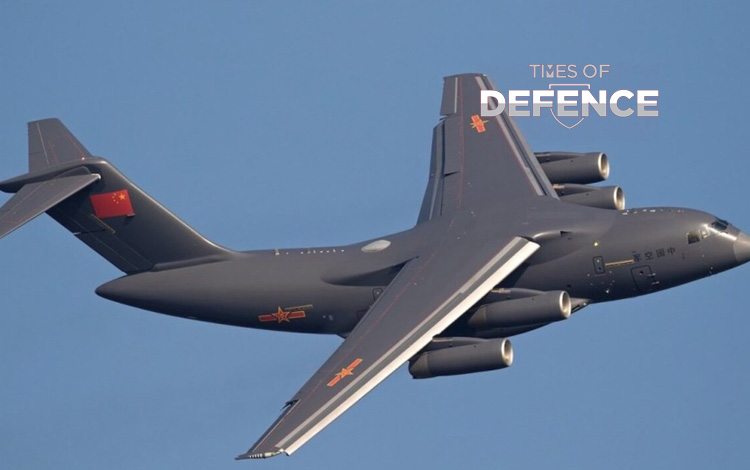
The development comes as China continues expanding its Xi’an Y-20 Kunpeng family, including dedicated tanker and newer-engine variants.
C-17 Production Could Return — But No Decision Has Been Made
Boeing ended C-17 production in 2015, after delivering the final aircraft from its Long Beach, California, facility.
The company produced 279 C-17s during the program, according to the U.S. Air Force’s current account, while Boeing separately describes 275 C-17As delivered between 1993 and 2015. The difference reflects how the figures are counted across the U.S. and international fleet.
The USAF is now asking a fundamental industrial question: can the C-17 production ecosystem actually be reconstructed after more than a decade?
That means examining the status of tooling, production facilities, suppliers, engineering knowledge and workforce availability.
Congress has separately directed the Air Force to provide a formal briefing by March 1, 2027, assessing the feasibility, cost, timeline and industrial requirements associated with restarting C-17 production. The review is also expected to consider alternatives such as life-extension programs, modernization, commercial-derived cargo aircraft and expansion of the Civil Reserve Air Fleet.
Boeing has indicated that C-17 operators have approached the company about a possible restart and has described those discussions as encouraging. However, there is currently no announced production restart contract.
Why the C-17 Remains Important
The Globemaster III occupies a distinctive position in U.S. air mobility.
The aircraft combines strategic-range transport capability with the ability to conduct tactical airlift, airdrop and operations from relatively austere airfields.
According to the USAF, the C-17 is designed to rapidly move troops and oversized cargo to major operating bases or directly into forward areas. It can also conduct aeromedical evacuation missions.
C-17 Technical Profile
| Specification | C-17 Globemaster III |
|---|---|
| Manufacturer | Boeing |
| Type | Strategic/tactical military transport |
| Length | 53 m |
| Wingspan | 51.75 m |
| Engines | 4 × Pratt & Whitney F117-PW-100 |
| Thrust | 40,440 lbf / ~180 kN each |
| Cargo | Heavy/oversized cargo, vehicles, troops |
| Missions | Strategic airlift, tactical airlift, airdrop, MEDEVAC |
| Production | 1993–2015 |
| Final aircraft | Delivered in 2015 |
| Current USAF plan | Sustainment and modernization; future replacement under study |
The F117 is a military derivative of the PW2040 turbofan family and incorporates thrust reversers that redirect engine exhaust upward and forward, helping reduce foreign-object ingestion during operations from austere surfaces.
A New C-17 Could Be More Than a Reproduction
The USAF is not necessarily considering simply rebuilding the 1990s-era aircraft.
Tulley specifically raised the possibility of incorporating new technologies, improved connectivity and defensive capabilities into any future C-17-derived design.
That could potentially mean a modernized aircraft with:
- Open-system avionics
- Improved communications and networking
- Modern defensive systems
- Greater electronic-warfare awareness
- Updated mission computers
- Improved survivability in contested airspace
- Potential propulsion or aerodynamic improvements
Boeing is already under contract to modernize the C-17A flight deck using a Modular Open Systems Architecture (MOSA) approach, intended to address avionics obsolescence and make future upgrades easier to integrate.
However, whether these improvements would justify rebuilding the C-17 rather than developing a clean-sheet aircraft remains one of the central questions in the Air Force’s analysis.
The Bigger Question: Next-Generation Airlift
The USAF has been developing the Next Generation Airlift (NGAL) concept to eventually replace both the C-17 and C-5.
This is an unusual requirement because the two aircraft occupy substantially different portions of the airlift spectrum.
The C-5M is significantly larger, while the C-17 provides a combination of heavy payload capacity, tactical mobility and austere-airfield capability.
The Air Force has therefore been examining whether one future platform—or potentially a broader family of systems—can eventually provide the required capabilities.
The current plan has envisioned NGAL entering service in the 2040s, while existing C-17s could remain in service for decades longer. Previous USAF planning has contemplated operating portions of the C-17 fleet toward 2075.
China Has Taken a Different Route
While Washington is debating whether to restart production of an aircraft whose production ended in 2015, China is continuing to expand the Y-20 family.
The Xi’an Y-20 entered PLAAF service in 2016, making 2026 its tenth year of operational service.
The aircraft is China’s largest domestically developed strategic airlifter and is broadly comparable in mission class to the C-17.
Open-source estimates commonly place the Y-20’s maximum takeoff weight at approximately 220 tonnes, with a maximum payload around 60–66 tonnes, although exact performance figures vary by source and configuration. Janes currently cites an estimated 66-tonne maximum payload and 220-tonne MTOW.
Y-20A vs Y-20B
The original Y-20A uses four Russian-origin D-30KP-2-series turbofans, each producing approximately 117.7 kN of thrust.
The newer Y-20B introduces China’s domestically developed WS-20 high-bypass turbofan.
The WS-20 is assessed at approximately 127.5 kN of thrust—around 8% more than the D-30KP-2—and is intended to improve thrust, efficiency and potentially payload/range performance.
The transition to the WS-20 is strategically significant because it reduces China’s dependence on Russian propulsion technology for its heavy transport fleet.
Recent AVIC footage showed 10 Y-20Bs participating in an elephant walk at Kaifeng Air Base, compared with five Y-20Bs identified there in November 2024.
YY-20: China’s Air Refueling Expansion
China has also transformed the Y-20 platform into an aerial tanker.
The YY-20 uses a probe-and-drogue refueling system, with three hose-and-drogue stations: two mounted beneath the outer wings and another on the rear fuselage.
The platform has been used to refuel aircraft including J-16 and J-20 fighters, expanding the PLAAF’s ability to conduct longer-range operations.
Janes currently assesses that at least eight YY-20A aircraft are in service. That is considerably more defensible than the frequently circulated estimate of approximately 40 aircraft.
The YY-20 has now also been formally commissioned, with the PLAAF confirming combat-readiness training and aerial-refueling exercises.
In 2026, the PLAAF also disclosed an AI-assisted aerial-refueling dispatch system for YY-20 operations. The system can use information such as receiver fuel levels, airspace range and loiter requirements to help generate an optimized refueling plan in real time.
Y-20B as a Multi-Role Platform
The latest development may be even more significant.
Chinese state media has described the Y-20B as having the potential to perform multiple missions beyond conventional transport.
Janes reported that Chinese state media has claimed the Y-20B can be converted between transport and aerial-refueling configurations through the installation of appropriate equipment.
The same reporting has associated the platform conceptually with future bomber, airborne early-warning and electronic-warfare roles, although these additional configurations should be treated as reported capabilities/concepts rather than confirmed operational variants.
This points toward a broader Chinese approach: use a common large-aircraft architecture as a foundation for multiple specialized systems.
How Many Y-20s Does China Actually Have?
This is where caution is required.
The claim that China has “over 150 Y-20-family aircraft”, divided into roughly 70 Y-20As, 40 YY-20As and 40 Y-20Bs, is an open-source estimate rather than a confirmed official inventory.
Publicly available evidence clearly establishes a substantial and growing fleet, but the precise total is difficult to verify because China does not publish a complete aircraft inventory.
Recent evidence includes:
- 10 Y-20Bs observed at Kaifeng in June 2026.
- At least 8 YY-20As assessed by Janes.
- 18 Y-20As plus 5 Y-20Bs observed at Kaifeng in November 2024.
- Continued Y-20 production and expansion across PLAAF transport units.
Therefore, the direction of growth is well established, while the exact “150+” fleet figure should be treated as an estimate.
C-17 vs Y-20: The Industrial Comparison
The comparison is less about which aircraft is technically superior and more about industrial momentum.
The C-17 is a mature, combat-proven platform with an extensive international operator base and decades of operational experience.
The Y-20, meanwhile, is still in an expansion phase and has evolved rapidly into a broader family of transport, tanker and potentially specialized aircraft.
| Category | C-17 Globemaster III | Y-20 Family |
|---|---|---|
| Country | United States | China |
| Manufacturer | Boeing | Xi’an Aircraft Corporation |
| First flight | 1991 | 2013 |
| Service entry | 1995 | 2016 |
| Production | Ended 2015 | Continuing |
| Engines | 4 × F117 | Y-20A: D-30KP-2; Y-20B: WS-20 |
| Approx. MTOW | ~265.4 t | ~220 t |
| Approx. payload | ~77.5 t | ~60–66 t |
| Tanker variant | No dedicated production variant | YY-20 |
| Domestic engine | No | WS-20 on Y-20B |
| Current production | No | Yes |
| Development direction | Sustain/modernize; NGAL under study | Expanding family |
The C-17 has the advantage of decades of operational experience and a mature global support network. The Y-20’s major advantage from an industrial perspective is that its production line remains active and is being used as the basis for new variants.
What Happens Next?
The USAF’s immediate decision is not whether to buy C-17s.
It is whether a restarted C-17—or a substantially redesigned C-17-derived aircraft—makes sense within the future airlift architecture.
The upcoming Analysis of Alternatives will have to answer several questions:
Can the production line realistically be rebuilt?
How much would a restart cost?
How quickly could the first new aircraft be delivered?
Would a modernized C-17 provide enough additional capability to justify the investment?
Could a new clean-sheet NGAL aircraft provide greater survivability and efficiency?
Should the future fleet consist of one aircraft type or several complementary platforms?
At the same time, China’s continuing Y-20 expansion demonstrates the strategic value of maintaining an active heavy-aircraft production ecosystem.
The emerging competition is therefore not simply C-17 vs Y-20.
It is increasingly a competition between two different approaches to strategic air mobility: reviving and modernizing a proven Western platform versus continuously expanding a domestic aircraft family with transport, tanker and future special-mission derivatives.
For now, the USAF has only opened the question. A C-17 production restart remains a possibility—not a program decision.
