


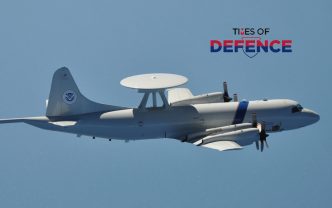
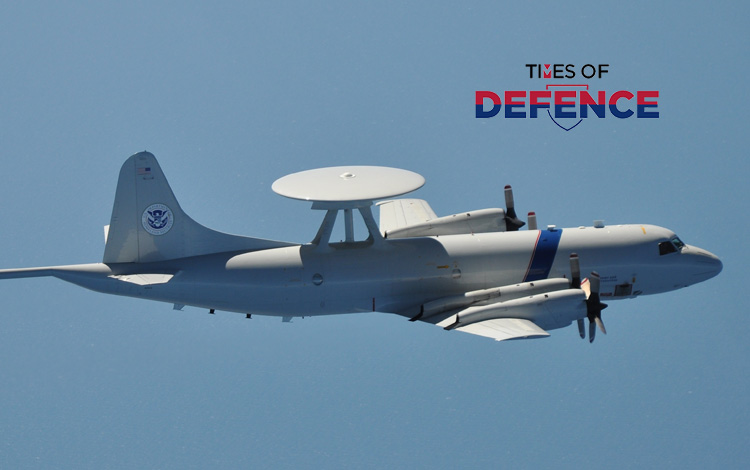
JACKSONVILLE, Fla. — U.S. Customs and Border Protection (CBP) Air and Marine Operations (AMO) officially marked the end of an era on September 30, 2026, with the final operational flight and retirement of its last Lockheed P-3 Airborne Early Warning (AEW) aircraft. Operating out of the National Air Security Operations Center (NASOC) in Jacksonville, Florida, the P-3 AEW fleet—famously characterized by its top-mounted rotating radar dome—concluded more than three decades of long-range maritime surveillance, counter-narcotics interdiction, and contingency disaster-response missions.
Originally adapted from the U.S. Navy’s P-3 Orion maritime patrol airframe, the CBP AMO P-3 AEW served as the primary airborne surveillance backbone across the Western Hemisphere Transit Zone, covering the Caribbean Sea, the Gulf of Mexico, and the eastern Pacific Ocean. Over its operational lifecycle, the fleet logged tens of thousands of flight hours tracking illicit maritime and aerial trafficking vectors, coordinating real-time radar track data with joint interagency task forces (JIATF-South), and providing vital emergency communications relay and airspace management following major hurricanes and humanitarian crises.
TECHNICAL SPECIFICATIONS: LOCKHEED P-3 AIRBORNE EARLY WARNING (AEW) AIRCRAFT
* Primary Operator: U.S. Customs and Border Protection (CBP) Air and Marine Operations (AMO)
* Base Station: NASOC Jacksonville, FL / NASOC Corpus Christi, TX
* System Role: Airborne Early Warning, Maritime Domain Awareness & Counter-Trafficking C2 Platform
* Airframe & Propulsion Architecture:
* Platform: Modified Lockheed P-3 Orion four-engine turboprop
* Powerplant: 4x Allison T56-A-14 turboprop engines (4,600 shp each)
* Endurance & Range: 10 to 12+ hours loiter capability; operational range exceeding 2,500 nautical miles
* Radar & Sensor Integration:
* Primary Radar: AN/APS-138 / AN/APS-145 Airborne Early Warning Radar housed in a 24-foot rotating rotodome
* Radar Performance: 360-degree broad-area maritime and overland surface-moving target tracking out to 200+ nautical miles
* Secondary Sensors: Electro-optical/infrared (EO/IR) sensor turrets, tactical SATCOM, and multi-band radio comms arrays
* Operational Legacy: Sole civilian law enforcement variant equipped with rotodome-mounted airborne early warning radar