


HIMARS Crews Train to Fire, Move and Survive in Hokkaido
The U.S. Army is rehearsing mobile long-range precision-fire operations in northern Japan as part of Exercise Orient Shield 26, placing the M142 High Mobility Artillery Rocket System (HIMARS) in a multinational environment designed to simulate the demands of a complex and contested battlefield.
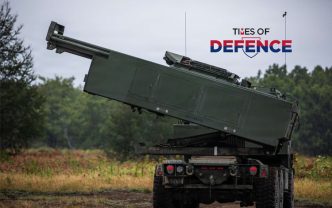
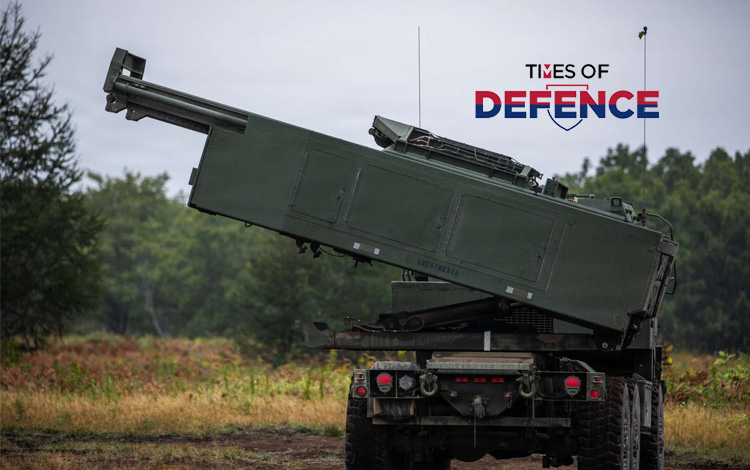
On September 18, U.S. Army HIMARS crews from 1st Battalion, 17th Field Artillery Regiment, 3rd Multi-Domain Task Force conducted rehearsal operations at the Yausubetsu Training Area in Hokkaido.
U.S. Army imagery shows the launchers being staged and crews preparing for operations as part of a broader exercise integrating fires, maneuver, sustainment, interoperability and command and control.
The significance goes beyond the launcher itself.
The exercise is testing whether mobile long-range fires can continue operating when an adversary has persistent surveillance, electronic warfare, drones and precision counter-fire capabilities.
Orient Shield 26: A Trilateral Fires Exercise
Orient Shield 26 brings together the U.S. Army, Japan Ground Self-Defense Force and Australian Army.
The 2026 iteration is the 41st edition of the exercise and the largest to date, involving approximately 3,700 personnel.
The exercise combines field training, multinational maneuver, live-fire activities and sustainment operations.
HIMARS and GMLRS live-fire events form part of this larger training architecture, which is designed to improve the ability of allied formations to coordinate fires, movement, logistics and command-and-control functions.
Australia is participating for the second consecutive year, with personnel from the 1st Australian Division, 17th Sustainment Brigade and 10th Fires Brigade among the participating forces.
Why Hokkaido Matters
Hokkaido presents a very different operational environment from a traditional large training range.
Long-range fires units operating in the Indo-Pacific must account for:
- Large geographic distances
- Limited firing locations
- Road and bridge restrictions
- Mountainous and forested terrain
- Persistent drone surveillance
- Electronic warfare
- Long-range enemy fires
- Difficult resupply requirements
- The need to operate with allied forces
For a HIMARS unit, this means that simply reaching the required firing range is not enough.
The launcher must be able to move between firing positions, receive targeting information, fire, relocate and reload while remaining difficult to detect and engage.
The “Shoot-and-Scoot” Concept
HIMARS is built around mobility.
Unlike tracked M270 MLRS launchers, HIMARS uses a wheeled tactical vehicle, allowing it to rapidly reposition across road networks.
This creates the basis for the classic artillery concept known as “shoot-and-scoot.”
A launcher can:
Move → occupy a firing position → receive targeting data → fire → displace.
The objective is to minimize the time an enemy has to detect the launcher, establish a firing solution and conduct counter-battery operations.
In a modern battlefield, this is becoming increasingly important because drones and other sensors can observe artillery positions almost continuously.
A stationary launcher can become a target.
A mobile launcher creates a constantly changing targeting problem.
HIMARS Technical Architecture
The M142 HIMARS is a wheeled precision-fire launcher designed to employ the U.S. Army’s MLRS family of munitions.
Lockheed Martin says the launcher can carry:
- Six GMLRS rockets
- Two Precision Strike Missiles (PrSM)
- One ATACMS missile
It is also designed to employ the broader MLRS family of munitions.
HIMARS at a Glance
| Characteristic | HIMARS |
|---|---|
| Designation | M142 |
| Type | Wheeled multiple rocket launcher |
| Chassis | 6×6 tactical vehicle |
| Primary mission | Mobile precision fires |
| GMLRS capacity | 6 rockets |
| PrSM capacity | 2 missiles |
| ATACMS capacity | 1 missile |
| GMLRS range | 70+ km class |
| PrSM range | 499+ km |
| Air transport | C-130/C-17 compatible |
| Operational concept | Shoot-and-scoot |
The exact performance of a particular firing mission depends on the munition, target, launch conditions and configuration.
PrSM Changes the Reach of HIMARS
One of the most important developments in the HIMARS ecosystem is the Precision Strike Missile (PrSM).
PrSM is designed as a next-generation long-range surface-to-surface precision weapon.
Lockheed Martin lists a range of 499+ kilometers and says two PrSM rounds can be carried by a HIMARS or M270 launcher.
This dramatically changes the role of the launcher.
With GMLRS, HIMARS functions primarily as a precision rocket-artillery system.
With PrSM, the same launcher becomes capable of conducting much deeper precision strikes.
That allows a dispersed HIMARS formation to potentially threaten targets well beyond the immediate tactical battle area.
The Sensor-to-Shooter Chain
The launcher is only one component of a modern long-range fires system.
A successful precision strike depends on an entire chain:
Sensor → Target identification → Data transmission → Command and control → Fire mission → Launcher → Missile → Battle-damage assessment
This is why Orient Shield 26 is emphasizing interoperability and command and control alongside the actual firing system.
A HIMARS launcher can have enormous range, but its military value depends on receiving accurate and timely targeting information.
In a contested environment, the network itself can also become a target.
Communications may be disrupted.
GPS signals may be degraded.
Sensors may be attacked.
Units may have to operate with incomplete information.
Training therefore has to prepare crews to function even when the battlefield network is under pressure.
Logistics May Be the Hardest Part
Long-range fires also create a major sustainment challenge.
Every HIMARS firing mission consumes ammunition.
Once a launcher fires, the unit needs to:
- Leave the firing position.
- Reach a new hide or firing location.
- Receive additional ammunition.
- Reload the launcher.
- Reconnect with the command network.
- Receive another mission.
- Move again.
This means ammunition transporters, fuel, maintenance teams, medical support and command elements have to remain mobile as well.
DVIDS imagery from the exercise specifically shows logistics and medical personnel supporting the HIMARS rehearsal.
In a major conflict, an adversary would attempt to identify not only the launcher but also its logistics signature.
That makes distributed sustainment an important part of survivability.
Japan, Australia and the U.S. Build a Shared Fires Network
Orient Shield 26 demonstrates the increasing importance of allied long-range fires in the Indo-Pacific.
The exercise brings together three countries with different military organizations but increasingly overlapping operational requirements.
For the U.S., the objective is to ensure that its long-range fires can operate alongside Japanese and Australian forces.
For Japan, interoperability with U.S. long-range fires provides additional depth to its own defensive architecture.
For Australia, participation provides experience operating within a multinational fires and sustainment network.
The ultimate objective is not simply to have three countries fire weapons independently.
It is to develop the ability to share information, coordinate effects and sustain dispersed forces as a single operational network.
HIMARS Is Becoming a Multi-Domain Weapon
HIMARS was originally designed as a mobile artillery rocket launcher.
Its role is now expanding.
With increasingly capable munitions such as PrSM, the system contributes to the U.S. Army’s broader Multi-Domain Operations concept.
Long-range fires can support:
- Land operations
- Maritime targeting
- Air-defense suppression
- Counter-logistics missions
- Command-and-control disruption
- Anti-access/area-denial operations
- Joint and allied operations
This does not mean HIMARS can independently perform all these missions.
Instead, it becomes one firing component within a wider sensor and command network.
Why Mobility Matters More Than Ever
The biggest lesson from the exercise may not be missile range.
It is survivability through mobility.
A 500-kilometer-class missile is strategically useful only if the launcher survives long enough to fire it.
In an Indo-Pacific conflict, long-range fires units could face extensive satellite surveillance, UAV reconnaissance, electronic warfare and enemy precision strikes.
That makes the ability to repeatedly:
fire → move → hide → reload → fire again
a central requirement.
The launcher therefore has to be treated as a maneuvering combat system rather than a stationary artillery piece.
The Broader Indo-Pacific Fires Picture
HIMARS operations in Japan are taking place as the United States and its allies expand their long-range fires capabilities across the Indo-Pacific.
Japan has been developing its own stand-off strike capabilities, while Australia is also expanding long-range fires and missile capabilities.
The United States is simultaneously developing new generations of precision weapons, including PrSM and other long-range systems.
This creates a battlefield where the ability to strike from hundreds of kilometers away is increasingly combined with distributed sensors and networked command systems.
The result is a shift from traditional artillery formations toward distributed precision-fire networks.
What Orient Shield 26 Is Really Testing
The HIMARS crews at Yausubetsu are not simply practicing how to launch rockets.
They are rehearsing an entire operational cycle.
Find the target.
Receive the mission.
Move into position.
Fire.
Disappear.
Reload.
Reconnect.
Move again.
And they are doing it alongside Japanese and Australian forces.
That is the real significance of the exercise.
The future of long-range fires will not be determined solely by how far a missile can fly.
It will depend on whether the launcher, sensors, communications, ammunition and allied forces can continue operating after the battlefield becomes heavily surveilled and contested.
Technical note: The U.S. Army’s current Orient Shield 26 material confirms HIMARS/GMLRS live-fire training and rehearsal operations, but it does not publicly identify a specific PrSM firing during the September 18 Hokkaido activity. Therefore, the presence of PrSM in the HIMARS capability discussion should not be interpreted as confirmation that PrSM was fired during this particular rehearsal.
