


YONAGUNI ISLAND, Japan — The United States Armed Forces and the Japan Self-Defense Forces (JSDF) initiated Exercise Keen Sword 27 (running October 19–29, 2026), deploying approximately 57,000 personnel, 30 naval combatants, and 370 aircraft across southwestern Japan, the First Island Chain, and maritime approaches to Taiwan.
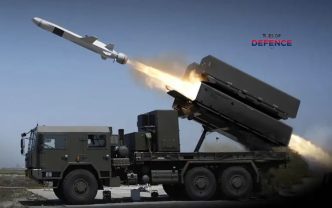
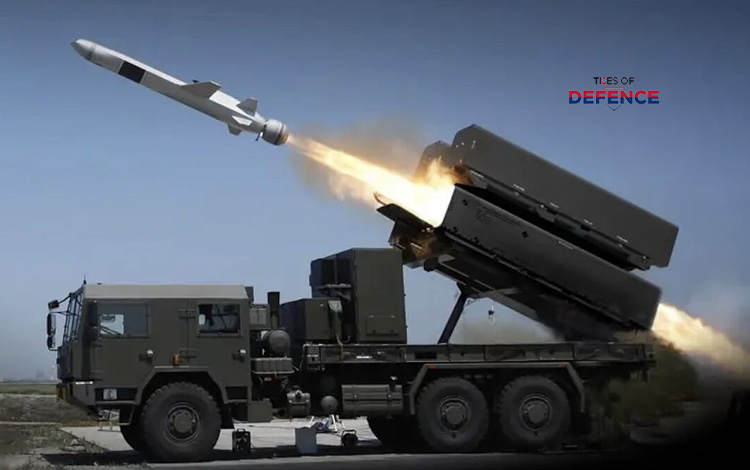
The major bilateral exercise marks the operational debut of Japan’s newly fielded Mitsubishi Heavy Industries Type 25 Surface-to-Ship Missile (SSM) system outside its permanent base at Camp Kengun. Derived from the Upgraded Type 12 SSM program, the land-attack and anti-ship cruise missile extends Japan’s counterstrike engagement envelope out to ~1,000 km. Simultaneously, the U.S. Marine Corps deployed its land-based Navy-Marine Expeditionary Ship Interdiction System (NMESIS) to Yonaguni Island—located 110 km east of Taiwan—alongside Japanese Type 88 SSM and Type 03 Chū-SAM medium-range air defense batteries on Ishigaki and Yonaguni islands. The exercise integrates real-time target data links between U.S. and Japanese command nodes to rehearse combined anti-access/area-denial (A2/AD) maneuvers against adversary naval surface formations across the East China Sea.
TECHNICAL SPECIFICATIONS: COMBINED FIRST ISLAND CHAIN ANTI-SHIP DEPLOYMENT SUITE 
* Exercise Framework & Operational Scope:
* Exercise Name & Dates: Exercise Keen Sword 27 (October 19–29, 2026)
* Force Size & Assets: ~57,000 troops (36,000 JSDF / 21,000 U.S.), ~30 warships, ~370 aircraft
* Core Geography: Kyushu, Okinawa Prefecture, Ishigaki Island, and Yonaguni Island (110 km from Taiwan)
* Japanese Type 25 Surface-to-Ship Missile (SSM) System:
* Developer & Inducted Variant: Mitsubishi Heavy Industries (Inducted March 2026)
* Missile Class: Long-range stealthy land-attack / anti-ship standoff cruise missile
* Operational Slant Range: ~1,000 km (620 miles)
* Airframe Features: Low-Radar Cross Section (RCS) composite body, folding wings, and high-efficiency turbofan engine
* Guidance & Targeting Architecture: TERCOM, INS/GPS mid-course navigation with multi-band Ka-band AESA active radar homing seeker
* Transporter Erector Launcher (TEL): Heavy 8×8 wheeled vehicle chassis carrying 6-cell containerized launch canisters
* U.S. Marine Corps NMESIS (Navy-Marine Expeditionary Ship Interdiction System):
* Developer & Platform: Raytheon / Oshkosh Defense ROGUE Fires (Remotely Operated Ground Unit for Expeditionary) Unmanned JLTV
* Primary Armament: 2 x Naval Strike Missiles (NSM)
* Effector Kinematics & Range: High-subsonic stealth anti-ship missile; range >185 km (>100 nm)
* Target Acquisition & Seeker: Imaging Infrared (IIR) seeker with autonomous target recognition (ATR) and passive RF processing
* Operational Mobility: C-130H/J transportable for rapid Expeditionary Advanced Base Operations (EABO) island insertion
TIMES OF DEFENCE ASSESSMENT:
The mass deployment of long-range anti-ship missile platforms to Yonaguni, Ishigaki, and Kyushu during Exercise Keen Sword 27 reflects a fundamental shift in U.S.-Japan defense strategy toward active, asymmetric maritime containment along the First Island Chain. By positioning the 1,000 km range Type 25 SSM alongside mobile USMC NMESIS batteries, Washington and Tokyo establish an overlapping, multi-layered anti-ship engagement umbrella across the Miyako Strait and Bashi Channel chokepoints.
Operating ground-launched anti-ship missiles from small, dispersed islands creates a severe cost-imposition challenge for potential adversaries. Unlike large surface combatants or fixed airbases, highly mobile unmanned launchers like NMESIS and road-mobile Type 25 TELs are difficult to detect, track, and strike. Furthermore, linking U.S. and Japanese sensor data to pass real-time targeting coordinates to distributed missile batteries allows both nations to constrain adversary fleet movements across the East China Sea and Taiwan Strait without relying solely on high-value carrier strike groups.

