


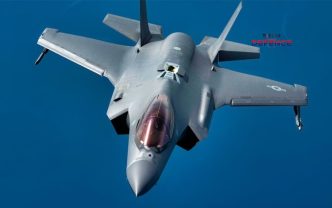
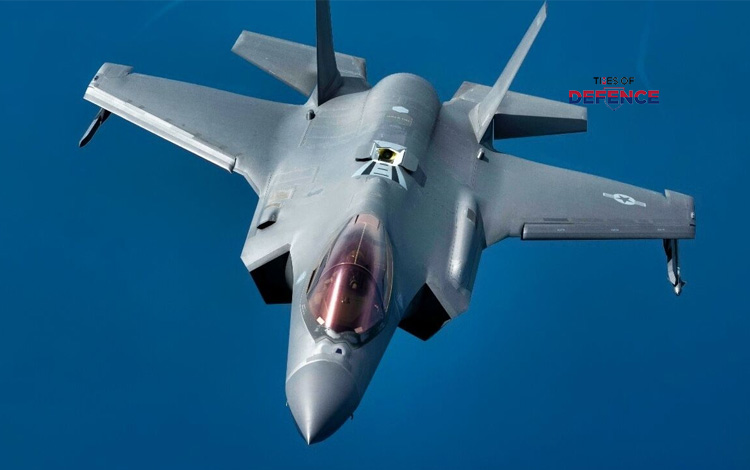
In a comprehensive force structure report submitted to Congress on October 16, 2026, the U.S. Air Force outlined a strategic modernization target aimed at expanding its combat-coded fighter inventory to 1,509 frontline aircraft by 2035.
Under the proposed force composition roadmap, fifth-generation Lockheed Martin F-35A Lightning II fighters will scale to comprise approximately 40 percent of the total combat fleet—transitioning from their current 30 percent baseline to become the tactical backbone of USAF fighter squadrons. Air superiority platforms, combining remaining Lockheed Martin F-22A Raptors and incoming Boeing F-47 Next Generation Air Dominance (NGAD) sixth-generation fighters, will account for another 20 percent. The remaining 40 percent will be divided between modernized fourth-generation platforms: Boeing F-15EX Eagle II heavy strike fighters (~20 percent) and General Dynamics/Lockheed Martin F-16C/D Fighting Falcons (~20 percent). Achieving this structure requires navigating fiscal constraints, annual procurement rate drops, and development timelines for sixth-generation platforms alongside potential fourth-generation line revivals.
TECHNICAL SPECIFICATIONS: USAF 2035 PLANNED FLEET COMPOSITION & PLATFORM ENVELOPES
Managing Agency & Statutory Report
⚡ Executive Authority: Department of the Air Force (USAF) / Office of the Assistant Secretary for Acquisition, Technology, and Logistics
⚡ Congressional Directive: FY2026/FY2027 Force Structure and Readiness Report to the House and Senate Armed Services Committees
⚡ Target Fleet Size: 1,509 combat-coded fighter aircraft by FY2035 
Comparative Fleet Inventory Shift (Current vs. 2035 Target)
💥 F-16 C/D / Block 70/72 Fighting Falcon: Current: ~45% | 2035 Target: ~20% (Phased retirement & potential attritable restart)
💥 F-35A Lightning II (5th-Gen Strike): Current: ~30% | 2035 Target: ~40% (Primary mass multi-role strike platform)
💥 F-15 C/D/E & F-15EX Eagle II: Current: ~15% | 2035 Target: ~20% (Heavy payload, high-altitude missile truck)
💥 F-22A Raptor & Boeing F-47 NGAD (6th-Gen): Current: ~10% (F-22A only) | 2035 Target: ~20% (Combined F-22A transition & F-47 NGAD entry)
Boeing F-47 NGAD Sixth-Generation Platform Parameters
🚀 Development Status: Engineering and Manufacturing Development (EMD) awarded to Boeing (March 2025); first flight target 2028
🚀 Mission Architecture: Manned centerpiece of a family-of-systems paired with uncrewed Collaborative Combat Aircraft (CCA)
🚀 Performance & Envelope: Combat radius >1,000 nautical miles (1,850+ km; 70% increase over F-22); top speed >Mach 2.0; open-architecture mission systems
🚀 Fleet Target: ~185 production airframes intended to systematically replace the operational F-22A fleet starting in the early 2030s
F-35A Acquisition Bottlenecks & Fiscal Vulnerabilities
🚀 FY2027 Budget Allocation: 38 F-35A airframes requested; 14 units dependent on $2.34 Billion in supplemental budget reconciliation funding
🚀 Historical Procurement Rate Falloff: Reduced from early projections of 110 airframes/year down to ~24–48 airframes/year due to TR-3/Block 4 software integration delays, cost overruns, and engine thermal management upgrades (F135 ECU)
TIMES OF DEFENCE ASSESSMENT
The USAF’s Congressional force structure report highlights the operational and financial challenges of balancing legacy platform retirements with high-tech procurements. Attempting to scale the F-35A to 40 percent of a 1,509-aircraft combat fleet while introducing the Boeing F-47 NGAD by 2035 requires sustained procurement funding that contrasts with current annual acquisition reductions.
From an engineering and force-planning perspective, relying heavily on the F-35A leaves the service vulnerable to technical and budgetary delays. Delays in completing the Technology Refresh 3 (TR-3) hardware and full Block 4 software upgrades have repeatedly slowed deliveries, leading defense planners to discuss a potential restart of F-16 procurements to prevent force capacity shortfalls. Simultaneously, managing the transition from the legacy F-22A to the F-47 NGAD requires Boeing to maintain an aggressive development schedule toward a 2028 first flight. If fiscal reconciliation fails or sixth-generation development timelines slip, the Air Force will be forced to extend legacy F-15EX and F-16 Block 40/50 service lives to preserve tactical capacity against peer adversaries.

