

LANGLEY AFB, Va. — Air Combat Command’s Acquisition Management and Integration Center (AMIC) awarded position additions on the $5.4 billion Combat Air Force Contracted Air Support (CAF CAS) Indefinite-Delivery/Indefinite-Quantity (IDIQ) contract framework to KestrelX LLC, A2G International LLC, and Fleet Adversary Support and Training (FAST) LLC.
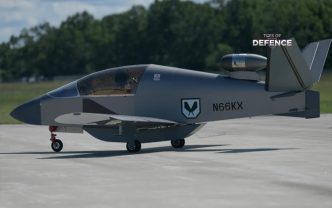
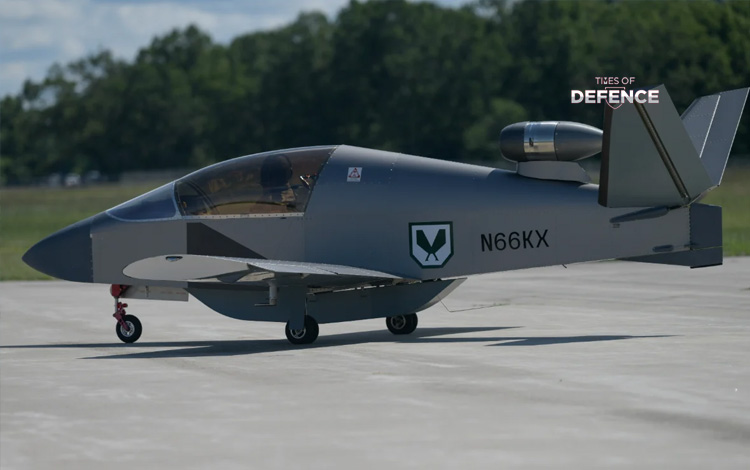
The contract modifications expand the USAF’s commercial Red Air and Close Air Support (CAS) training architecture through October 8, 2029. While legacy commercial adversary air (ADAIR) providers predominantly field fourth-generation and supersonic fighter platforms (e.g., F-16, F-21, Mirage F1, A-4 Skyhawk) to simulate high-end air-to-air adversaries, the inclusion of KestrelX marks a tactical pivot toward simulating low-observable, low-radar-cross-section (RCS) Unmanned Aerial Systems (UAS), asymmetric swarms, and low-altitude sub-sonic cruise missiles. KestrelX fields platforms like the SubSonex JSX-2 microjet (powered by a PBS TJ100 turbojet engine), providing high-agility, small-envelope threat replication for both frontline fighters and Joint Terminal Attack Controllers (JTACs).
TECHNICAL SPECIFICATIONS: CAF CAS RED AIR & THREAT REPLICATION ARCHITECTURE 
* Contracting Agency & Program Office: USAF Air Combat Command (ACC) AMIC (Langley AFB, VA)
* Contract Vehicle & Ceiling: Combat Air Force Contracted Air Support (CAF CAS) IDIQ ($5.4 Billion Ceiling through Oct 8, 2029)
* Newly Inducted Commercial Vendors:
* KestrelX LLC (Driggs, ID): Specialized UAS, low-observable target, and cruise missile threat replication
* A2G International LLC (Melbourne, FL): Manned/unmanned airborne ISR, CAS, and strike training
* Fleet Adversary Support and Training LLC (St. Augustine, FL): Fleet ADAIR and tactical air-to-ground support
* Threat Replication Platform Profile (KestrelX SubSonex JSX-2 Microjet):
* Airframe Architecture: Lightweight single-seat microjet (Empty Weight: ~227 kg / Max Gross: ~454 kg)
* Powerplant: 1 x PBS TJ100 turbojet engine (~290 lbf / 1.3 kN thrust)
* Kinematics & Envelope: Cruise Speed ~210 knot TAS (~390 km/h) | VNE ~249 knot TAS | G-limits +6.0/-3.0g
* Threat Emulation Role: Low-RCS cruise missile flight profile, Group 3/4 UAS maneuver simulation, and low-altitude optical/RF radar signature target
* Operational Scope & Integration:
* Missions: Red Air adversary simulation, Close Air Support (CAS) for ground JTACs, cruise missile defense (CMD) tracking, and multi-domain sensor integration
* Geographic Execution: Operational task orders executed across continental U.S. (CONUS) defense ranges and joint exercises (e.g., Exercise Northern Strike)
TIMES OF DEFENCE ASSESSMENT:
The U.S. Air Force’s decision to integrate non-traditional ADAIR providers like KestrelX into its $5.4 billion contract pool reflects a structural evolution in modern air combat training requirements. While legacy Red Air contracts prioritized supersonic fighter-on-fighter engagements, real-world operational threat profiles in Ukraine and the Indo-Pacific demonstrate that low-cost cruise missiles, loitering munitions, and uncrewed aerial systems pose an equally pressing challenge to integrated air defense architectures.
Utilizing microjets such as the JSX-2 to replicate small-RCS, low-altitude cruise missile flight profiles provides air force fighter squadrons and ground-based air defenders with realistic radar-tracking and engagement training at a fraction of the flight-hour cost of frontline fighters. Furthermore, leveraging contracted commercial assets for specialized threat simulation helps preserve flight hours on high-value F-35 and F-22 airframes, acting as an essential bridge until organic uncrewed aggressor platforms (such as Collaborative Combat Aircraft) achieve operational maturity.