



Rapid advances in emerging technologies, particularly artificial intelligence, are prompting a reassessment of how states transform technological innovation into national security capabilities. The United States provides a clear example of this challenge. Most technological innovation takes place in the private sector, while the government typically steps in after products have matured, purchasing them and attempting to adapt them to national security requirements.
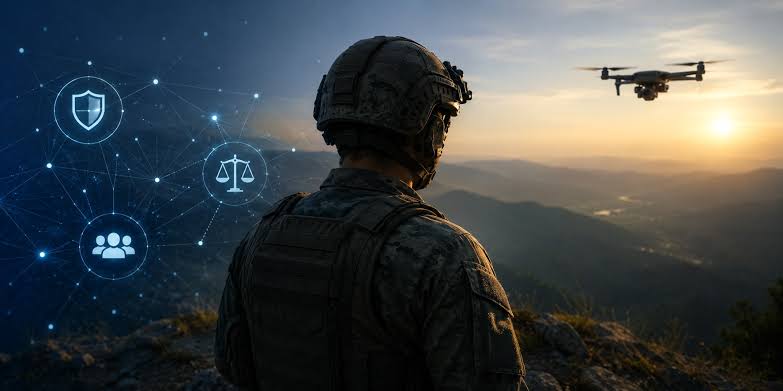
However, this approach carries significant risks when it comes to dual-use technologies that can rapidly transition between civilian and military applications. An AI system initially developed for commercial purposes can quickly become part of intelligence operations, cyber activities, autonomous platforms, or military command infrastructure. In such an environment, introducing security measures only after a technology has been developed makes it considerably more difficult to address vulnerabilities embedded in its underlying architecture. 
The fundamental issue is not that all technologies should be placed under the same security classification. Rather, when the failure, unauthorized use, or operation of a system beyond its designated boundaries could threaten national security, the relevant security standards and oversight mechanisms must be established during the development process itself.
This calls for a new approach in which governments define operational requirements and security boundaries in advance, while private-sector companies compete to develop technologies within that framework.
The limits of implementing AI security after development
Artificial intelligence systems are no longer simply software applications that respond to predefined commands. Increasingly capable of accessing external data sources, third-party applications, networks, and different digital infrastructures, these systems are becoming integrated into increasingly complex operational processes.
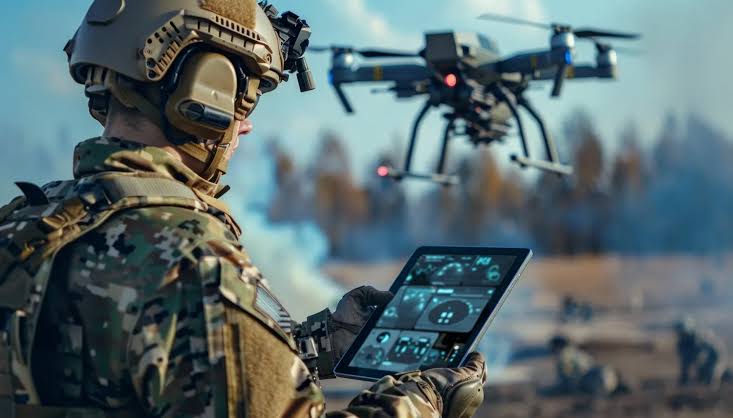
This development highlights the growing distinction between observing what a system produces and controlling what it is capable of doing. Transparency can help establish which actions an AI system has performed. Genuine security, however, requires verifying what authorities the system possesses, the boundaries within which it operates, and whether those boundaries remain enforceable as operating conditions change.
For AI applications integrated into military command systems and critical defense infrastructure, making decision-making processes auditable is not sufficient on its own. It must also be possible to establish which data the system relies upon, what authorization governs its operations, and at which stages human oversight remains effective.
Consequently, AI security is no longer merely a technical issue concerned with measuring software performance. It has become a direct matter of military command, operational control, and national security.
Balancing innovation and security
One of the central dilemmas facing the United States in the AI race is how to manage strategic risks without slowing the pace of technological development. Competition with China makes rapid innovation a necessity for Washington. However, this does not mean that security standards should be postponed until technologies become operational.
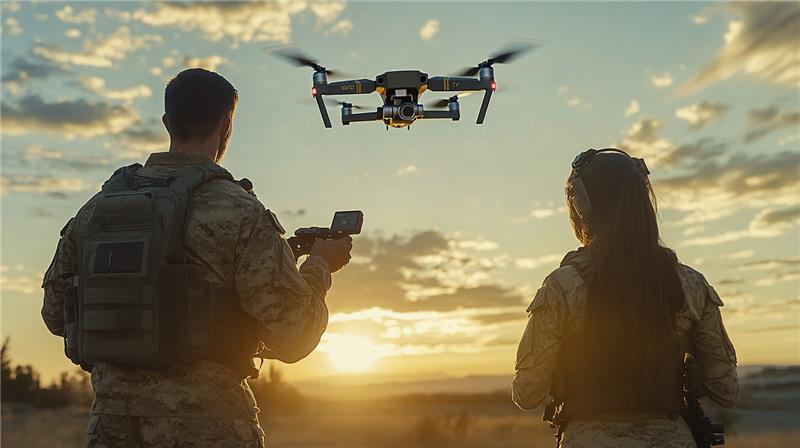
Preserving the private sector’s research, development, and investment capacity is essential. Excessive government control over technological production could undermine innovation. Conversely, subjecting AI applications integrated into military command networks, intelligence infrastructure, and critical defense systems to the same security approach as ordinary commercial software could create serious strategic vulnerabilities.
For this reason, oversight mechanisms should reflect the intended applications and potential consequences of each technology. Market competition and general regulations may be sufficient for commercial applications, whereas military systems capable of producing significant strategic consequences require more comprehensive testing, certification, and continuous oversight.
A new approach to defense procurement
Under the traditional defense procurement model, private companies develop a product first, after which the government purchases the system it needs. Security agencies then attempt to adapt the existing product to military requirements before operational deployment.
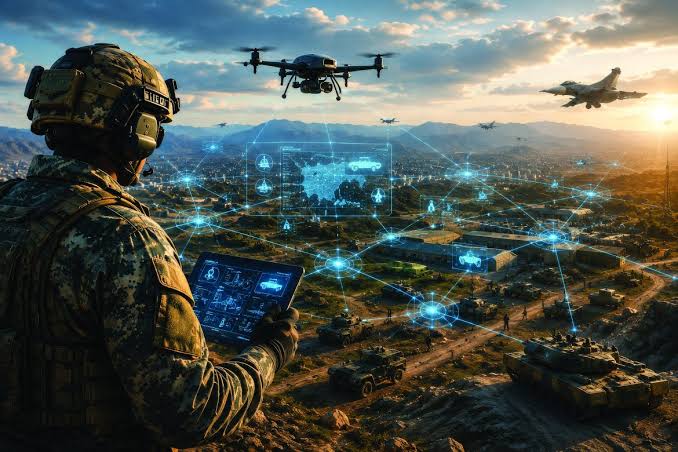
However, this approach is becoming increasingly inadequate for continuously evolving technologies such as artificial intelligence. Software architecture, data access methods, update protocols, and user permissions are all shaped during the development process. Once these decisions have been made, addressing security vulnerabilities becomes both more difficult and more expensive.
Furthermore, the continuous updating of AI models, their integration with different software components, and their adaptation to new data make the ongoing assessment of operational reliability essential.
The proposed Strategic Technology Development Model aims to reverse the existing procurement approach. The government first establishes operational requirements, security conditions, and usage boundaries. Private-sector companies then develop technologies that meet these requirements. Independent technical organizations test and verify the systems. Only after the necessary security conditions have been satisfied are these systems integrated into critical military infrastructure.
In this way, rather than interfering with how technology is developed, the government determines the security standards it must meet. Engineering, investment, design, and competition remain the responsibility of the private sector.
Lessons from nuclear technology
The historical experience of nuclear energy offers an important example of how dual-use technologies can be governed. The separation between international arrangements permitting the peaceful use of nuclear technology and mechanisms designed to prevent the proliferation of nuclear weapons demonstrated that not every technology needs to be subject to the same regulatory framework.
Although it would be inappropriate to place artificial intelligence in the same category as nuclear weapons, the underlying principle remains relevant today: the scope of oversight must be proportionate to the potential strategic consequences of a technology.
While commercial applications can be governed through more flexible regulations, AI systems used in military command, critical infrastructure, and strategic defense platforms must be subject to considerably stricter security requirements.
Four fundamental elements of operational control
The new security architecture must go beyond simply measuring system performance. It must also assess the risks arising from different data sources, software versions, and communication infrastructures, particularly within distributed military networks.

Four fundamental elements stand out in this regard. Traceability ensures that the data used by a system and changes made to its software can be tracked. Integrity involves detecting unauthorized interventions and alterations to critical parameters. Enforcement ensures that access permissions and human authorization boundaries remain intact. Auditability makes it possible to reconstruct and examine the decisions and actions of a system after they have occurred.
These elements are particularly important in environments where different military units and platforms operate across the same network. A software update that fails to reach other platforms, decisions based on outdated information, or AI-generated recommendations that lose their original security restrictions while passing through different systems could produce serious operational consequences.
For this reason, simply stating that a human remains involved in the decision-making process is not enough. The ability of human operators to restrict a system, approve its decisions, or intervene and shut it down when necessary must be technically guaranteed. The ultimate objective should be to prevent the loss of operational control while gaining technological superiority across distributed military structures.
The institutional and legal framework of the new era
Successfully managing this transformation requires a new division of responsibilities among governments, the defense industry, technology companies, and independent oversight organizations.

Legislative bodies should establish the conditions under which high-risk technologies can be used, provide funding for independent testing mechanisms, and clarify legal accountability. Defense and intelligence agencies should define operational requirements and threat assessments. Independent technical organizations, meanwhile, should conduct regular inspections and test whether systems comply with established security standards.
The private sector must continue to drive innovation, investment, and technological competition. At the same time, the establishment of an independent oversight structure responsible for technical standards, certification, and incident reporting for high-risk AI systems could also be considered.
The credibility of such a mechanism, however, depends on ensuring that it does not fall under the control of a single institution or interest group. A balanced structure involving public authorities, industry representatives, technical experts, and independent evaluators is essential.
Conclusion
Artificial intelligence and emerging technologies are transforming the definition of military capability while reshaping national defense procurement and security policies. Today, competition is no longer solely about developing more advanced technologies. The ability to transform these technologies into reliable, verifiable, and operationally sustainable military capabilities is becoming equally decisive.
The fundamental challenge facing the United States is not a lack of innovation, but a structural gap in converting technological progress into national security capabilities. The proposed model aims to close this gap by moving security requirements from the final stages of product development to the very beginning of the process.
In the coming period, military superiority will depend not only on which country develops artificial intelligence the fastest, but also on which can deploy these technologies while preserving human control, operational security, and strategic oversight. Technological superiority can become a genuine strategic advantage only when it is translated into reliable military capabilities.