

The Economist has highlighted Turkey’s growing strategic importance as the Middle East undergoes a major shift in its regional balance of power, pointing to Ankara’s expanding defense industry and pragmatic foreign policy as key elements of its influence.
The assessment comes amid broader debate over the changing role of the United States in the Middle East and the emergence of a more fragmented regional order.
According to the assessment attributed to The Economist, the traditional U.S.-led regional architecture is facing increasing pressure, while countries with the military, economic and diplomatic capacity to operate more independently are gaining greater room for maneuver.
Turkey stands out in this environment because of the combination of its geographic position, expanding defense-industrial base and increasingly flexible foreign policy.
Defense Industry as a Source of Strategic Influence
One of the most visible components of Turkey’s growing regional influence is its defense industry.
Over the past decade, Turkish companies have expanded their capabilities across unmanned aerial systems, precision-guided munitions, electronic warfare, air defense, naval platforms and armored vehicles.
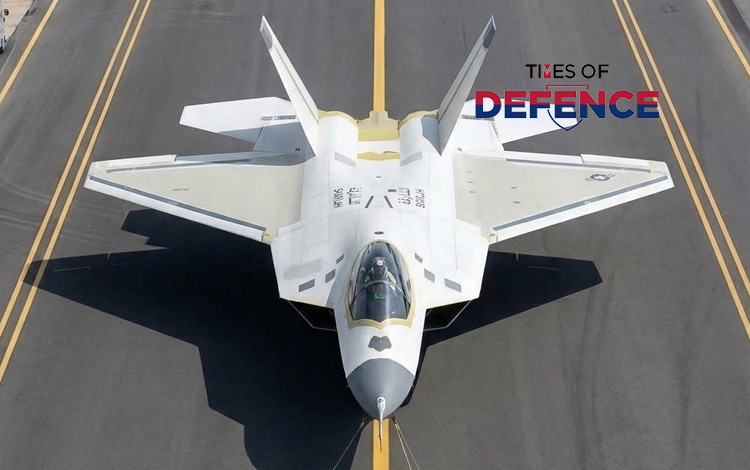
Systems such as the Bayraktar TB2, Bayraktar TB3 and Akıncı, alongside developments including Kızılelma, KAAN, naval combat platforms and indigenous missile systems, have expanded Turkey’s ability to produce and export military technology.
The significance extends beyond individual weapons.
A domestic defense-industrial ecosystem gives Ankara greater freedom to sustain military operations, develop capabilities according to its own requirements and build long-term defense partnerships with other countries.
Turkey has also expanded defense cooperation with countries across the Middle East, Caucasus, Central Asia, Africa and Europe.
Geography Gives Ankara Strategic Options
Turkey occupies a unique position between Europe, the Black Sea, the Caucasus and the Middle East.
It is a NATO member while maintaining working relationships with actors including Russia, Ukraine, Azerbaijan and countries in the Gulf.
That position allows Ankara to participate in multiple diplomatic and security channels simultaneously.
Its role in the Black Sea, Syria, Iraq, the Caucasus and the Eastern Mediterranean gives Turkey interests in several of the regions where major-power competition is concentrated.
This does not mean that Turkey controls the regional order. Rather, its geographic position gives Ankara a larger set of strategic options than many regional states.
A More Fragmented Middle East
The broader argument reflects a significant transformation in the Middle East.
For much of the modern era, regional security was heavily influenced by external powers. The United States remains a major military and diplomatic actor, with extensive forces, bases, alliances and security partnerships throughout the region.
However, regional powers have increasingly sought greater strategic autonomy.
Saudi Arabia, the United Arab Emirates, Iran, Israel, Qatar and Turkey have all developed their own regional strategies, while China and Russia have also expanded their diplomatic and economic involvement.
The result is a more complicated balance in which influence is increasingly distributed among several actors rather than concentrated in a single external power.
Turkey’s Role Is Not Without Constraints
The growing influence attributed to Turkey should not be interpreted as evidence that Ankara is about to replace the United States as the dominant power in the Middle East.
Turkey still faces significant economic, military and diplomatic constraints, while the United States retains capabilities and alliances that no regional actor currently matches.
The Turkish defense industry is also still dependent on foreign technologies and components in several areas, despite rapid progress toward greater domestic production.
Likewise, Ankara’s relationships with regional powers are often based on pragmatic cooperation rather than permanent alignment.
The Strategic Shift
What is changing is the number of actors capable of shaping regional outcomes independently.
Turkey’s expanding defense-industrial capacity gives it additional tools of influence, while its diplomatic approach allows Ankara to maintain relationships with competing powers.
If the regional order continues moving toward greater strategic autonomy among Middle Eastern states, Turkey is positioned to be one of the countries with substantial influence over that transition.
The Economist’s broader analysis of the changing geopolitical environment emphasizes that the international order is becoming more fragmented and that America’s role is evolving under the current administration.
The key question is therefore not simply whether U.S. influence is disappearing, but how regional powers will use the additional strategic space created by a changing Middle Eastern order. Turkey’s defense-industrial expansion, geographic position and diplomatic flexibility make it an important actor in that process—but not an automatic replacement for the United States.