


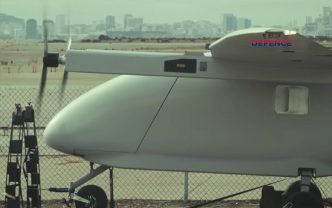
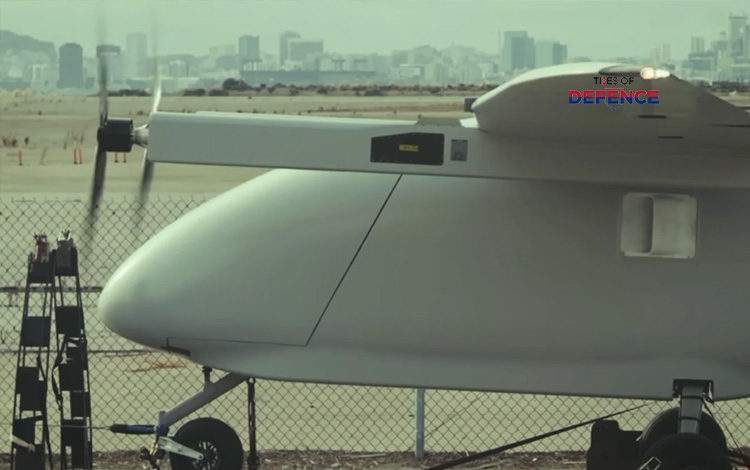
California-based autonomous aviation developer Pyka announced on November 22, 2026, that a second DropShip hybrid-electric unmanned cargo airframe has rolled off the production line and completed ground testing, moving next into flight testing and operational demonstrations as the programme advances toward serial production seven months after the maiden flight of the first prototype.
Building on milestones achieved by the initial DropShip airframe—which first flew on April 27, 2026, in Alameda, executed autonomous parachute drops of multiple 91 kg (200 lb) loads from 91 meters (300 feet) within 15 meters (50 feet) of target in June 2026, flew an uncrewed 32 km (20-mile) resupply sortie from Gulfport to Diamondhead, Mississippi, during a U.S. Army Reserve exercise, and supported logistics operations during the U.S. Army’s Project Convergence Capstone 6—the rollout of a second airframe expands Pyka’s test and validation capacity ahead of serial manufacturing. Supported in part by an AFWERX Direct-to-Phase II U.S. Air Force innovation award and leveraging autonomy software and electric propulsion heritage from Pyka’s Pelican 2 platform, DropShip is engineered to move critical supplies into contested, austere, or high-risk environments without exposing pilots or ground convoys.
TECHNICAL SPECIFICATIONS: PYKA DROPSHIP AUTONOMOUS CARGO AIRCRAFT
1. Propulsion, Payload Capacity & Flight Performance
⚡ Prime Developer & Heritage: Pyka (Alameda, California); adapts autonomous flight control software and electric propulsion architecture proven on the Pelican 2 agricultural UAS, backed by AFWERX Direct-to-Phase II support
⚡ Weight & Payload Envelope: Maximum takeoff weight of ~635 kg (1,400 lbs) in initial reported test baseline (up to 1,600 lbs in expanded hybrid specification), with usable cargo capacity up to ~249 kg (550 lbs) and a 58 cu ft modular mission bay
⚡ Range, Speed & Ceiling: Ferry range exceeding 5,600 km (3,500 miles) and over 1,000 miles with heavy cargo loads, cruise/sprint speeds around 70 to 90 knots, and service ceiling up to 20,000 feet MSL
⚡ Hybrid-Electric & Low-Signature Mode: Combines heavy-fuel/diesel-driven generation with electric propulsion, supporting short/austere runway operations and low-noise electric operation for sensitive terminal approaches or loiter 
2. Precision Airdrop, Multi-Mission Bay & Field Trials
💥 Autonomous Precision Parachute Drop: Capable of releasing cargo payloads—such as multiple 91 kg (200 lb) bundles from ~91 m (300 ft)—landing within ~15 m (50 ft) of designated targets without requiring a landing strip at the drop zone
💥 Modular Mission Bay & Reconfigurability: Open-architecture payload bay supports field rations, medical supplies, communications relays, ISR sensors, or emergency response/CASEVAC configurations
💥 Operational Exercise Validation: Tested in U.S. Army Reserve scenarios and Project Convergence Capstone 6, moving from single-airframe proof of concept to multi-airframe flight testing and demonstrations ahead of serial production
TIMES OF DEFENCE ASSESSMENT
Pyka’s rollout and ground-test completion of a second DropShip airframe on the path to serial production highlights three critical shifts in contested logistics, uncrewed resupply, and defense manufacturing scaling:
1. Moving Beyond Single-Prototype Risk Toward Multi-Airframe Scaling: Transitioning from a single test airframe to a second completed aircraft—seven months after first flight—reduces single-point testing bottlenecks and validates repeatable assembly processes needed for serial production.
2. Reducing Exposure in Contested Logistics Through Standoff and Precision Airdrop: Delivering up to 249 kg (550 lbs) of rations, medical gear, or mission supplies via uncrewed flight and precision parachute drops allows forces to sustain forward or dispersed units without risking manned aircraft crews or vulnerable ground convoys.
3. Adapting Commercial Autonomy and Hybrid Propulsion for Military Sustainment: Carrying over flight-control software and electric propulsion experience from commercial operations into military exercises like Project Convergence Capstone 6 illustrates how dual-use autonomy firms are compressing development timelines for austere logistics.

