


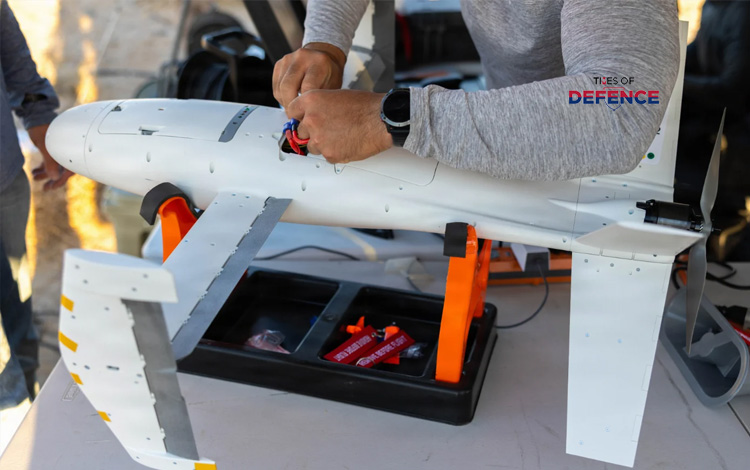
The U.S. Department of Defense (DoD) is engaged in preliminary discussions with General Motors (GM), Ford Motor Company, Canadian automotive supplier Magna International, and other industrial manufacturers about supplying subcomponents to scale mass production of military unmanned aerial vehicles (UAVs), according to reporting published on November 24, 2026.
No contracts or binding agreements have been finalized, and automotive executives have expressed mixed reactions regarding margins, program fit, and congressional funding predictability. The outreach aligns with Defense Secretary Pete Hegseth’s late-September 2026 drone consolidation push—including Project Agincourt and plans toward a four-star Autonomous Warfare Command—as well as U.S. Army efforts to acquire millions of drones over the coming years (including a November 2026 solicitation for 400 one-way attack drones capped at $3,000 each with potential scaling up to 10,000 units in Army depots) while reducing reliance on Chinese-origin drone parts in a projected $20 billion to $30 billion annual military drone market.
TECHNICAL SPECIFICATIONS: PENTAGON–AUTOMOTIVE DRONE SUPPLY-CHAIN INITIATIVE
1. Industrial Scope, Component Categories & Acquisition Context
⚡ Defense Contracting & Policy Context: Preliminary DoD talks with General Motors, Ford, Magna International, and non-automotive manufacturers alongside Project Agincourt (initiated September 30, 2026) and U.S. Army low-cost one-way attack drone initiatives (400 initial units capped at $3,000 each, with top performers potentially building up to 10,000 units in Army depots)
⚡ Target Subsystems & Parts: Proposed supply of motors/engines, actuators, sensors, and lidar to established unmanned aircraft manufacturers rather than replacing specialized drone prime contractors
⚡ GM & Automotive Defense Precedent: GM is evaluating drone motor manufacturing following GM Defense’s September 2026 delivery of PAC-3 MSE missile housing components to Lockheed Martin (22 days after contract signing) and discussions involving RTX and L3Harris; Ford has indicated its Pentagon talks center on military vehicles and satellites, while Magna has not confirmed participation 
2. Scaling Economics, Supply-Chain Resilience & Commercial Trade-Offs
💥 Demand Scale & Market Projection: Driven by DoD plans to procure millions of surveillance and strike drones over coming years against a projected $20 billion to $30 billion annual military drone market, where smaller domestic UAV makers face factory capacity bottlenecks
💥 Supply-Chain De-Risking: Aims to expand high-volume domestic and allied manufacturing for propulsion, actuation, and sensing hardware while mitigating supply-chain exposure to Chinese-made components
💥 Margin & Governance Constraints: Expendable or low-cost drones carry thin unit margins compared to passenger vehicles or high-end defense systems, alongside commercial concerns over variable defense order cycles, annual congressional appropriations, and reputational considerations
TIMES OF DEFENCE ASSESSMENT
Preliminary Pentagon discussions with General Motors, Ford, and Magna International regarding military drone components highlight three critical tensions in modern defense-industrial scaling, supply-chain security, and commercial-defense convergence:
1. Bridging the Factory-Scale Gap Between Small UAV Makers and Mass Demand: Many U.S. unmanned aircraft companies lack high-rate automotive-grade manufacturing capacity to deliver drones in the millions; tapping automotive precision machining, motor, and actuator supply chains addresses a real volume bottleneck.
2. Reconciling Low-Margin Expendable Hardware With Automaker Economics: Unlike high-margin vehicles or complex missile housings, small expendable strike and reconnaissance drones often carry tight margins, making commercial profitability and multi-year demand stability decisive hurdles for automakers.
3. Advancing Non-Chinese Component Sourcing Alongside Acquisition Reform: Pairing high-volume non-traditional manufacturing with initiatives like Project Agincourt and depot-level scaling reflects an effort to build resilient domestic/allied supply chains for critical motors, sensors, and actuators without waiting years for traditional defense primes alone.

