



OREGON, United States — The Oregon Army National Guard has completed a major organizational transformation, redesignating its 3rd Battalion, 116th Cavalry Regiment as the 2nd Battalion, 186th Infantry Regiment and converting the former armored formation into Oregon’s first Mobile Infantry Battalion.
The redesignation ceremony took place on September 12, 2026, in La Grande, Oregon. The change reconnects the unit with an infantry lineage dating back to 1888 while moving it away from its previous heavy-armored structure.
The transition is part of a much broader U.S. Army effort to create Mobile Brigade Combat Teams (MBCTs) that are lighter, faster and more dispersed than traditional armored formations.
The Army’s own transformation literature describes the MBCT concept as emphasizing mobility, dispersion, speed, depth and layered lethality, with extensive use of unmanned aerial systems and new light vehicles.
From Abrams and Bradley to Mobile Infantry
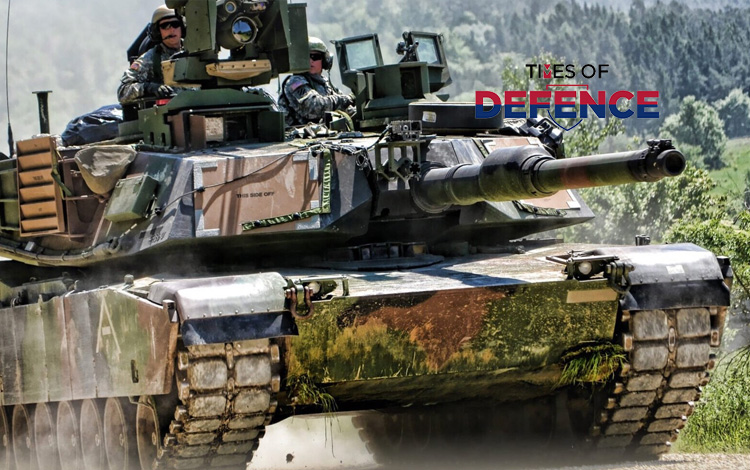
The Oregon battalion previously operated as an armored/cavalry formation equipped around the M1A2 Abrams main battle tank and M2 Bradley fighting vehicle.
Under the new structure, the battalion is moving toward a much lighter force centered on Infantry Squad Vehicles (ISVs), increased unmanned-system employment and dispersed infantry operations.
The change represents a fundamental shift in battlefield philosophy.
The Abrams provides:
- Heavy armor protection
- 120 mm direct fire
- High battlefield survivability
- Powerful anti-armor capability
- Ability to lead mechanized formations through contested terrain
The ISV, by contrast, is primarily a mobility platform. It gives infantry a rapid means of moving across difficult terrain but does not attempt to replicate the Abrams’ armor or direct-fire capability.
The Army explicitly describes the ISV as a light, unarmored vehicle designed to transport a nine-soldier infantry squad and its equipment, prioritizing speed and agility rather than armor and firepower.
The Infantry Squad Vehicle
The Infantry Squad Vehicle (ISV) is one of the central pieces of the Army’s new mobile infantry concept.
The vehicle is designed to move an entire infantry squad rapidly across rugged terrain and support distributed operations.
ISV — Key Characteristics
Role: Ultra-light infantry mobility vehicle
Crew/passenger capacity: 9 Soldiers
Protection: Light/unarmored
Primary function: Rapid infantry transport
Design priority: Mobility and agility
Operational concept: Distributed/light infantry operations
The Army has described the ISV as an ultra-light tactical vehicle capable of carrying nine passengers and their equipment. The vehicle’s development was deliberately accelerated through the Army’s Transformation in Contact approach, which uses commercial technology and continuous soldier feedback to field capabilities more rapidly.
Unlike an Abrams, the ISV is not intended to fight as a heavily protected assault vehicle.
Its value comes from allowing infantry units to move quickly, disperse, relocate and exploit terrain without the enormous transportation and sustainment requirements associated with heavy armor.
Why the Army Wants More Mobility
The transformation reflects a fundamental change in how U.S. ground forces expect to operate against technologically sophisticated opponents.
Modern battlefields are increasingly characterized by:
- Persistent drone surveillance
- FPV attack drones
- Loitering munitions
- Long-range precision fires
- Electronic warfare
- Satellite and aerial reconnaissance
- Rapid targeting cycles
- Dispersed formations
An armored formation that concentrates large numbers of expensive vehicles can become highly visible to enemy sensors.
The MBCT concept therefore emphasizes dispersion and rapid movement.
U.S. Army publications specifically describe the new mobile brigade as a formation designed to be “light, lean, and lethal”, with unmanned systems providing additional reconnaissance and precision effects.
Ukraine’s Influence — But Not a Simple “Tank Is Dead” Lesson
The war in Ukraine has demonstrated the vulnerability of armored vehicles to persistent drone observation, FPV attacks, artillery and precision fires.
However, the Oregon transformation should not be interpreted as evidence that the U.S. Army believes tanks are obsolete.
In fact, U.S. commanders and Army analysis continue to emphasize the value of armor when it is properly integrated with concealment, electronic warfare, counter-UAS capabilities, infantry and supporting fires.
Recent U.S. training involving Ukrainian unmanned-systems personnel has reinforced this more nuanced lesson: armor remains valuable for protection, mobility and firepower, but its employment must change significantly in a drone-saturated environment.
The more accurate interpretation is therefore:
The U.S. Army is diversifying its force structure rather than abandoning armored warfare altogether.
A Much Larger Army Transformation
The Oregon battalion’s transformation is part of a much larger restructuring.
The Army’s current plan calls for 25 infantry brigades to transition into Mobile Brigade Combat Teams over the transformation period.
Several active-duty formations and National Guard units have already begun or completed the conversion.
The Indiana National Guard’s 76th Mobile Brigade Combat Team and Virginia National Guard’s 116th Mobile Brigade Combat Team are among the National Guard formations already involved in the transition.
The transformation is intended to create formations capable of moving much faster than traditional light infantry while avoiding the enormous weight and logistics requirements of armored brigades.
The MBCT Concept
The Mobile Brigade Combat Team sits between traditional light infantry and heavier armored formations in terms of mobility and combat structure.
Its core characteristics include:
Mobility
ISVs allow infantry squads to rapidly reposition rather than relying primarily on foot movement.
Dispersion
Smaller and lighter formations can spread across larger areas, reducing the vulnerability of concentrated formations to precision fires.
Unmanned Systems
Drones provide reconnaissance, targeting, surveillance and potentially lethal effects.
Electronic Warfare
New mobile formations are incorporating electromagnetic warfare capabilities directly into maneuver formations.
Layered Fires
Because lighter formations sacrifice some organic heavy direct-fire capability, they require integration with mortars, artillery, aviation, unmanned systems and other supporting fires.
Army doctrine and professional publications explicitly recognize this tradeoff. The MBCT gains mobility but must solve the problem of providing sufficient organic or supporting fires to exploit that mobility.
ISV Becomes More Than a Transport Vehicle
The ISV is also evolving into a platform for additional capabilities.
In April 2026, the Army demonstrated the integration of the Tactical Electronic Warfare System–Infantry (TEWS-I) onto an ISV with the 101st Airborne Division.
The configuration provides a mobile electromagnetic-warfare capability that can detect, identify and disrupt enemy signals while maneuvering with infantry formations.
The Army is also experimenting with ISV-based support for weapons and other mission equipment.
This suggests that the vehicle family could become a modular foundation for multiple battlefield functions rather than simply serving as infantry transportation.
What Is Lost by Giving Up Abrams?
The transformation provides mobility, but it also involves significant tradeoffs.
An M1A2 Abrams offers capabilities that an ISV cannot reproduce:
Protection: Abrams armor provides dramatically greater protection against small arms, fragments and many battlefield threats.
Firepower: Its 120 mm main gun provides powerful direct-fire effects against armored and fortified targets.
Shock action: Heavy armored vehicles can breach and assault positions while protected from threats that would be extremely dangerous to exposed infantry.
Survivability: Although tanks are vulnerable to modern drones and precision weapons, their armor and active protection capabilities still provide advantages unavailable to light vehicles.
The new formation therefore cannot simply perform the same missions as an armored battalion.
Its strength is instead speed, dispersion and reduced logistical footprint.
The Logistics Equation
Weight is a major factor.
An M1A2 Abrams weighs roughly 70+ tons, depending on configuration.
Moving and sustaining such a vehicle requires specialized transporters, fuel, maintenance equipment, recovery vehicles and significant logistical support.
The ISV is dramatically lighter and can be transported and deployed much more easily.
This is particularly important for National Guard formations, which must maintain readiness with substantially less continuous training time than active-duty units.
Army professional literature notes that National Guard formations have specific challenges during the transition because of limited training time and resources.
The Drone-War Lesson
The most important lesson emerging from Ukraine is not simply that “tanks are vulnerable.”
It is that battlefield survival increasingly depends on the ability to:
See without being seen.
Move before the enemy can target you.
Disperse before precision fires arrive.
Use drones to find and strike enemy forces.
Employ electronic warfare and counter-UAS systems.
Integrate fires across multiple domains.
The new U.S. Army mobile formations are being designed around these principles.
What Happens to the Abrams?
The Oregon transformation does not mean that Abrams tanks are being removed from the entire U.S. Army.
The United States continues to maintain Armored Brigade Combat Teams and modernize the Abrams fleet.
The Army’s force structure is instead moving toward a more diverse mix of:
- Armored Brigade Combat Teams
- Stryker formations
- Mobile Brigade Combat Teams
- Airborne and air-assault forces
- Unmanned systems
- Long-range fires
- Electronic warfare formations
The objective is to ensure that the Army can select the appropriate force structure for different operational environments.
Bottom Line
The Oregon National Guard’s transition from an Abrams/Bradley-centered formation to a lighter mobile infantry structure is one of the clearest examples of the U.S. Army’s ongoing transformation for the drone-dominated battlefield.
But calling it an “abandonment of the Abrams because Ukraine exposed its weaknesses” oversimplifies the change.
The more significant story is the emergence of a multi-tiered Army in which heavy armor remains available for missions requiring protection and firepower, while lighter mobile formations provide speed, dispersion and reduced logistical demands.
The battlefield lesson from Ukraine is therefore not necessarily “replace tanks with light vehicles.”
It is increasingly:
“Do not let the enemy find you, target you and destroy you before you can maneuver and strike.”
