

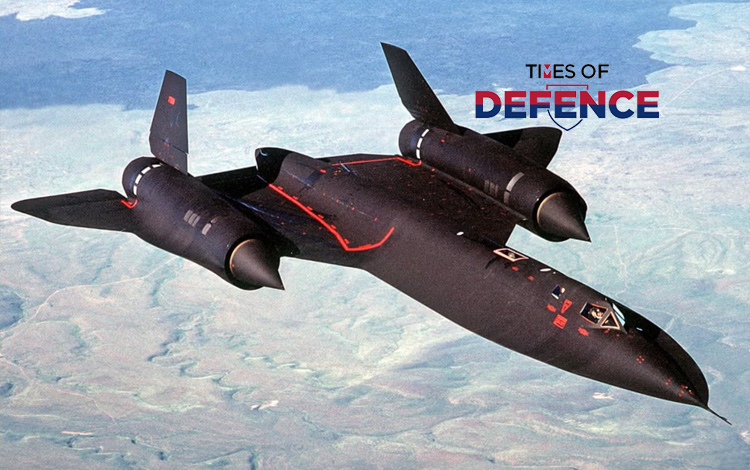
EDWARDS AIR FORCE BASE, Calif. — NASA is evaluating preliminary feasibility pathways to restore the final operational Lockheed SR-71A Blackbird (tail number 844 / USAF serial 61-7980) to airworthy flight status. The aircraft, which served as NASA’s primary high-speed and high-altitude research platform until its last flight in October 1999, was recently relocated from an outdoor static display at NASA Armstrong Flight Research Center into a hangar facility. Reports indicate NASA has initiated outreach to former SR-71 program personnel and specialized engineers to gauge interest and assess technical requirements for a potential return-to-flight restoration initiative.
As the last Blackbird constructed and the final airframe of the fleet to fly, airframe #844 represents the primary candidate for high-speed flight research reactivation. Reactivating the platform after a 27-year hiatus presents substantial technical and industrial hurdles, including restoring specialized ground support infrastructure, sourcing JP-7 thermal stability fuel, recertifying legacy Pratt & Whitney J58 engines, and modernizing life-support and flight control systems. If reactivated, the aircraft would support NASA’s expanding high-speed experimental (X-plane) research portfolio, serving as a flight testbed for hypersonic propulsion, advanced thermal protection systems, and high-altitude aerodynamic models at speeds above Mach 3.2 and altitudes exceeding 85,000 feet.
TECHNICAL SPECIFICATIONS: LOCKHEED SR-71A BLACKBIRD (NASA #844 / USAF 61-7980)
* System Classification: Twin-Engine Supersonic / High-Altitude Research & Strategic Reconnaissance Aircraft
* Design Authority & Manufacturer: Lockheed Skunk Works
* Production & Fleet Status: 32 total airframes produced; airframe #844 was the final SR-71 built and the last to fly (October 9, 1999)
* Primary Role & Mission Envelope: High-speed, high-altitude research testbed (including Linear Aerospike SR-71 Experiment / LASRE) and atmospheric flight testing
* Airframe & Material Architecture:
* Length: 32.74 meters (107 ft 5 in)
* Wingspan: 16.94 meters (55 ft 7 in)
* Height: 5.64 meters (18 ft 6 in)
* Structural Composition: ~85% titanium alloy structure with radar-absorbent composite skin elements
* Mass Parameters:
* Empty Weight: ~30,600 kg (67,500 lbs)
* Maximum Take-Off Weight (MTOW): ~78,000 kg (172,000 lbs)
* Powerplant & Propulsion Suite:
* Engines: 2x Pratt & Whitney J58 (JT11D-20J) continuous-afterburning bleed-bypass turbojets
* Static Thrust: 32,500 lbf (144.6 kN) per engine with afterburner
* Specialized Fuel: Low-volatility, thermally stable JP-7 jet fuel with triethylborane (TEB) chemical ignition
* Flight Performance Envelope:
* Maximum Cruise Speed: Mach 3.2+ (~3,540 km/h / 2,200 mph)
* Service Ceiling: >25,900 meters (>85,000 feet)
* Operational Range: ~5,400 km (2,900 nautical miles) without aerial refueling
* Research Payload Integration: Upper-fuselage equipment mounting points for aerodynamic test rigs, high-speed flight sensors, and high-altitude sampling instruments