


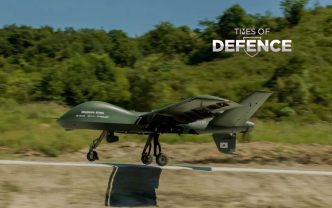
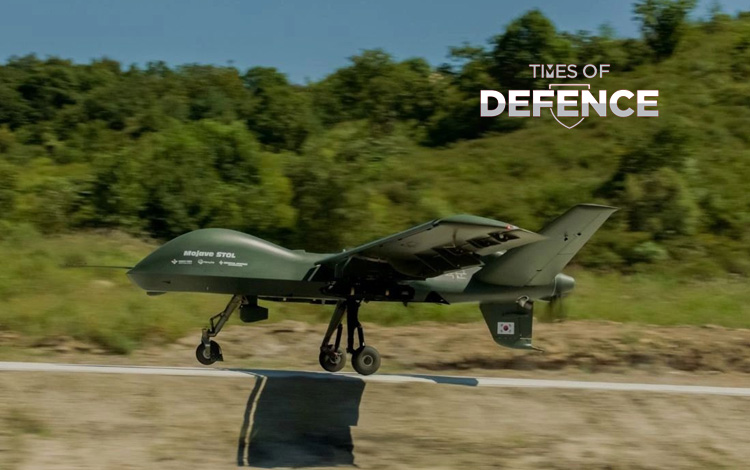
POCHEON, South Korea — Hanwha Aerospace and General Atomics Aeronautical Systems, Inc. (GA-ASI) have successfully demonstrated the Mojave Short Takeoff and Landing (STOL) unmanned aerial system (UAS) in South Korea, highlighting its ability to operate effectively from short, rugged, and semi-prepared locations.
The live flight demonstration took place during the 2026 Defense Drone Technology Exhibition in Pocheon. Operating under realistic field conditions, the Mojave took off from an Army airfield, executed a tactical landing on an active dirt tank maneuver route, and subsequently took off from the unpaved surface to return to base.
Strategic Localization and Manufacturing Plans
To support long-term regional defense needs and secure local supply chains, Hanwha Aerospace plans to establish dedicated research and development (R&D) as well as production infrastructure in South Korea. The company has set a target of achieving more than 70% domestic production content when the unmanned system transitions into mass production.
The successful flight marks a significant milestone in the ongoing collaboration between Hanwha Aerospace and GA-ASI to introduce advanced autonomous capabilities to the Korean peninsula and the broader region.
Technical Specifications and Operational Capabilities
-
Propulsion: Powered by a 450-horsepower Rolls-Royce M250 turboprop engine.
-
Short-Field Aerodynamics: Equipped with specialized high-lift wing configurations, leading-edge slats, and double-slotted flaps that allow takeoffs and landings in under 400 feet (approx. 120 meters).
-
Payload Capacity: Maximum payload capacity of up to 3,600 lbs (1,633 kg), capable of carrying up to 16 AGM-114 Hellfire missiles or various advanced sensor payloads.
-
Flight Endurance: Maximum endurance of up to 25 hours depending on payload and fuel weight.
-
Mission Versatility: Designed for intelligence, surveillance, and reconnaissance (ISR), close air support (CAS), forward tactical logistics, and communications relay.
-
Expeditionary Footprint: Built for operations from unimproved dirt strips, forward operating bases, and naval flight decks without requiring catapults or arresting gear.
