


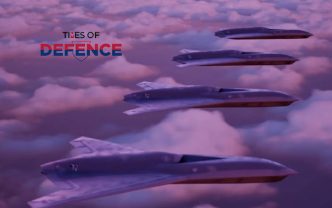
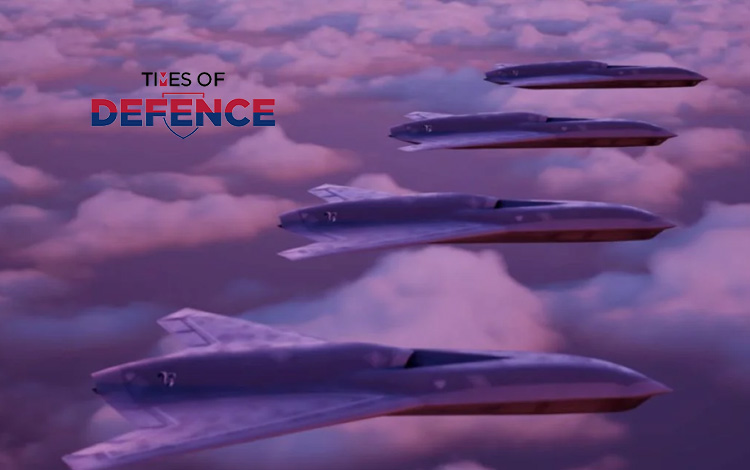
WASHINGTON — Lockheed Martin’s Skunk Works has significantly expanded development of its Vectis Collaborative Combat Aircraft (CCA), announcing plans to build four additional aircraft on top of the original prototype. The move brings the planned Vectis fleet to five aircraft as Lockheed accelerates flight testing and production development ahead of a targeted first flight by the end of 2027.
The announcement was made during the Air, Space & Cyber Conference in September 2026, where Lockheed Martin also displayed a full-scale Vectis model publicly for the first time. The company describes the aircraft as a clean-sheet, internally funded program designed for survivability, lethality, adaptability and autonomous operation in highly contested environments.
From One Prototype to Five
Lockheed Martin initially unveiled Vectis in September 2025. At that stage, the company presented it as an internally funded Group 5 uncrewed combat aircraft intended to operate independently or alongside crewed aircraft.
The latest decision to build four additional aircraft is significant because Lockheed says the additional vehicles will not simply support flight testing. The company is also using the expanded production effort to mature manufacturing processes and shorten the transition from design to production.
According to Lockheed Martin, the Vectis development team moved from its first drawing to a wind-tunnel fly-off in less than two months, completed the first digital build in six months and released the first physical part after eight months. The first prototype remains scheduled to fly by the end of 2027.
A Stealth-Focused CCA
Vectis has been designed around a tailless lambda-wing configuration with a single engine and an internal weapons bay.
One of the most distinctive features visible on the latest configuration is the submerged dorsal air inlet. Rather than using a conventional exposed intake, the engine inlet is recessed into the upper fuselage.
Lockheed has highlighted several potential benefits. The configuration can contribute to a low-observable design while reducing frontal drag, and positioning the inlet on top of the aircraft can reduce the risk of foreign-object ingestion when operating from austere or less-prepared airstrips.
The combination of a tailless airframe, internal weapons carriage and carefully integrated propulsion system reflects Skunk Works’ emphasis on survivability in contested airspace.
However, Lockheed Martin has not publicly released a radar-cross-section figure, and many key performance parameters remain undisclosed.
Dimensions and Classification
Vectis is understood to be a Group 5 UAS, the largest category in the U.S. military’s UAS classification system.
Publicly reported dimensions are approximately:
- Length: ~34 ft / 10.4 m
- Wingspan: ~38 ft / 11.6 m
- Configuration: Tailless, lambda-wing
- Engine: Single turbofan
- Weapons: Internal weapons bay
- Category: Group 5 UAS / CCA
The aircraft is therefore considerably larger than many conventional tactical UAVs and is closer in scale to a fighter-sized unmanned combat aircraft.
Importantly, maximum takeoff weight, combat radius, endurance, maximum speed, service ceiling and payload capacity have not been publicly disclosed by Lockheed Martin. Some figures circulating online should therefore be treated as estimates rather than confirmed specifications.
Williams FJ44-4 Turbofan
The Vectis prototype is scheduled to fly with a Williams International FJ44-4 turbofan.
Lockheed Martin selected the engine because it is a mature and commercially proven design, allowing the Skunk Works team to accelerate the prototype program rather than develop an entirely new propulsion system.
The FJ44-4 provides more than 3,600 pounds of thrust from a compact twin-spool architecture. Lockheed says the engine provides the propulsion necessary for the prototype’s targeted speed, range and endurance requirements.
The use of a mature commercial-derived engine is also consistent with the program’s emphasis on affordability and rapid development.
Internal Weapons Bay
Vectis has been designed with an internal weapons bay, allowing weapons to be carried without requiring external pylons that could increase aerodynamic drag and radar signature.
Public imagery and reporting have associated the design with weapons such as:
- AIM-120 AMRAAM
- GBU-53/B Small Diameter Bomb II
However, these should be treated as potential or planned weapon integrations rather than confirmed operational loadouts. Lockheed Martin has not released a definitive public weapons list or stated that Vectis has completed weapons testing.
The internal bay also gives the aircraft a degree of configuration flexibility that could support different missions without fundamentally redesigning the airframe.
Multi-Mission Architecture
Lockheed Martin is not positioning Vectis as a single-purpose attack drone.
The company describes the aircraft as a multi-mission autonomous platform capable of supporting:
ISR → Electronic Warfare → Precision Strike → Offensive Counter-Air → Defensive Counter-Air
The flexible architecture is intended to allow customers to modify mission systems and payloads as requirements evolve.
Lockheed’s official description also emphasizes that Vectis can operate independently or cooperate with crewed aircraft such as the F-35 and future next-generation combat aircraft.
This is the central idea behind the CCA concept: instead of replacing crewed fighters, unmanned aircraft can extend their sensor coverage, weapons reach and tactical options.
Autonomy and Human-Machine Teaming
Vectis is being developed around autonomous operation and integration with crewed aircraft.
Lockheed has described the aircraft as capable of operating as part of a broader family of systems, in which autonomous aircraft can cooperate with crewed fighters and other unmanned platforms.
The company has not publicly disclosed the complete autonomy software architecture or detailed levels of autonomous decision-making. Therefore, claims that Vectis will independently perform complex combat decisions should not be presented as an established operational capability.
An Internally Funded Gamble
One of the most notable aspects of Vectis is that Lockheed Martin is funding the development itself rather than developing the aircraft under a publicly announced production contract.
That gives Skunk Works considerable freedom to shape the design and accelerate development, while also allowing the company to position Vectis for future U.S. and international requirements.
The company has said it is targeting a competitive CCA price point, but no official Vectis unit price has been announced.
Where Vectis Fits Into the CCA Competition
Vectis is part of a rapidly developing U.S. effort to introduce autonomous combat aircraft capable of working alongside manned fighters.
For CCA Increment 1, the U.S. Air Force selected the YFQ-42A from General Atomics and YFQ-44A from Anduril for production.
Vectis is therefore not currently an Increment 1 production aircraft. Instead, Lockheed is developing it independently while positioning the platform for future CCA requirements and potentially other U.S. or allied applications.
That distinction is important: Vectis is a developmental aircraft, not an operationally deployed combat drone.
Technical Snapshot
| Feature | Vectis |
|---|---|
| Manufacturer | Lockheed Martin Skunk Works |
| Type | Collaborative Combat Aircraft |
| Classification | Group 5 UAS |
| Configuration | Tailless lambda-wing |
| Length | ~10.4 m / 34 ft |
| Wingspan | ~11.6 m / 38 ft |
| Engine | Williams International FJ44-4 |
| Engine thrust | >3,600 lbf |
| Propulsion | Single turbofan |
| Air intake | Submerged dorsal inlet |
| Weapons carriage | Internal weapons bay |
| Potential weapons | AIM-120 / GBU-53/B reported |
| Missions | ISR, EW, strike, counter-air |
| Autonomy | Designed for autonomous operation |
| Crew integration | F-35 and future crewed platforms |
| Prototypes | 5 planned |
| First flight | Targeted by end of 2027 |
| Funding | Internally funded by Lockheed Martin |
| Operational status | Developmental |
Could Vectis Change Air Combat?
Vectis could become an important part of the evolution toward human-machine teaming, but it is too early to describe it as a proven game-changing combat system.
The aircraft has not yet flown, its weapons and sensors have not been publicly demonstrated in operational conditions, and critical performance figures remain undisclosed.
What is already significant is the development philosophy: a relatively large, stealth-oriented autonomous aircraft designed from the beginning to operate alongside fifth-generation and future combat aircraft, while using digital engineering and advanced manufacturing to accelerate production.
The decision to build five aircraft instead of one gives Lockheed Martin substantially more hardware with which to conduct flight testing, mature autonomy and validate manufacturing processes.
If Vectis reaches its 2027 first-flight target and subsequently demonstrates the survivability, autonomy, affordability and mission flexibility envisioned by Skunk Works, it could become a serious candidate for future CCA requirements. For now, however, its battlefield effectiveness remains to be demonstrated.
