


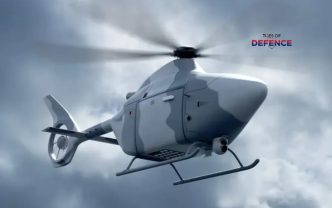
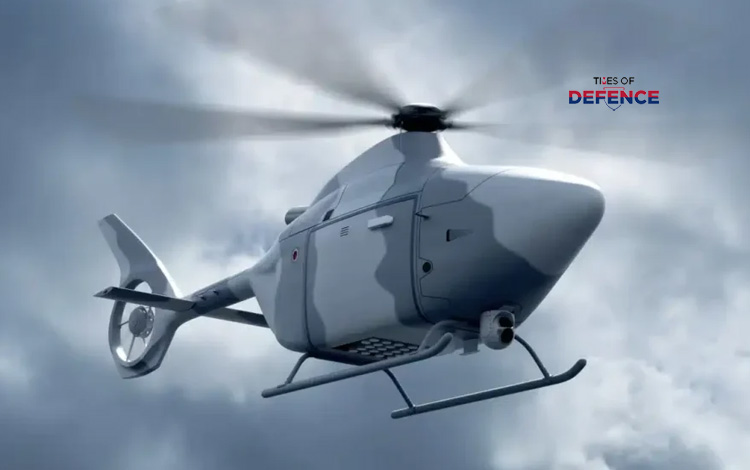
Defense aviation prime Leonardo Helicopters has executed a strategic software development agreement with U.S. autonomy firm Shield AI to integrate the Hivemind mission autonomy suite onto Leonardo’s Proteus uncrewed vertical takeoff and landing (VTOL) technology demonstrator.
Announced on October 29, 2026, the partnership leverages Shield AI’s Hivemind Software Development Kit (SDK) to equip Leonardo engineers with commercial-grade AI piloting tools. Following Proteus’ successful maiden flight in early 2026 using Leonardo’s proprietary baseline flight autonomy, the Hivemind SDK enables the rapid, in-house development and continuous deployment of mission-level AI software tailored for high-threat rotary-wing operations. The integration directly supports the UK Royal Navy’s Maritime Aviation Transformation (MATx) strategy—a long-term operational roadmap guiding Fleet Air Arm structure through 2040 under the doctrine of “uncrewed where possible, crewed where necessary.”
TECHNICAL SPECIFICATIONS: LEONARDO PROTEUS & HIVEMIND AUTONOMY ARCHITECTURE
Program Governance, Development Framework & Platform Baseline
⚡ Platform Developer & Prime: Leonardo Helicopters UK (Yeovil, Somerset, England)
⚡ Autonomy Software Partner: Shield AI (San Diego, California) — Hivemind Software Development Kit (SDK)
⚡ Program Framework: Rotary Wing Uncrewed Air System (RWUAS) CCD Phase 3B Technology Demonstrator Programme
⚡ Sponsoring Strategic Stakeholders: Royal Navy / UK Defence Innovation (UKDI) / Maritime Aviation Transformation (MATx)
⚡ Platform Status: Initial flight tests completed early 2026; Hivemind mission-autonomy integration targeted for follow-on operational flight trials 
Proteus VTOL Airframe & Payload Engineering
💥 Platform Configuration: Full-scale uncrewed vertical takeoff and landing (VTOL) rotary-wing technology demonstrator (design derived from AW09/AW101 design concepts)
💥 Modular Payload Capacity: ~1,000 kg (1 tonne) internal payload bay or 2× standard NATO 463L logistics pallets
💥 Multi-Mission Payload Integration: Rapidly swappable mission bays supporting sonobuoy dispensers and active/passive dipping sonars (Anti-Submarine Warfare), surface-search radar (Airborne Early Warning / ISR), and automated cargo hooks (Contested Logistics)
💥 Structural Composite Baseline: Built utilizing over 40 advanced composite structural components designed via high-fidelity digital twin modeling
Shield AI Hivemind SDK Architecture & Edge AI Execution
🚀 Software Development Kit (SDK) Concept: Modular software architecture enabling third-party OEM engineers to build, train, test, and update sovereign AI autonomy algorithms without vendor lock-in
🚀 Mission Autonomy Focus Areas:
• Anti-Submarine Warfare (ASW): Autonomous sonobuoy pattern dissemination, acoustic contact tracking, and tactical coordination
• Intelligence, Surveillance & Reconnaissance (ISR): Adaptive sensor management, automated target recognition (ATR), and dynamic route re-planning in GPS-denied environments
• Contested Logistics: Low-altitude, autonomous obstacle avoidance and terrain-following during ship-to-shore / intra-theater resupply
🚀 Continuous Iteration Cycle: Enables real-time mission refinement and algorithm updates, significantly reducing lifecycle costs and acceleration testing in synthetic-to-real flight environments
🚀 Fleet Scalability Potential: Architecture designed to extend beyond Proteus to Leonardo’s crewed/uncrewed fleet, including AW101 Merlin and AW159 Wildcat operational software pipelines
TIMES OF DEFENCE ASSESSMENT
Leonardo’s adoption of Shield AI’s Hivemind SDK for the Proteus VTOL demonstrator highlights a key shift in military aviation: moving from closed, proprietary flight-control software to open, SDK-driven mission autonomy architectures. As multi-domain maritime warfare becomes increasingly contested by peer electronic warfare and air-defense threats, uncrewed rotary-wing assets must execute complex tactical missions without constant human C2 links.
From an engineering and naval aviation perspective, this software integration offers three core advantages:
1. **OEM Control over Mission Autonomy**: Utilizing an open SDK allows Leonardo’s engineers to retain ownership and customization rights over Proteus’ mission logic. Rather than outsourcing flight control code to a third party, Leonardo can continuously refine AI routines for specific operational threats (e.g., tracking quiet diesel-electric submarines or navigating cluttered littoral environments).
2. **Operationalizing the Royal Navy’s MATx Strategy**: The Royal Navy’s plan to augment its crewed helicopter fleet (Merlin HM2/HC4 and Wildcat HMA2) with uncrewed systems depends on high-payload VTOL platforms. A 1-tonne capacity uncrewed helicopter capable of autonomously hunting submarines or delivering 463L palletized cargo frees high-value crewed airframes for complex command and strike roles.
3. **Cross-Fleet Software Reuse**: While initially deployed on the Proteus demonstrator, the software framework established with Hivemind can be extended to future upgrades across Leonardo’s broader military rotary portfolio. Integrating standardized AI autonomy tools across both uncrewed auxiliary platforms and manned helicopters lays the groundwork for seamless Manned-Unmanned Teaming (MUM-T) across NATO naval forces.

