

NEW DELHI — Indian Defence Minister Rajnath Singh has publicly reaffirmed India’s commitment to developing foundational technologies for sixth-generation fighter aircraft, even as the Ministry of Defence (MoD) works to address persistent timelines and delivery backlogs across existing indigenous combat platforms. Addressing aerospace leadership, the MoD directed state-owned manufacturer Hindustan Aeronautics Limited (HAL) to streamline production bottlenecks and adhere strictly to delivery schedules to prevent widening operational capability gaps.
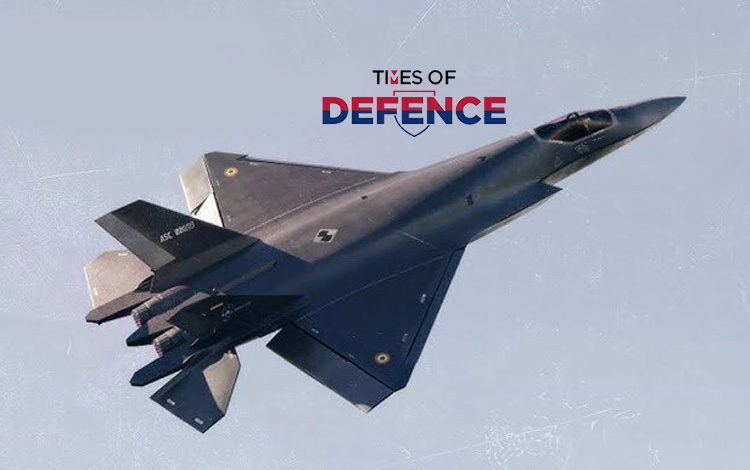
The Indian Air Force (IAF) currently operates 29 active fighter squadrons against a sanctioned strength of 42. Deliveries of the 83 contracted LCA Tejas Mk1A aircraft—originally scheduled to commence in mid-2024—have encountered delays due to supply chain backlogs for General Electric F404-GE-IN20 engines, alongside pending AESA radar integration and flight-software certification tests. Concurrently, the Cabinet Committee on Security (CCS) approved ₹15,803 crore ($1.6 billion) in March 2024 for the prototype development of the Advanced Medium Combat Aircraft (AMCA), India’s 5th-generation stealth fighter. Designed by the Aeronautical Development Agency (ADA) and DRDO, the AMCA is scheduled for a prototype rollout between 2026 and 2027, with a maiden flight targeted for 2028 and serial production planned for the mid-2030s.
To bridge the gap toward 6th-generation capabilities, India is directing research into high-thrust indigenous engine co-development, directed energy weapons, artificial intelligence-driven decision support, and meta-material radar cloaking.
PROGRAM & TECHNICAL SPECIFICATIONS: ADA / DRDO AMCA & 6TH-GEN R&D FRAMEWORK
* Platform Classification: 5th-Generation Stealth Multirole Fighter (AMCA) / 6th-Gen Technology Testbed
* Design & Development Authorities: Aeronautical Development Agency (ADA), Defence Research and Development Organisation (DRDO), and HAL Consortium
* Program Allocation: ₹15,803 crore (~$1.6B USD) for 5 prototype airframes
* Flight Performance Objectives:
* Maximum Speed: Mach 1.8 (supercruise capable)
* Combat Radius: 1,620 km (870 nautical miles)
* Service Ceiling: 20,000 meters (65,000 feet)
* Stealth & Airframe Engineering:
* Serpentine Diverterless Supersonic Inlets (DSI) shielding engine fan faces
* Internal Weapons Bay (IWB) and ~40% composite airframe construction
* Advanced metamaterial microwave-absorbing surface coatings (Anālakṣhya)
* Propulsion Roadmap:
* AMCA Mk1: Twin General Electric F414-INS6 turbofans (98 kN class)
* AMCA Mk2 / 6th-Gen Baseline: Proposed 110–130 kN co-developed high-thrust engine
* 6th-Generation R&D Focus Areas:
* Manned-Unmanned Teaming (MUM-T) via Combat Air Teaming System (CATS) loyal wingmen
* AI-assisted cognitive flight management and autonomous tasking
* Integration of directed energy weapons (DEW) and multi-spectral sensors