

The possibility of a new war on the Korean Peninsula and the military dimension of US-China rivalry
The longstanding military and political tensions on the Korean Peninsula are entering a new phase as North Korea continues to develop its nuclear weapons and ballistic missile capabilities, South Korea deepens its defense cooperation with the United States, and great-power competition in the region intensifies. The Pyongyang administration’s view of nuclear deterrence as a fundamental pillar of national security, coupled with Seoul’s growing military coordination with Washington, is further deepening mistrust between the two Koreas.
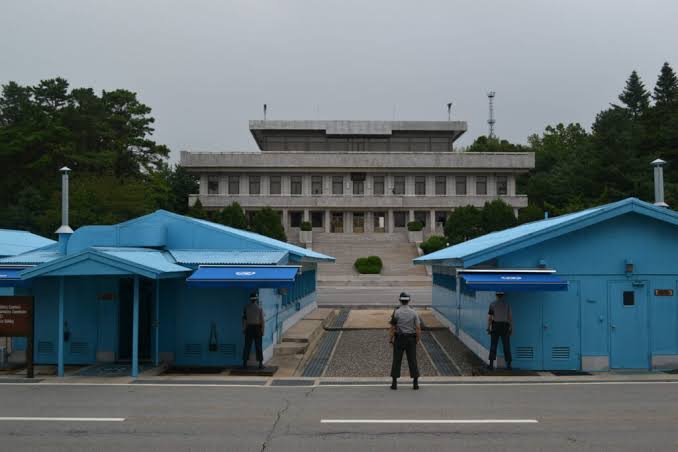
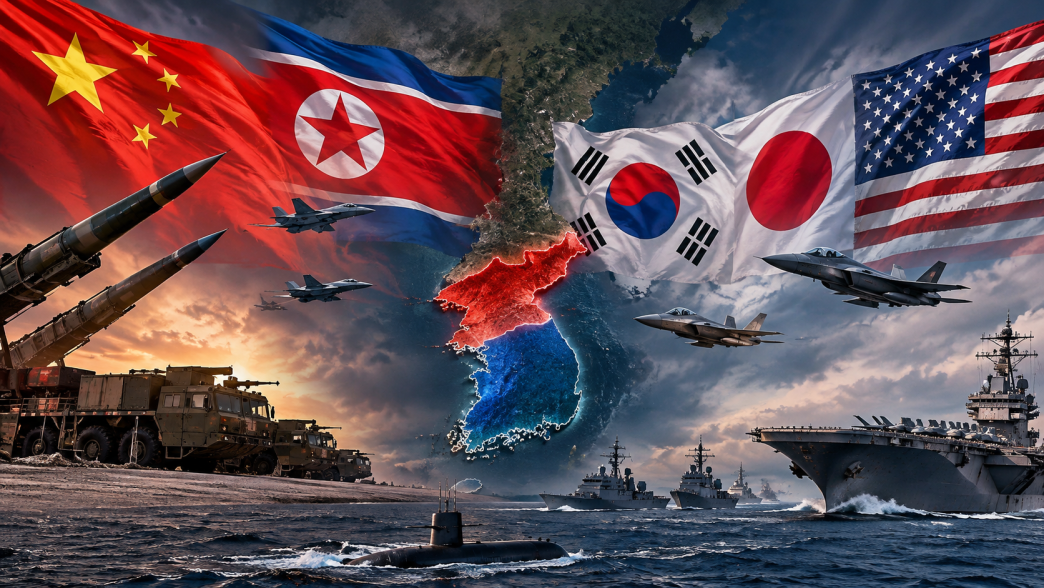
It is no longer sufficient to assess the current tensions solely through the lens of the historical hostility between the two Koreas. A potential war could quickly evolve into a broader regional security crisis in which the United States and China could find themselves directly confronting one another. Japan’s security, the balance of power in the Taiwan Strait, and military competition across the Pacific would also be affected by such a conflict. 
The military and political dynamics behind the tensions
One of the most significant developments fueling tensions on the Korean Peninsula is North Korea’s decision to describe South Korea not as a country with which it should pursue reunification, but as a hostile state. Pyongyang’s departure from its reunification policy and its shift toward establishing permanent military fortifications along the border have changed the nature of relations between the two countries. Since April 2024, North Korea has begun strengthening its defensive line by constructing minefields, barbed-wire barriers, anti-tank obstacles, and military roads along the border.
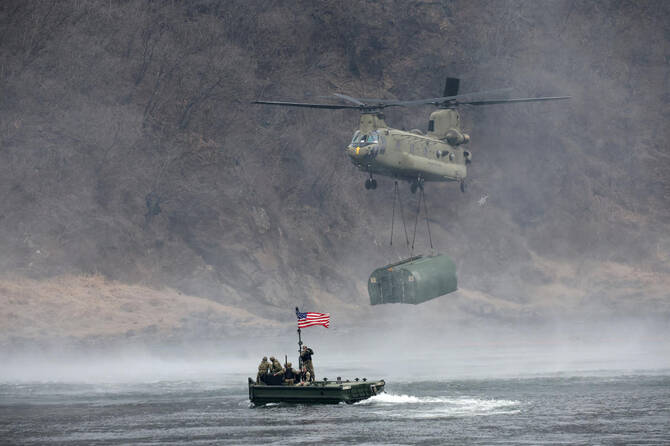
In response, South Korea is developing its joint defense capabilities with the United States. In addition to military exercises between Washington and Seoul, efforts to coordinate nuclear deterrence and conventional forces are also expanding. The Iron Mace exercise conducted in September 2026 focused on the coordinated use of US nuclear capabilities and South Korean conventional military assets. Pyongyang, meanwhile, views these activities as preparations for a nuclear war against North Korea.
Indeed, North Korea conducted a series of ballistic missile and submarine-launched cruise missile tests in October 2026. The launch of approximately a dozen short-range ballistic missiles on October 29, followed by further missile tests in November, demonstrates that military activity in the region remains ongoing. Kim Jong-un’s visit to nuclear facilities on November 26, accompanied by calls to develop tactical nuclear weapons and expand the country’s nuclear arsenal, also indicates that this process is set to continue.
How would the United States respond in the event of a war?
If a full-scale war were to break out on the Korean Peninsula, the United States’ first priority would be to support South Korea’s military capabilities and contain North Korean attacks. Washington could mobilize not only the approximately 28,500 troops stationed in South Korea, but also its military bases in Japan and its naval and air forces across the Pacific.
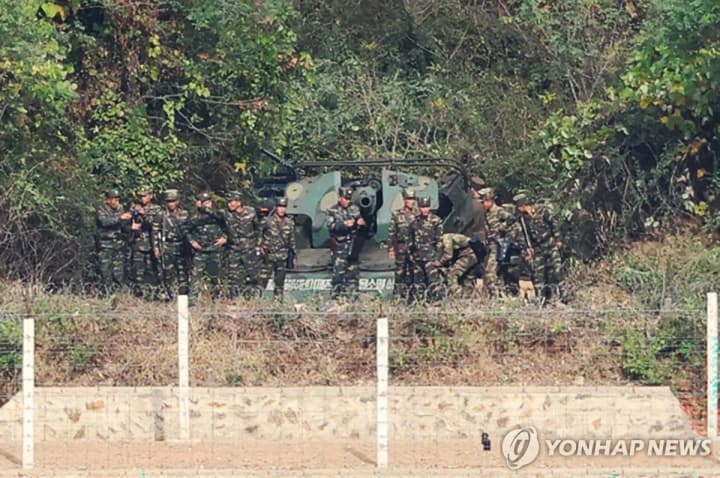
In the initial phase, the United States would likely increase its intelligence, surveillance, and reconnaissance capabilities, deploy additional fighter jets and strategic bombers to the region, and strengthen its missile defense systems. In particular, THAAD and Patriot systems, alongside US naval-based missile defense assets, would play an important role in countering North Korea’s ballistic missile capabilities.
If the conflict escalated, the United States could launch air and naval operations targeting North Korea’s missile launch infrastructure, military command centers, and artillery assets. However, the main risk of such an operation would be that Pyongyang might interpret conventional attacks as an attempt to overthrow the regime and resort to using nuclear weapons.
For this reason, Washington’s most critical challenge would be to prevent the conflict from turning into a nuclear war while defending South Korea. US military superiority does not entirely eliminate the strategic risks arising from North Korea’s nuclear capabilities.
Would China intervene in the war?
One of the most important dimensions of a potential Korean War would be how China responds. Beijing regards the destabilization of North Korea and the advance of US-led military forces toward the Chinese border as serious threats to its national security.
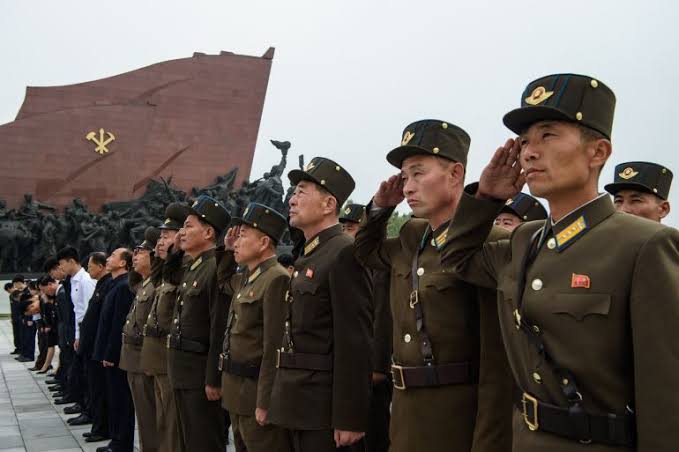
China and North Korea have maintained a mutual defense treaty signed in 1961. The agreement provides for military assistance if either party comes under armed attack. However, an important distinction must be made regarding Beijing’s approach: it cannot be assumed that China would automatically intervene militarily if North Korea were to initiate a war.
China’s potential actions in the event of a war can be assessed under several headings. First, Beijing could strengthen security measures by deploying additional military units and logistical assets to border regions. Controlling a possible influx of refugees from North Korea and securing its border would be among China’s initial priorities.
Second, China could seek to prevent the complete collapse of the North Korean regime. In particular, if US and South Korean forces crossed north of the 38th parallel and approached the Chinese border, this could become a direct justification for intervention from Beijing’s perspective. In such circumstances, China could send military units into North Korea to establish a buffer zone, prevent nuclear facilities from falling into uncontrolled hands, or secure strategic infrastructure within the country.
Nevertheless, the possibility that China would seek to avoid a direct war with the United States should also be taken seriously. Such a conflict could develop into a much larger military crisis involving not only the Korean Peninsula, but also Japan, Taiwan, and the entire Pacific region.
The Russian factor and the risk of the war expanding
Another actor influencing the balance of power on the Korean Peninsula is Russia. Growing military cooperation between Moscow and Pyongyang is creating new opportunities for North Korea in terms of defense industry development and combat experience. Russia’s procurement of ammunition and missiles from North Korea, in exchange for military technology, equipment, and economic support, has elevated relations between the two countries to the level of a strategic partnership.
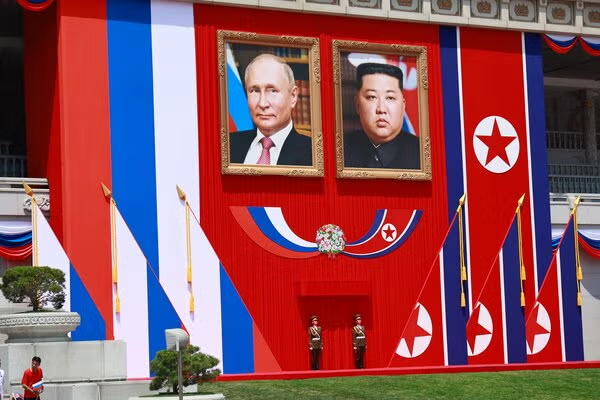
However, Russia’s need to allocate military resources to different fronts due to the war in Ukraine could make a direct and large-scale military intervention on the Korean Peninsula more difficult. Nevertheless, Moscow could still position itself alongside Pyongyang through diplomatic support, intelligence sharing, and the transfer of military technology.
An important point to consider here is that Russia does not share the same strategic priorities as China. While Beijing’s primary concerns are maintaining stability on the Korean Peninsula and preventing the expansion of the US military presence, Moscow could derive strategic benefits from developments that divert Washington’s attention and resources toward another region.
How realistic is the possibility of nuclear war?
North Korea’s nuclear capabilities represent the most dangerous dimension of a potential war. Pyongyang regards nuclear weapons not merely as a deterrent against the United States, but also as a fundamental instrument for ensuring the survival of its regime. The development of tactical nuclear weapons has further increased concerns that these weapons could be used in a potential regional conflict.
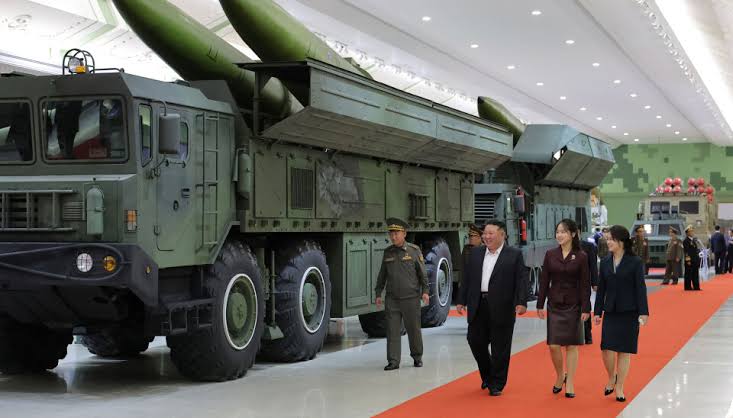
In particular, heavy losses among North Korea’s conventional forces, attacks on military command centers, or a perception that the regime’s survival is under threat could increase the risk of nuclear weapons being used. In such a scenario, US military bases in the Pacific, as well as targets in South Korea and Japan, could come under attack.
On the other hand, the use of nuclear weapons would also have consequences that could endanger the survival of the North Korean regime itself. Therefore, nuclear capabilities should primarily be viewed as a means of deterring direct military intervention by the United States and its allies. Nevertheless, the possibility of their use should not be dismissed if a war spirals out of control.
Is the Korean Peninsula heading toward a new confrontation between great powers?
Recent developments on the Korean Peninsula indicate that tensions between the two countries are no longer limited to periodic military provocations. North Korea’s designation of South Korea as a hostile state, the expansion of its nuclear capabilities, and the reinforcement of military fortifications along the border are making the security environment increasingly fragile.
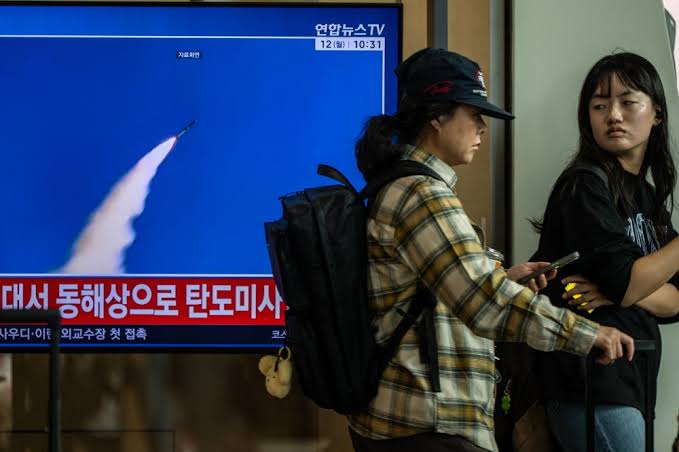
Nevertheless, the fact that a full-scale war would have severe consequences for both Pyongyang and Seoul remains an important factor discouraging the parties from engaging in direct confrontation. However, weakening communication channels, increasingly frequent military exercises, and mutual distrust along the border are raising the risk that a relatively minor incident could escalate into a major conflict.
The real danger lies in the possibility that such a war could extend beyond the borders separating the two Koreas. US military intervention to defend South Korea, followed by Chinese action to prevent the collapse of North Korea or the advance of US forces toward its own borders, could turn the crisis into a direct confrontation between great powers.
Consequently, a new war on the Korean Peninsula would not simply be a repetition of the Korean War of 1950–1953. A new conflict shaped by nuclear weapons, advanced missile systems, unmanned platforms, and great-power rivalry could profoundly affect the global security architecture. For this reason, alongside military deterrence, restoring diplomatic communication channels will be critically important in preventing a regional war in the period ahead.