


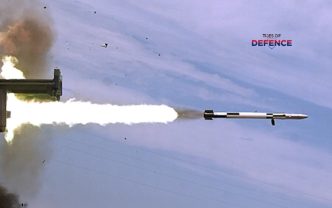
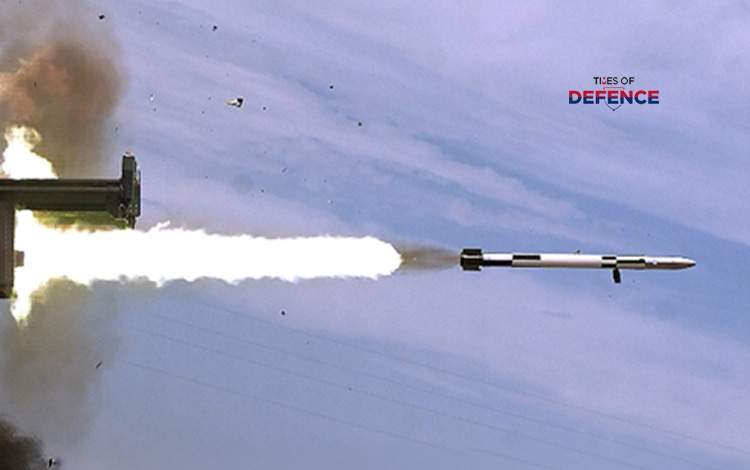
Lockheed Martin announced on November 23, 2026, that it has completed a third successful flight test of its Joint Reduced Range Rocket (JR3) solution at Yuma Proving Ground, Arizona, validating the system’s reduced-range flight profile, trajectory control, terminal accuracy, and marking-payload effects.
Developed as a next-generation replacement for the legacy Low-Cost Reduced Range Practice Rocket (LCRPR / RRPR) used by the U.S. Army and allied rocket artillery operators, Lockheed Martin’s JR3 combines a low-cost solid rocket motor built on mature propulsion technology with a modular payload section and a 24-round reusable launch pod fitted with reloadable launch tubes. Following earlier successful flight tests in August 2025 and August 2026, the latest November 2026 trial underscores how reloadable training pods and reduced-range safety envelopes enable M142 HIMARS and M270 MLRS crews to execute higher-volume, day-and-night live-fire training across space-constrained domestic and allied ranges while also providing a scalable modular architecture transferable to future low-cost, mass-producible tactical rocket initiatives such as the U.S. Army’s Direct Support Fires Technology effort.
TECHNICAL SPECIFICATIONS: LOCKHEED MARTIN JOINT REDUCED RANGE ROCKET (JR3)
1. Launch Pod Architecture, Reusability & Launcher Compatibility
⚡ Prime Contractor & Programme Role: Lockheed Martin Missiles and Fire Control (LMT); developed for the U.S. Army’s Joint Reduced Range Rocket (JR3) requirement to replace legacy Reduced Range Practice Rockets across U.S. and international partner fleets
⚡ High-Capacity Reusable Pod: Utilizes a 24-round rocket launch pod engineered with reloadable launch tubes and reusable pod structures, quadrupling per-pod training shot count compared to standard 6-round tactical MLRS/GMLRS pods
⚡ Launcher & Fire-Control Compatibility: Retains standard MLRS Family of Munitions (MFOM) form, fit, mechanical, and electrical interfaces for seamless employment on M142 HIMARS and M270-series launchers without hardware modifications 
2. Flight Envelope, Payloads & Modular Scalability
💥 Reduced-Range Safety Envelope: Calibrated to meet U.S. Army JR3 range-safety parameters (minimum impact range of ~7.5–8 km and maximum impact range under 15 km), enabling realistic live-fire crew drills on smaller, constrained training ranges day or night
💥 Terminal Accuracy & Marking Effects: Validated during the third Yuma Proving Ground flight test for predictable trajectory flight, near-precision impact accuracy, and visible target-marking payload effects (flash/bang/smoke) for fire-direction observation
💥 Modular Open Architecture & Tactical Growth: Incorporates a modular interface between the mature low-cost rocket motor and adaptable payload section, establishing a scalable design pathway for future mass-producible, low-cost operational rockets such as Direct Support Fires Technology
TIMES OF DEFENCE ASSESSMENT
Lockheed Martin’s third successful flight test of the Joint Reduced Range Rocket (JR3) at Yuma Proving Ground highlights three critical shifts in rocket artillery readiness, training economics, and scalable munitions manufacturing:
1. Solving the Range-Constraint and Cost Bottleneck in HIMARS/MLRS Live-Fire Training: Full-range GMLRS and tactical rockets require vast safety fans and carry high per-round costs that limit live-fire frequency. Combining a sub-15 km flight envelope with a 24-round reusable, reloadable launch pod lets artillery crews train far more frequently on existing local ranges.
2. Maximizing Training Volume Through Pod Reusability and Reloadable Tubes: Replacing single-use canisters with reloadable launch tubes inside a 24-round pod lowers per-shot training expenditure and logistical waste while preserving authentic loading, fire-control, and launch procedures.
3. Creating a Modular Bridge to Mass-Producible Low-Cost Tactical Rockets: Pairing a mature, low-cost solid rocket motor with an adaptable payload interface positions JR3 not only as a training munition, but also as a manufacturing baseline for future high-volume, affordable operational fires.

