


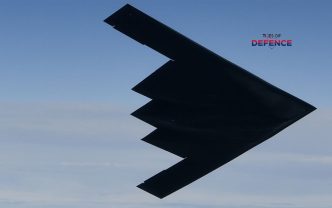
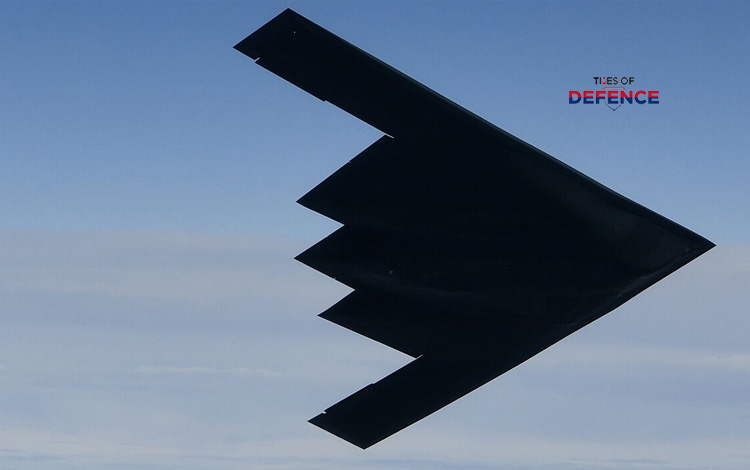
U.S. Air Force B-2 Spirit stealth bomber aircrews from the active-duty 509th Bomb Wing and Missouri Air National Guard’s 131st Bomb Wing have released detailed firsthand accounts of Operation Midnight Hammer—the 37-hour global strike mission executed on June 21–22, 2025, in which seven B-2 bombers delivered 14 GBU-57 Massive Ordnance Penetrator (MOP) bunker-busting bombs against Iran’s hardened nuclear facilities at Fordow and Natanz—coinciding with Air Force Chief of Staff Gen. Kenneth Wilsbach presenting the Presidential Unit Citation to both wings at Whiteman Air Force Base on November 20, 2026.
Representing the largest operational B-2 strike package in history and the first combat employment of the 30,000-pound GBU-57 MOP, the mission involved 14 pilots across seven B-2 airframes supported by more than 125 U.S. aircraft—including F-22 and F-35 fighter escorts, aerial refueling tankers, and command-and-control assets—while submarine-launched Tomahawk cruise missiles struck a third nuclear site at Isfahan. To preserve operational security prior to launch from Missouri, additional B-2 aircraft flew westward as a visible decoy movement while the strike package departed eastward under strict radio silence. After Iranian crews poured concrete over ventilation shafts at Fordow in the days immediately preceding the raid, planners adjusted weapon sequencing so lead bombers breached the concrete cap before follow-on GBU-57s penetrated deep into the subterranean enrichment complex, with six B-2s striking Fordow and a seventh engaging Natanz.
TECHNICAL SPECIFICATIONS: B-2 SPIRIT & GBU-57 MASSIVE ORDNANCE PENETRATOR STRIKE PACKAGE
1. B-2 Spirit Global Strike Package & Operational Execution
⚡ Operating Units & Basing: 509th Bomb Wing (active duty) and 131st Bomb Wing (Missouri Air National Guard) operating in a Total Force partnership out of Whiteman Air Force Base, Missouri
⚡ Strike Package & Duration: Seven B-2A Spirit stealth bombers crewed by 14 pilots flying a 37-hour non-stop round-trip mission (the second-longest B-2 combat sortie on record), supported by over 125 escort fighters, tankers, and support aircraft
⚡ Operational Deception & Airspace Penetration: Employed a westward B-2 deployment as an operational decoy while the strike force flew eastward under strict emissions/radio silence, operating alongside allied suppression of enemy air defenses and receiving zero surface-to-air missile launches during ingress and egress
⚡ Target Allocation & Multi-Domain Coordination: Six B-2s dropped 12 GBU-57 MOPs on the deeply buried Fordow enrichment complex; a seventh high-altitude B-2 delivered two GBU-57s against Natanz; and a U.S. Navy submarine executed follow-on Tomahawk cruise missile strikes against Isfahan 
2. GBU-57 Massive Ordnance Penetrator (MOP) & Hardened Target Defeat
💥 Munition Class & Carriage: Boeing GBU-57A/B Massive Ordnance Penetrator—a 30,000-pound (13,600 kg), 20.5-foot precision-guided earth-penetrating bomb carried exclusively in operational service by the B-2 Spirit (two weapons per aircraft across internal rotary launcher bays)
💥 Penetration & Sequential Fuze Sequencing: Engineered with a hardened high-strength steel alloy casing and smart programmable fuzing to punch through reinforced concrete and bedrock; employed in tightly timed multi-aircraft intervals during Midnight Hammer to breach concrete-capped ventilation shafts and detonate within subterranean halls
💥 Inventory & Industrial Replenishment Constraints: Because the GBU-57 is produced in small specialized quantities solely for the B-2 fleet, expending 14 munitions in a single operation—following earlier combat use against buried Houthi weapons facilities in Yemen—placed significant draw on finite U.S. deep-penetrator stockpiles
TIMES OF DEFENCE ASSESSMENT
The newly declassified pilot accounts of Operation Midnight Hammer and the November 2026 Presidential Unit Citation ceremony at Whiteman Air Force Base highlight three critical realities in global strike, hardened underground warfare, and munition magazine depth:
1. Global Reach and Operational Deception Remain Decisive Against Hardened Targets: Launching seven stealth bombers from the continental United States on a 37-hour mission—masked by decoy deployments and synchronized with over 125 support aircraft—demonstrates that long-range stealth aviation paired with multi-tanker logistics can still achieve tactical surprise against heavily defended subterranean complexes.
2. Sequential Precision Penetrators Can Overcome Last-Minute Physical Hardening: Iran’s last-minute concrete capping of Fordow’s ventilation shafts forced real-time adjustments to weapon timing and fuzing, showing that defeating deeply buried facilities requires tightly spaced multi-bomb salvos rather than single-weapon strikes.
3. Finite Heavy Penetrator Stockpiles Constrain Sustained Anti-Bunker Campaigns: While the B-2 and GBU-57 combination proved uniquely capable of striking deep underground nuclear sites without nuclear weapons, the high cost and limited inventory of 30,000-pound penetrators create an acute magazine constraint if forces must target dozens of dispersed, mountain-tunneled missile and nuclear facilities simultaneously.

