

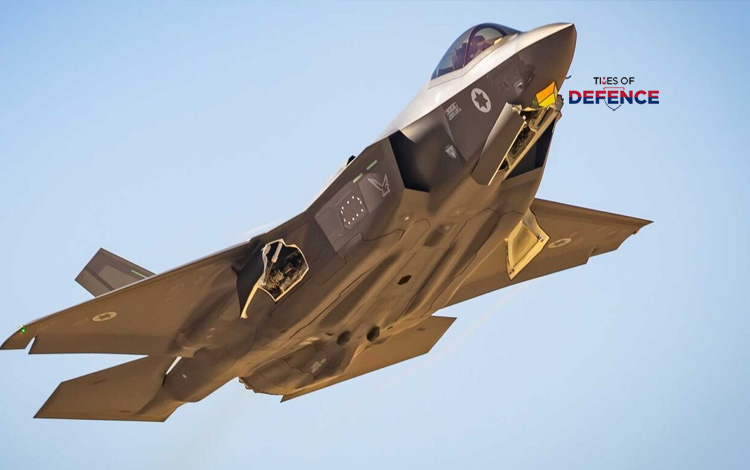
FORT WORTH, Texas — The U.S. Department of War awarded Lockheed Martin Aeronautics an $18,789,801 Foreign Military Sales (FMS) contract modification on October 15, 2026, to expand non-standard system development, demonstration, and software/hardware integration for a customized F-35 Lightning II configuration.
Financed entirely by an undisclosed foreign military customer, the award extends a multi-year development effort following previous modifications of $53.4 million in August 2022 and $12.9 million in August 2025. Development work will run through December 2030, with 80% of activity centered at Lockheed Martin’s Fort Worth facility. While core operational flight program (OFP) base code remains strictly proprietary to the U.S. Joint Program Office (JPO), the integration effort centers on sovereign C4I architecture “plug-in” layers, unique electronic warfare (EW) suites, mission data files (MDF), and indigenous precision-guided ordnance integration (such as Israeli IAF F-35I Adir configurations or Singaporean RSAF specialized requirements).
TECHNICAL SPECIFICATIONS: LOCKHEED MARTIN F-35 CUSTOM INTEGRATION PROGRAM 
* Contracting Authority & Integrator: U.S. Department of War / Lockheed Martin Aeronautics (Fort Worth, TX)
* Program Classification: Foreign Military Sales (FMS) Non-Standard F-35 System Development & Demonstration
* Financial & Execution Timeline:
* Cumulative Increments: $53.4M (Aug 2022) + $12.9M (Aug 2025) + $18.8M (Oct 2026 Modification)
* Contract Performance Window: Active execution through December 2030 (100% Foreign Customer Funded)
* Custom Architectural Integration Parameters:
* Core Code Safeguards: No direct access to F-35 central core flight software / baseline operational flight program
* Software Architecture: Open-architecture “app-layer” overlay sitting on central processing hardware for sovereign adaptability
* Hardware & Testbed Suite: Dedicated non-standard flight test aircraft (e.g., IAF F-35I testbed at Flight Test Center / Tel Nof Air Base)
* Candidate Client Profiles & Technical Requirements:
* Israeli Air Force (IAF – F-35I “Adir”): Integration of C4I mission systems, Rafael / IAI indigenous weapons (SPICE, Rampage, Python-5), and external electronic countermeasure suites
* Republic of Singapore Air Force (RSAF – F-35B / F-35A): Custom sensor fusion interfaces, specialized STOVL operational profiles, and national tactical data link integration
TIMES OF DEFENCE ASSESSMENT:
The continued multi-million-dollar investment into a customized F-35 variant highlights the strategic necessity for advanced operators to maintain sovereign mission capabilities within a tightly controlled U.S. defense ecosystem. By utilizing open-architecture overlays that function over baseline flight systems, clients like Israel (or Singapore) can integrate native C4I networks and proprietary precision-guided munitions without compromising core U.S. intellectual property or code integrity.
However, the necessity of funding dedicated, long-term FMS modification contracts through 2030 emphasizes the immense financial overhead required to achieve operational independence on fifth-generation platforms. As threat environments evolve rapidly in the Middle East and Indo-Pacific, the ability to rapidly modify mission data files and weapons integration via these custom software layers will serve as a primary operational differentiator for high-end F-35 operators.