


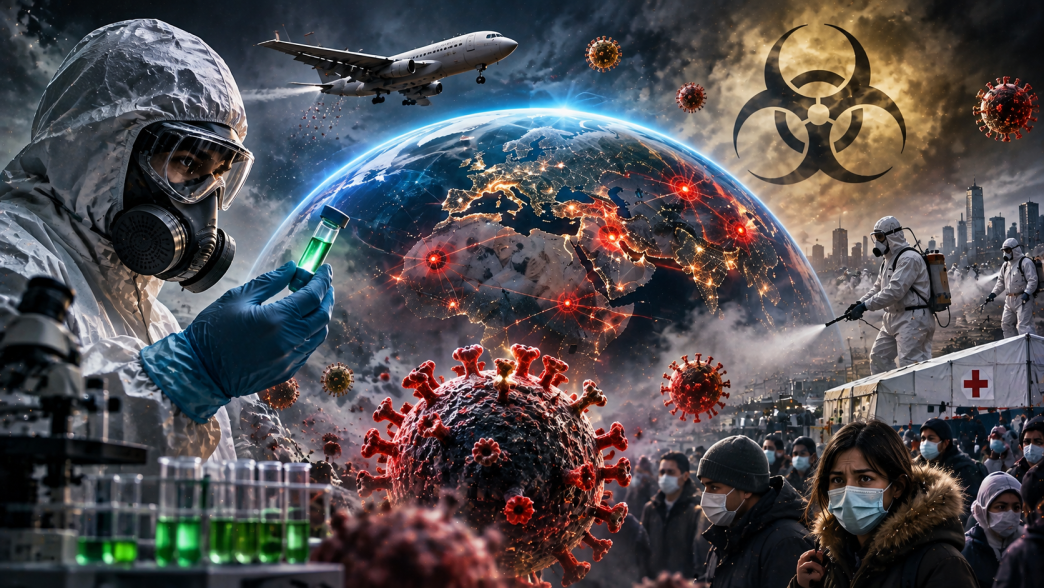
As the nature of warfare changes within the international security environment, the threats facing states have begun to extend beyond the limits of conventional military capabilities. While nuclear weapons, ballistic missiles, hypersonic systems, unmanned aerial vehicles and cyberattacks remain at the center of global security debates, another threat is gaining increasing importance: biological weapons.

The renewed focus on biological weapons is not solely related to past experiences of biological warfare. Advances in genetic engineering, synthetic biology, gene sequencing technologies and artificial intelligence are fundamentally changing the nature of biological threats. The fact that certain stages of biological research, which previously required advanced laboratory infrastructure, specialized personnel and substantial financial resources, can now be conducted with a broader scientific and technological infrastructure is creating new concerns among security circles. 
The fundamental issue here is not that the world will inevitably face another biological war. The real risk is that advances in biological sciences could be exploited by malicious states, terrorist organizations or non-state actors, while existing international security mechanisms may be unable to respond to these developments at the same pace.
The COVID-19 pandemic demonstrated how biological threats can destabilize the international system even in the absence of military conflict. The deaths of millions of people, disruptions to supply chains, border closures and severe losses to the global economy revealed that a biological crisis is not merely a public health issue. Today, the possibility that scientific technologies could be used for military and strategic purposes is making this experience an increasingly important part of national security policies.
The nature of biological weapons is changing
Biological weapons are among the weapons of mass destruction that involve the use of disease-causing microorganisms or toxins derived from them to harm humans, animals or agricultural production. However, the most important factor distinguishing today’s biological threats from those of the past is the level of technological advancement achieved in biotechnology.

In the past, a state seeking to develop biological weapons needed advanced laboratories, specialized scientists and long-term research programs. Today, developments in genetic engineering and synthetic biology are making it easier to analyze biological materials, understand their genetic characteristics and redesign them for scientific purposes. While these developments create significant opportunities for medicine, the pharmaceutical industry and vaccine research, they also increase security risks because of the dual-use nature of these technologies.
In particular, the convergence of artificial intelligence and biotechnology is one of the most important issues attracting the attention of international security circles. AI systems can analyze genomic data, model protein structures and contribute to the development of new medicines. However, the potential misuse of these same technologies creates new risks in terms of designing biological threats and accelerating research processes.
An assessment updated by the US Congressional Research Service on November 16, 2026, draws attention to the security risks posed by AI-assisted biological design tools. The report states that artificial intelligence could be misused in biological research, that existing genetic screening systems may be insufficient to detect certain new designs, and that more comprehensive oversight mechanisms are needed in this field. At the same time, it emphasizes that biological designs generated by AI still require physical synthesis and experimental validation to become functional in the real world. Therefore, the risks created by technological developments must be assessed without exaggerating them, but also without underestimating them.
The main danger here is the possibility that biological weapons could cease to be a capability accessible only to major states. The wider availability of scientific knowledge and the expansion of biotechnology infrastructure mean that non-state actors must also be monitored more closely from a biological security perspective. However, this does not mean that any organization can easily produce an effective biological weapon. Laboratory security, physical production, verification of biological effectiveness and the conditions required for dissemination continue to present significant technical obstacles.
Could artificial intelligence become a new dimension of biological warfare?
The use of artificial intelligence in the military domain is transforming decision-making, intelligence gathering, target identification and operational planning. A similar transformation is also taking place in the field of biological security. However, assessing the role of AI solely in terms of its potential to facilitate the development of biological weapons would be incomplete.

On the one hand, artificial intelligence offers tools that could increase biological risks. On the other, it can strengthen the capacity for early outbreak detection, genetic monitoring of diseases, vaccine development and medical intervention. For this reason, the future struggle for biological security will encompass not only offensive capabilities but also defense and early warning systems.
The AI Biosecurity Lab initiative announced by the United Kingdom in October 2026 is an important example of this transformation. With £100 million in public funding and contribution commitments from OpenAI and Anthropic totaling up to £200 million, the British government is establishing a new structure aimed at detecting biological threats earlier with the assistance of artificial intelligence and developing vaccines, treatments and other medical countermeasures. This initiative demonstrates that biological security is no longer solely a matter for health ministries; it has also become an issue for defense, intelligence, technology and science policies.
The United States is also taking similar steps to strengthen oversight of biotechnological research. On November 5, 2026, the White House announced the National Policy for the Screening of Nucleic Acid Synthesis. Under this policy, institutions receiving federal research funding are expected to obtain synthetic nucleic acids and certain equipment used in this field from certified suppliers. Suppliers, in turn, are required to conduct security checks on their customers and the genetic sequences being ordered.
This development demonstrates that Washington has begun to assess advances in artificial intelligence and biotechnology not only in terms of economic competition but also from a national security perspective.
Consequently, biological security is likely to become another emerging dimension of the technological rivalry between the United States and China. Control over genomic research, biotechnology, pharmaceutical production, vaccine development and artificial intelligence infrastructure could become one of the key elements in states’ pursuit of strategic superiority in the future.
Biological weapons are challenging the international legal system
The threat posed by biological weapons is not new. In 1972, the international community adopted the Biological Weapons Convention to prevent the use and development of these weapons. Entering into force in 1975, the convention serves as the principal international legal instrument prohibiting the development, production, acquisition and stockpiling of biological and toxin weapons.
However, one of the convention’s most significant shortcomings is its lack of a comprehensive and legally binding verification mechanism to monitor whether states are fulfilling their obligations. The absence of an independent and comprehensive inspection system, similar to the one established under the Chemical Weapons Convention, makes it difficult to detect biological weapons programs.
Moreover, a significant proportion of biological research is conducted for civilian purposes. Some of the technologies used in vaccines, pharmaceuticals, agriculture, livestock production and disease control have dual-use characteristics that could create security risks under different circumstances. Therefore, it is not possible to assume that every biotechnology research project conducted by a state has a military purpose. Nevertheless, detecting activities that could be concealed behind civilian research remains one of the most difficult challenges facing the international monitoring system.
The efforts undertaken within the United Nations framework are important in addressing this problem. At a meeting held in Montreux, Switzerland, on September 29-30, 2026, UNIDIR and the United Nations Office for Disarmament Affairs discussed initiatives aimed at strengthening the Biological Weapons Convention.
The discussions focused on making the convention, which has 189 States Parties, more effective, assessing scientific and technological developments, and institutionalizing international cooperation. The establishment of new mechanisms ahead of the Tenth Review Conference scheduled for 2027 was also raised.
What is particularly striking is that, although biological weapons are prohibited, the international capacity to monitor the implementation of this prohibition has not yet reached an adequate level. While satellite imagery, inspections of nuclear facilities and radiation measurements provide certain monitoring capabilities in the nuclear field, determining whether biological research is being conducted for military purposes is a much more complicated process.
For this reason, the 2027 conference could become a critical turning point in biological arms control. If the international community fails to reach an agreement on verification, transparency and oversight, the effectiveness of the existing system designed to prevent the proliferation of biological weapons could become even more controversial.
The uncertainty between new outbreaks and biological attacks
One of the most significant challenges in biological security is that naturally occurring outbreaks and deliberate biological attacks cannot easily be distinguished from one another in their initial stages.

A disease that suddenly emerges in a country and spreads rapidly to different regions may initially be assessed as a natural outbreak. However, when unusual findings emerge regarding the source, pattern of transmission or timing of the outbreak, its security implications may also come under scrutiny.
This situation could have serious consequences, particularly during international crises. An allegation that one state has carried out a biological attack against another could lead to political and military decisions being made before the claim has been scientifically verified. Faulty intelligence, disinformation or deliberate accusations could further destabilize already fragile international relations.
Furthermore, the consequences of biological attacks may extend beyond direct casualties and public health losses. Targeting agricultural production, spreading animal diseases, disrupting food supply chains and undermining economic activity can also produce strategic consequences. Therefore, assessing biological threats solely from a human health perspective is insufficient.
In this regard, the World Health Organization’s Pandemic and Epidemic Intelligence Strategy for 2026-2030, announced on October 10, 2026, represents an important development. The organization aims to enable every country to detect emerging health threats within 24 hours by 2030. AI-assisted open-source intelligence, genomic surveillance and international data sharing are among the key components of this strategy.
World Health Organization (WHO)+1
The approach is to identify risks as early as possible through early warning systems rather than waiting for biological threats to emerge. In the future, the countries that achieve superiority in biological security will not simply be those with powerful laboratories or advanced healthcare systems, but those capable of detecting outbreaks early and responding rapidly.
Biological warfare is becoming a new priority for the defense industry
The expanding national security dimension of biological threats is also creating a new area of focus for the defense industry. For many years, the traditional defense industry model was shaped around land, air and naval platforms, ammunition, missile systems and electronic warfare capabilities. However, in the emerging security environment, the capacity to protect against biological and chemical threats is also becoming an important component of defense planning.
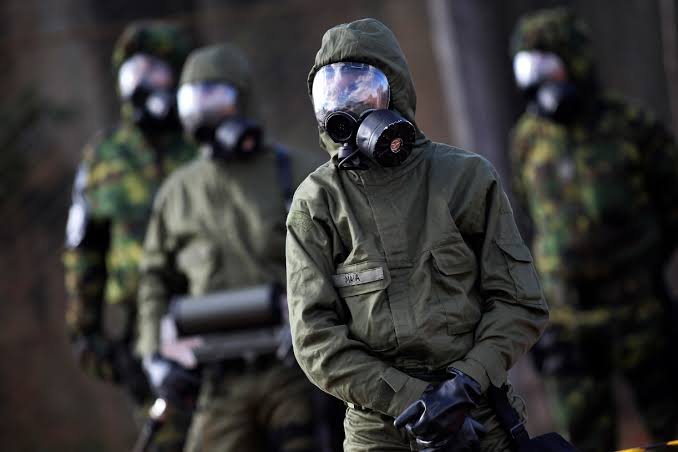
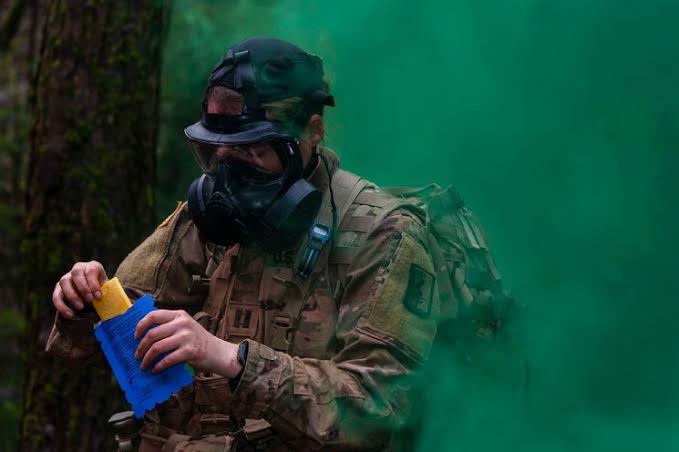
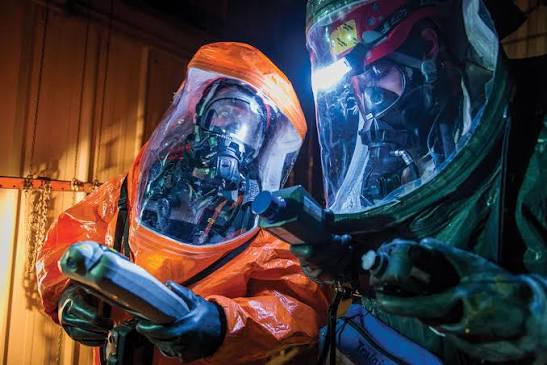
At this point, CBRN (chemical, biological, radiological and nuclear) defense systems are coming to the forefront. Sensors capable of detecting biological threats at an early stage, rapid diagnostic systems, mobile laboratories, protective equipment, decontamination infrastructure and medical countermeasures will become increasingly important among the defense technologies of the future.
Protecting military units against biological threats is particularly critical for operational continuity. A military force must be prepared not only for missile and artillery attacks on the battlefield but also for biological risks. This is because the occurrence of a biological incident can directly affect the mobility of military units, logistical activities and operational planning.
For this reason, biological defense cannot be regarded as the sole responsibility of medical personnel. Military intelligence, logistics, the defense industry, healthcare institutions and civil defense mechanisms must operate in coordination.
Another important issue for the defense industry is domestic production capacity. Dependence on foreign suppliers for critical diagnostic kits, biological sensors, laboratory equipment, protective systems and vaccine technologies could create serious strategic vulnerabilities during times of crisis. The problems experienced in procuring medical equipment and healthcare products during the pandemic demonstrated that such dependence is not merely an economic issue but also a matter of national security.
Could biological threats become decisive in future wars?
The use of biological weapons will remain one of the most serious scenarios in international security. However, it would be incorrect to assume that this threat will necessarily emerge in the form of an open biological war between major powers.
One of the more plausible risks is that biological threats could become an element of hybrid warfare. Targeting healthcare infrastructure through cyberattacks, spreading disinformation about outbreaks, using biological incidents as instruments of political pressure or exploiting the uncertainty created by natural outbreaks for strategic purposes are among the scenarios that could emerge in the future security environment.
Biological weapons have an important characteristic that distinguishes them from other weapons of mass destruction. While the explosion and physical destruction caused by a nuclear attack can be observed within a short period of time, the existence and source of a biological threat may not be identified at the same speed. This could make it more difficult to identify the actors behind an attack, shape the international response and determine an appropriate course of action.
Furthermore, the economic and psychological effects of biological threats may extend far beyond their physical consequences. Public panic, declining confidence in healthcare systems, border closures and disruptions to international trade could intensify the strategic consequences of a biological crisis.
All these developments indicate that biological security could become as important a national security issue in the future as nuclear deterrence, cyber defense and conventional military capabilities.
Conclusion: Biological security will become part of the new power struggle
The world is entering a new era in which biological weapons are returning to the international agenda and biotechnological developments are beginning to reshape global security balances. While artificial intelligence, synthetic biology and genetic engineering offer significant scientific opportunities for humanity, the possibility that these same technologies could be misused is reshaping the security policies of states.
The fundamental issue is not to halt scientific progress but to prevent these advances from being used in ways that threaten humanity’s security. This requires strengthening international legal mechanisms, monitoring biological weapons, expanding early warning systems and developing countries’ own biotechnological defense capabilities.
In particular, the 2027 Review Conference of the Biological Weapons Convention will be an important test of the international community’s ability to act collectively against this threat. The recent initiatives announced by the United States and the United Kingdom also demonstrate that major powers increasingly view biological security as one of the strategic arenas of future competition.
For Türkiye, this transformation requires broadening the scope of its defense industry and national security policies. Becoming a strong country within the future security architecture will not be measured solely by possession of advanced weapons systems. The ability to detect biological threats in advance, protect healthcare and defense infrastructure, develop critical biotechnological production capacity and respond rapidly during crises will also become fundamental elements of strategic power.
Ultimately, the world can no longer regard the possibility of facing biological weapons as a distant scenario. However, the real struggle will not begin after a war involving biological weapons has started, but through the establishment, today, of a security architecture capable of preventing such a threat from emerging in the first place.
While deterrence in the nuclear age was shaped by the capacity to inflict military destruction, in the age of biotechnology, one of the most important strategic advantages for countries will be their ability to protect their societies against invisible threats.

