

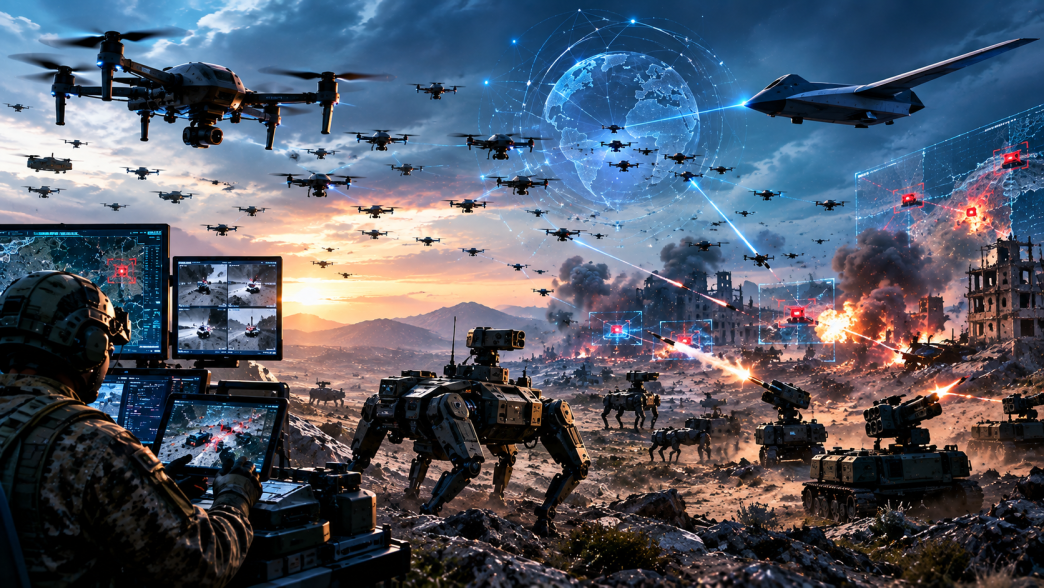
The transformation in warfare technology is redefining the role of humans on the battlefield more rapidly than ever before in history. Artificial intelligence, unmanned aerial vehicles, autonomous ground vehicles, unmanned maritime systems and advanced sensors are no longer concepts belonging to the future.
While the war in Ukraine has become a vast laboratory demonstrating how these technologies can be used in real combat environments, conflicts in the Middle East are also showing that unmanned systems have become decisive across a wide range of areas, from air defence to maritime security.
However, all these developments do not mean that future wars will be conducted entirely by robots. What is actually emerging is not the complete removal of humans from the battlefield, but rather the restructuring of the division of responsibilities between humans and machines.
Indeed, in 2026 NATO is also openly acknowledging that artificial intelligence, autonomous systems and unmanned platforms are changing the character of warfare. In the Alliance’s new digital strategy, the objective is not to remove humans from the system, but to use human-machine cooperation to achieve decision-making superiority.
Are machines replacing humans on the battlefield?
One of the most important reasons behind the transformation taking place today is that machines are no longer merely tools operated remotely by humans. AI-powered systems can perceive their surroundings, analyse vast amounts of data, classify targets and perform certain missions with limited human intervention.
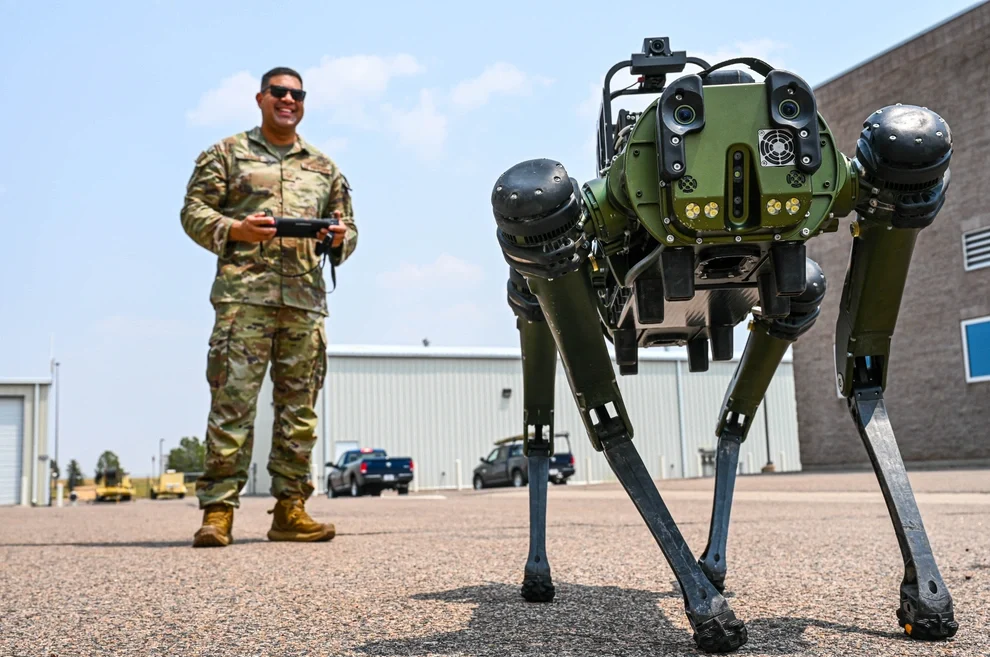
Ukraine provides one of the clearest examples of this development. In response to Russia’s intensive drone attacks, Ukraine is not only seeking to produce more unmanned aerial vehicles but is also making these systems increasingly autonomous. The Ukrainian Ministry of Defence announced in June that one such system could carry out approximately 95 percent of the engagement process automatically after the target was identified and the engagement order was given by a human.
More importantly, the transformation is not taking place only in the air. In Ukraine, unmanned ground vehicles are being deployed to the front to transport ammunition and supplies, evacuate wounded personnel, operate in mined areas and conduct direct attack missions. The fact that some systems can be transported to combat zones by aerial and maritime platforms also demonstrates that land, air and maritime platforms can be integrated into a single unmanned network.
For this reason, in the armies of the future, the question will no longer be simply “human or robot?” but rather which tasks should be assigned to humans and which should be assigned to machines.
Drone warfare heralds a new era
One of the most important realities revealed by the war in Ukraine is that unmanned systems are no longer auxiliary elements of warfare but have become one of the core components of military operations.
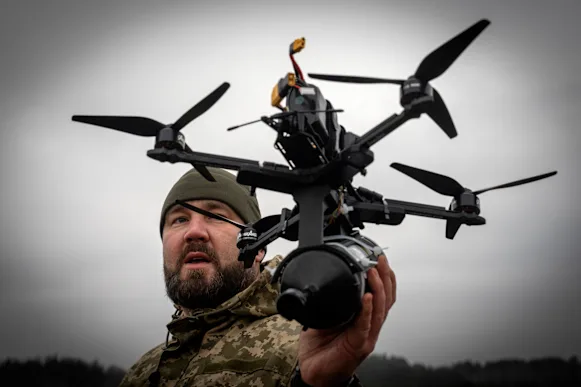
Russia’s use of increasingly advanced and faster unmanned aerial vehicles, combined with Ukraine’s development of next-generation interceptor drones, is turning the war into a kind of “drone versus drone” confrontation. Russia’s use of jet-powered Shahed-derived systems in September also demonstrates the speed of this transformation. Because these systems can fly at higher altitudes and greater speeds, they are increasing the pressure on existing air defence systems.
What matters here is not only the platforms themselves, but the network structure. When sensors, satellite links, electronic warfare systems, command-and-control centres, artificial intelligence algorithms and armed platforms are connected to one another, the resulting military capability becomes something far more significant than individual drones.
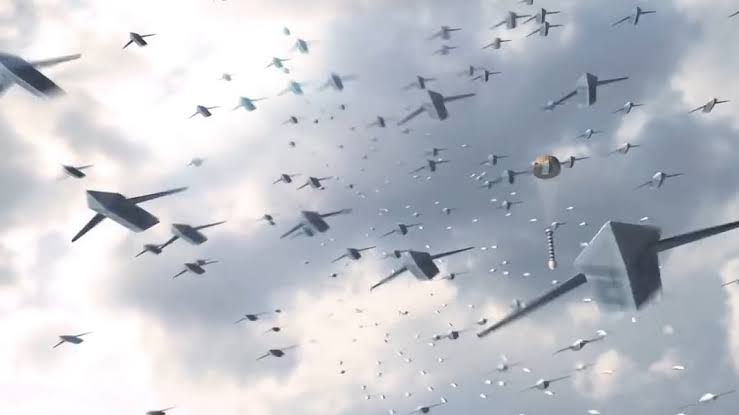
Britain’s announcement in September that British companies would use battlefield data obtained from Ukraine to develop AI-powered drone swarms also demonstrates that combat experience is now beginning to be transferred directly into next-generation defence technologies.
Therefore, superiority in future wars will not belong simply to the side that produces more drones. The advantage will increasingly belong to the side that collects better data, processes that data faster and coordinates different platforms more effectively within the same network.
The role of the pilot in air warfare will change
A similar transformation is taking place in aviation. However, this does not mean that crewed fighter aircraft will disappear completely in the short term.
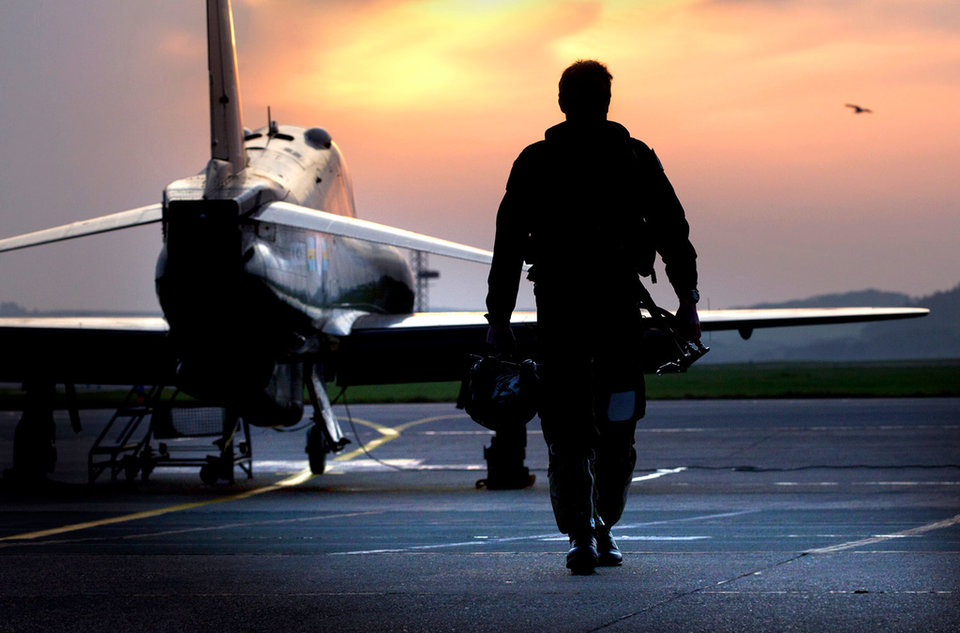
A more realistic scenario is for the fighter aircraft to evolve from a platform operating independently into a command element at the centre of unmanned systems. As the pilot increasingly moves away from simply flying their own aircraft, they may become an “air operations manager” responsible for directing surrounding unmanned aerial vehicles and coordinating different missions.
The transfer of some missions, such as reconnaissance, electronic warfare, suppression of enemy air defences, decoy operations and precision strikes, to unmanned platforms will accelerate this transformation.
Signs of this approach are already emerging. In France, AI algorithms are being tested on Rafale fighter aircraft, with one of the objectives being to enable crewed aircraft to work alongside unmanned “wingmen” in the future.
However, particularly in highly complex environments such as urban warfare, the human factor will remain important. In an environment where friendly forces, civilians and hostile elements are operating in close proximity, allowing an algorithm based solely on visual analysis to make decisions could create serious risks.
Robots have a greater advantage at sea
Maritime warfare may be one of the areas in which autonomous systems can take over a significant portion of the tasks traditionally performed by humans.
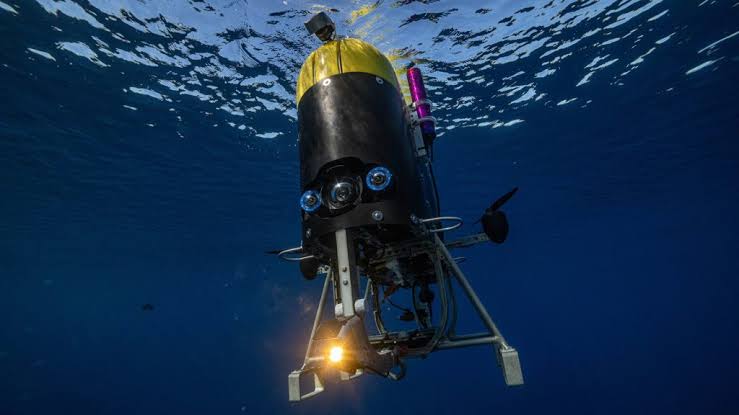
An unmanned maritime vehicle does not need to carry the life-support systems required by a human crew. It can remain at sea for extended periods, conduct reconnaissance, monitor submarine activity, detect mines or perform missions against designated targets.
NATO’s Task Force X-Central Mediterranean activities in 2026 also tested the operation of unmanned platforms alongside crewed assets using more than 100 different systems. This approach indicates that future fleets could consist not only of large crewed warships, but also of large numbers of smaller, interconnected unmanned systems.
Nevertheless, the human role will remain in complex missions where maritime law and international relations come into play. In situations such as searching a commercial vessel, stopping a civilian boat or conducting a sensitive operation against a port, technical target identification alone is not sufficient. Legal authority, political consequences and the risk of possible escalation must also be assessed.
Ground warfare will be the most difficult domain for robots
The area in which robots are likely to face the greatest challenges will be ground warfare.
In open terrain, navigating, identifying targets or transporting supplies may be relatively easy for an autonomous vehicle. However, cities, forests, mountainous regions and particularly underground tunnel networks make the battlefield far more complex.
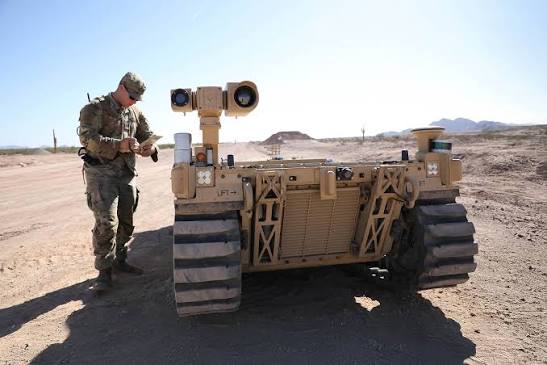
In an environment where GPS signals can be disrupted, communications can be degraded by electronic warfare, buildings can collapse within hours and maps can rapidly become obsolete, it may not be sufficient for a machine to operate according to pre-programmed behaviour.
Moreover, the uncertainty of human behaviour is far greater in ground warfare. Determining whether a person emerging from a building is an armed combatant, a civilian, a wounded person or someone leaving the area for another reason is not simply a technical image-recognition problem.
This is where cultural knowledge, context, intuition, judgement and legal responsibility come into play.
Therefore, artificial intelligence may assist in locating a target; however, completely eliminating human judgement capable of assessing the question “why should this target not be attacked?” particularly during critical engagement decisions, could create serious problems.
The real issue is removing humans from the loop
The most critical debate surrounding AI-enabled warfare begins precisely here.
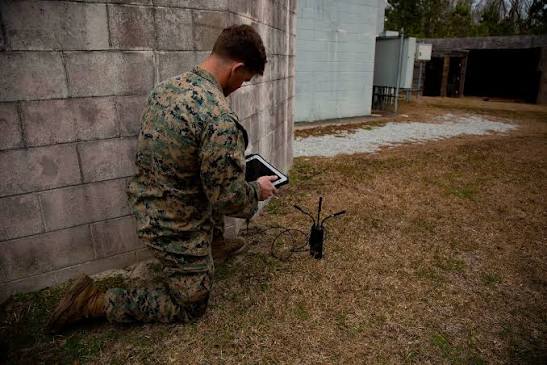
As machines accelerate the decision-making process, the amount of time available for humans to make decisions decreases. In an environment where a missile or attack drone can reach its target within seconds, it may theoretically be possible for a human to examine the recommendation generated by the system, consider alternatives and intervene, but doing so could become extremely difficult in practice.
Studies published within NATO in 2026 also identify the preservation of accountability and human oversight in AI-enabled command-and-control systems as one of the fundamental challenges. NATO’s approach emphasises human responsibility, explainability, reliability and the ability to deactivate systems when necessary in the use of artificial intelligence.
Therefore, the greatest danger in future wars may not be robots turning into science-fiction characters that act according to their own will. A more realistic risk is that humans become increasingly dependent on the decisions of rapidly operating systems and that, at a critical moment, there may simply not be enough time to challenge a decision produced by a machine.
The new warfare order will be based on human-machine cooperation
When all these developments are considered together, the most realistic answer to the question “will future wars be fought entirely by robots?” is, for now, no.
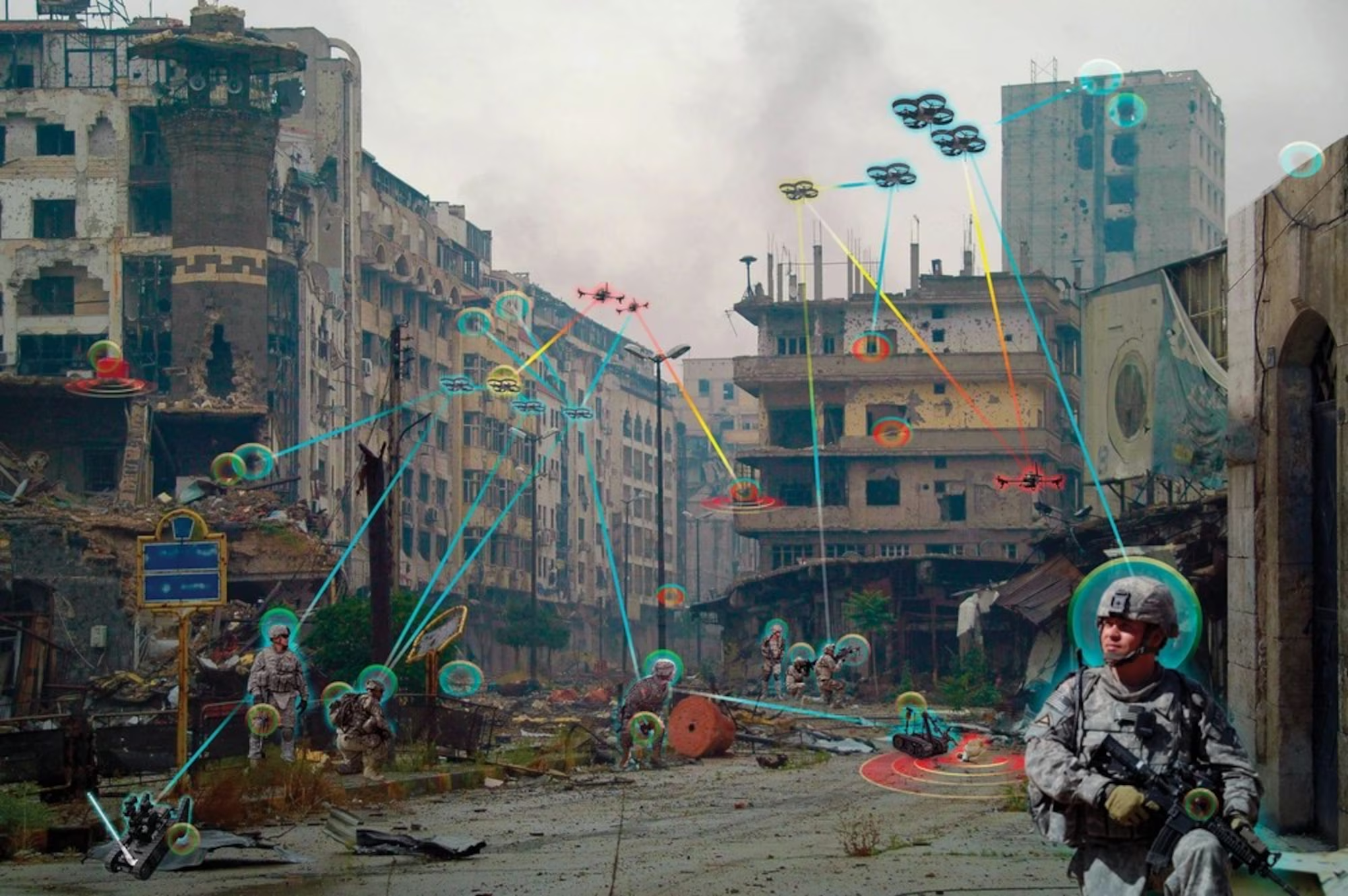
However, this does not mean that humans will retain their traditional position on the battlefield.
Future soldiers will likely undertake very different tasks from those performed by soldiers in the past. Some will manage hundreds of unmanned systems rather than directly entering combat; others will assess intelligence generated by artificial intelligence, while others will direct electronic warfare and cyber operations. In other words, while the number of soldiers may decrease in certain missions, the qualitative importance of humans within the system may increase.
Rather than replacing humans, robots may become tools sent into places humans cannot reach, operating for periods humans cannot endure and undertaking missions that are too dangerous for people.
For this reason, the armies of the future will not simply be those that acquire more robots. The real advantage will belong to forces capable of integrating crewed and unmanned systems within a single warfare architecture, using artificial intelligence as an aid to decision-making and preserving human responsibility at critical decision points.
Humans will not disappear completely from the battlefield. But the role of humans on the battlefield will change.
What will shape the wars of the future will not simply be the most advanced robot; it will be the warfare architecture capable of combining human intelligence and machine speed in the most effective way within the same system.