

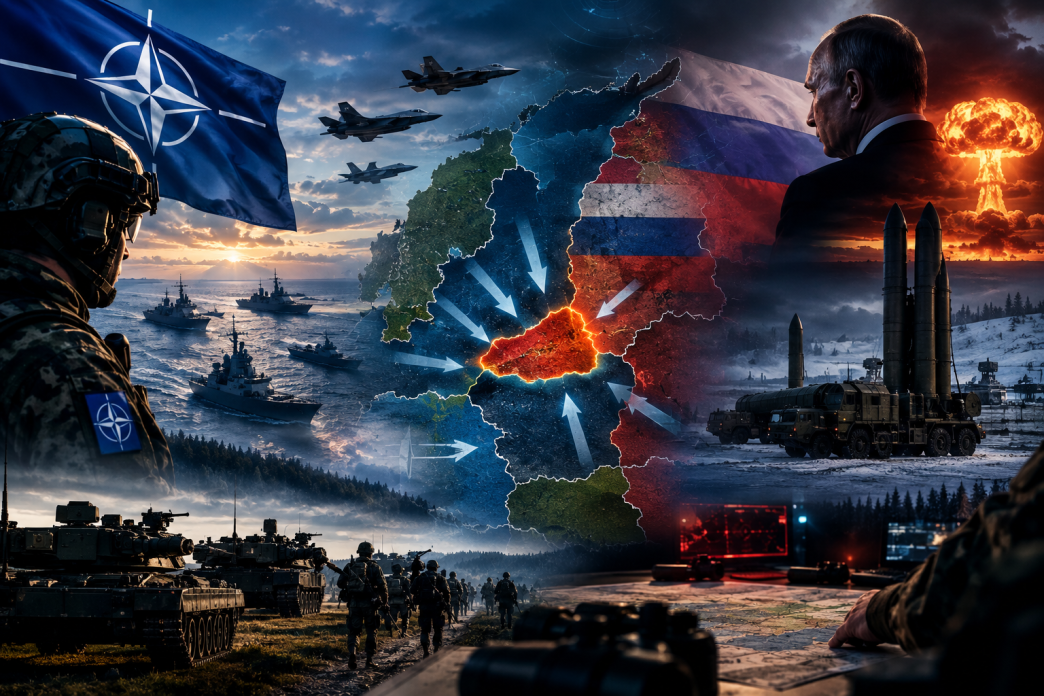
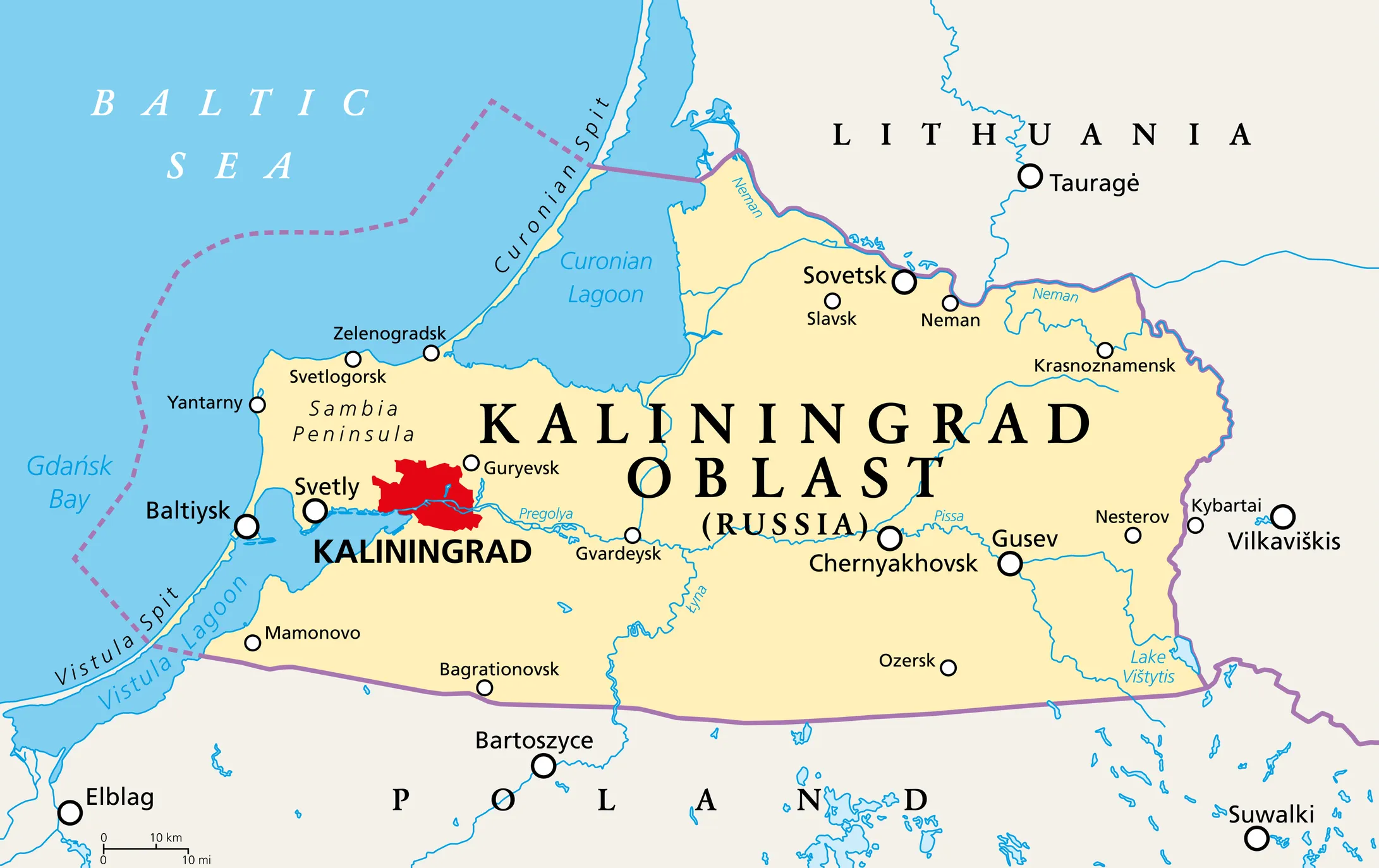
The security competition between Russia and NATO is evolving beyond the battle lines in Ukraine into a broader strategic confrontation extending to northern Europe and the Baltic Sea. By bringing the Kaliningrad exclave, located on the Baltic Sea between Poland and Lithuania, back into the spotlight, Moscow is emphasizing that this region is an indispensable security zone for Russia. The Kremlin’s message is clear: any attempt by NATO to sever Kaliningrad’s connection with mainland Russia could result in a response involving the use of nuclear weapons.
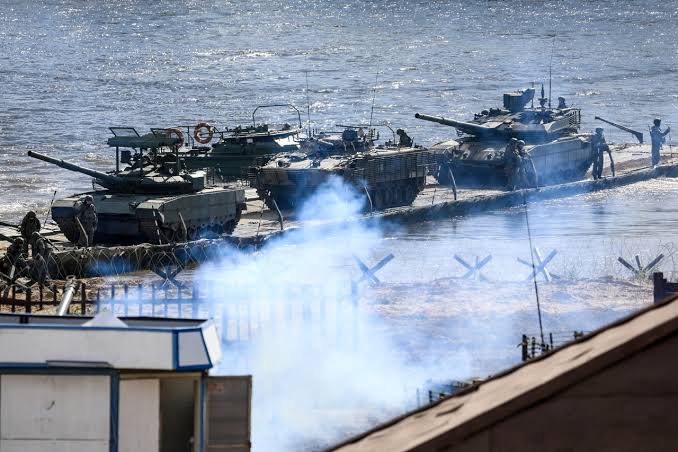
However, interpreting these threats solely through the lens of Russia’s military doctrine and its sensitivity regarding territorial integrity risks overlooking the broader dimensions of the issue. While Kaliningrad remains one of Russia’s instruments of military pressure against Europe, it is also becoming a symbol of the military and strategic constraints Moscow has faced as a result of the war in Ukraine. Therefore, the Kremlin’s nuclear rhetoric surrounding the region can be viewed not merely as a defensive warning, but as part of a broader deterrence policy aimed at restricting NATO’s room for maneuver and weakening Western countries’ support for Ukraine.
Why is Kaliningrad once again at the center of the strategic agenda?
The renewed escalation of tensions surrounding Kaliningrad has also been influenced by The Wargame, a television production aired in the United Kingdom that examines how London might respond to a potential Russian attack. While the Kremlin portrayed such scenarios as part of the threats directed against Russia, it accused NATO of pursuing a dangerous and irresponsible policy. In its diplomatic note to NATO, Moscow stated that all available military capabilities, including nuclear weapons, could be used if an attempt were made to isolate Kaliningrad from the rest of Russia.
NATO, meanwhile, rejected these accusations, stating that the alliance is defensive in nature and that its activities do not threaten Russian territory. The alliance also called on Moscow to end its full-scale invasion of Ukraine and abandon its nuclear threats.
Nevertheless, it would be inaccurate to regard the television production in question as the direct cause of a new military crisis between Russia and NATO. The real issue is that security debates in Europe are no longer confined to confrontations between conventional military forces. Nuclear weapons, unmanned systems, attacks on critical infrastructure, cyber operations, and military exercises are among the instruments used by the parties to influence one another’s decisions.
The renewed focus on Kaliningrad is also part of this broader competition. By characterizing any military planning concerning the region as a threat to its own territory, Moscow is attempting to make NATO’s deterrence activities more costly, both politically and militarily.
Nuclear rhetoric as a long-standing instrument of Russian pressure
Russia’s threats to use nuclear weapons against Western countries are not new. Since the beginning of the war in Ukraine, figures close to the Kremlin and some commentators in Russian state media have raised the possibility of nuclear attacks against European capitals supporting Kyiv. At times, this rhetoric has appeared less as a response to military necessity than as a communication strategy intended to instill fear among Western publics and influence the political decisions of their governments.
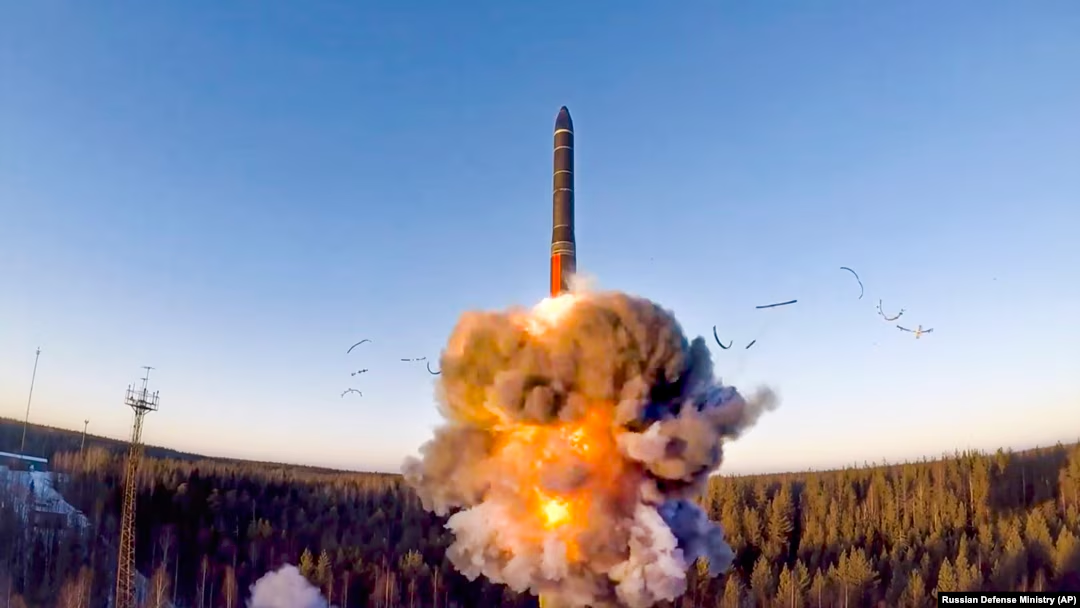
One notable example of this approach came in 2022, when the idea of launching a nuclear attack on London during the funeral of Queen Elizabeth II was raised on the Russian state television program 60 Minutes. The continued use of similar threats years later demonstrates that Moscow employs nuclear rhetoric not only as an extraordinary wartime option but also as an instrument of strategic pressure.
Margarita Simonyan, head of the RT television network, has also illustrated this contradiction by accusing the British media of exaggerating the possibility of war with Russia while simultaneously bringing the possibility of nuclear weapons use back into the discussion. Circles close to the Kremlin characterize Western discussions of the Russian threat as provocative, while presenting their own nuclear statements as a natural component of deterrence.
The fundamental objective is to generate political effects before nuclear weapons are actually used. Russia wants Western countries to avoid direct military intervention, limit their support for Ukraine, and adopt more cautious decisions regarding NATO’s eastern flank. In this way, the nuclear threat becomes a mechanism of psychological and diplomatic pressure that extends beyond developments on the battlefield.
How has the war in Ukraine changed Kaliningrad’s military value?
For many years, Kaliningrad was regarded as one of Russia’s forward military outposts in Europe. Its separation from mainland Russia and its location within a region surrounded by NATO member states have given particular importance to the military systems deployed there. As the headquarters of the Baltic Fleet, the region occupies a critical position in supporting Russian military activities in the Baltic Sea, strengthening air defense, and establishing deterrence against NATO’s eastern flank.
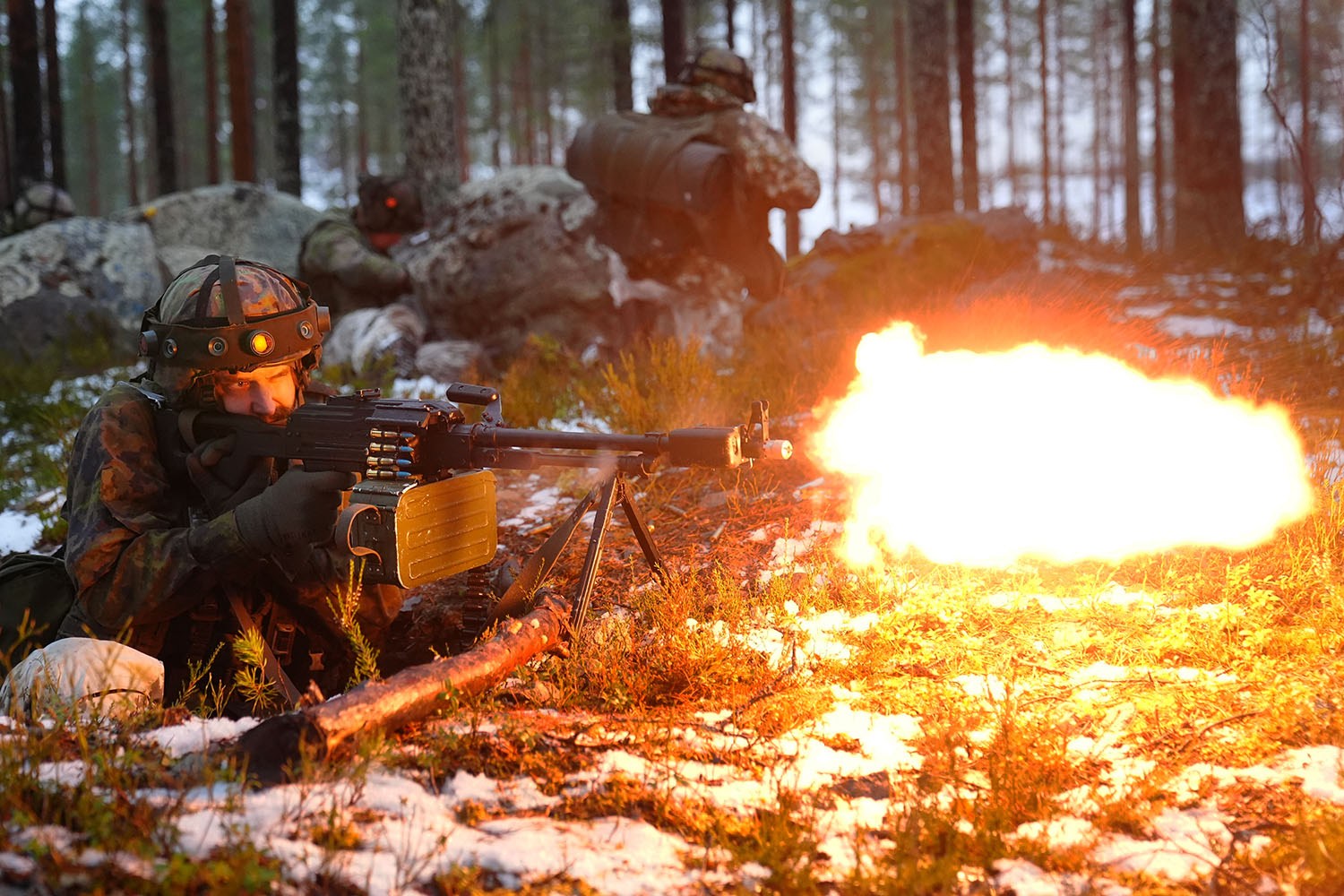
However, the full-scale war in Ukraine, which began in 2022, has also had consequences for Kaliningrad’s military capabilities. Russia’s redeployment of significant elements of its ground forces to the Ukrainian front weakened the region’s conventional military strength compared with previous years. The Kaliningrad-based 11th Army Corps also suffered heavy losses in the fighting in Ukraine. Although this did not eliminate the region’s military significance, it made the limitations on the conventional forces Russia could maintain there more apparent.
The statement made by Polish Foreign Minister Radosław Sikorski in September 2026, suggesting that the number of Russian troops in Kaliningrad had declined considerably, reflects the current dimension of this debate. Nevertheless, independent and up-to-date military data are needed to make a definitive assessment of the current condition and operational capabilities of the forces stationed in the region. The fact that troops have been sent to Ukraine does not mean that Kaliningrad is defenseless, nor should it be interpreted as evidence that Russia has lost all its military capabilities there.
The fundamental change is that Moscow must balance the need to maintain its conventional strength in Kaliningrad against the demands of the war in Ukraine. As pressure on Russia’s manpower, ammunition, air defense systems, and long-range strike capabilities increases, so does the cost of deploying the same military resources across different fronts.
Under these circumstances, nuclear deterrence is becoming more prominent as a potential means of compensating for limitations in conventional forces. While Kaliningrad retains its strategic importance, Moscow’s increased nuclear threats concerning the region indicate that the relationship between military capability and political deterrence is being reshaped.
The changing balance of power in the Baltic Sea
Assessing Kaliningrad’s strategic position also requires taking into account the broader changes in the balance of power in the Baltic Sea. Finland’s accession to NATO in 2023 and Sweden’s in 2024 significantly altered the alliance’s geographical and military position in northern Europe. As a result, the number of NATO members surrounding the Baltic Sea increased, and the alliance’s opportunities for military coordination in the region expanded.
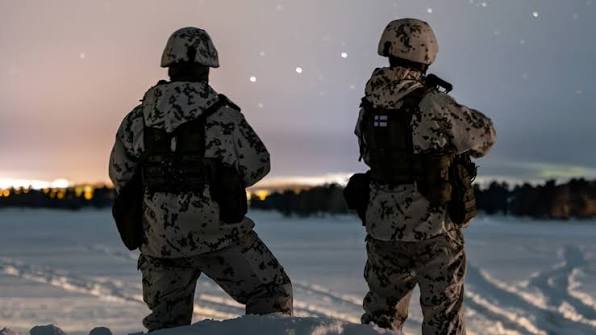
Nevertheless, describing the Baltic Sea as an area entirely under NATO control would oversimplify the military reality. Russia’s Baltic Fleet, military infrastructure in Kaliningrad, coastal defense systems, air defense assets, and long-range weapons remain important elements of the regional security equation. NATO’s increased geographical advantage does not mean that Russia has lost its ability to conduct military operations.
The changing situation is that Russia now faces a larger number of NATO members in the Baltic Sea and a more extensive system of alliance coordination. Consequently, the impact of the military pressure Moscow exerts through Kaliningrad is increasingly linked not only to the region’s own capabilities but also to NATO’s collective defense preparations.
Kaliningrad’s importance to Russia does not stem solely from the weapons systems currently deployed there. The region has the potential to influence NATO’s military planning on its eastern flank and make the defense of the Baltic states more complicated. For this reason, Moscow is attempting to preserve Kaliningrad’s strategic value through nuclear deterrence, even if its conventional forces are constrained.
The Suwalki Corridor and NATO’s eastern-flank vulnerabilities
One of the factors increasing Kaliningrad’s military importance is the Suwalki Corridor, which runs between Poland and Lithuania. This land connection, approximately 65 kilometers wide, links the Baltic states to the rest of Europe through Poland and other NATO allies. Kaliningrad lies on one side of the corridor, while Belarus, which maintains close military cooperation with Russia, lies on the other.
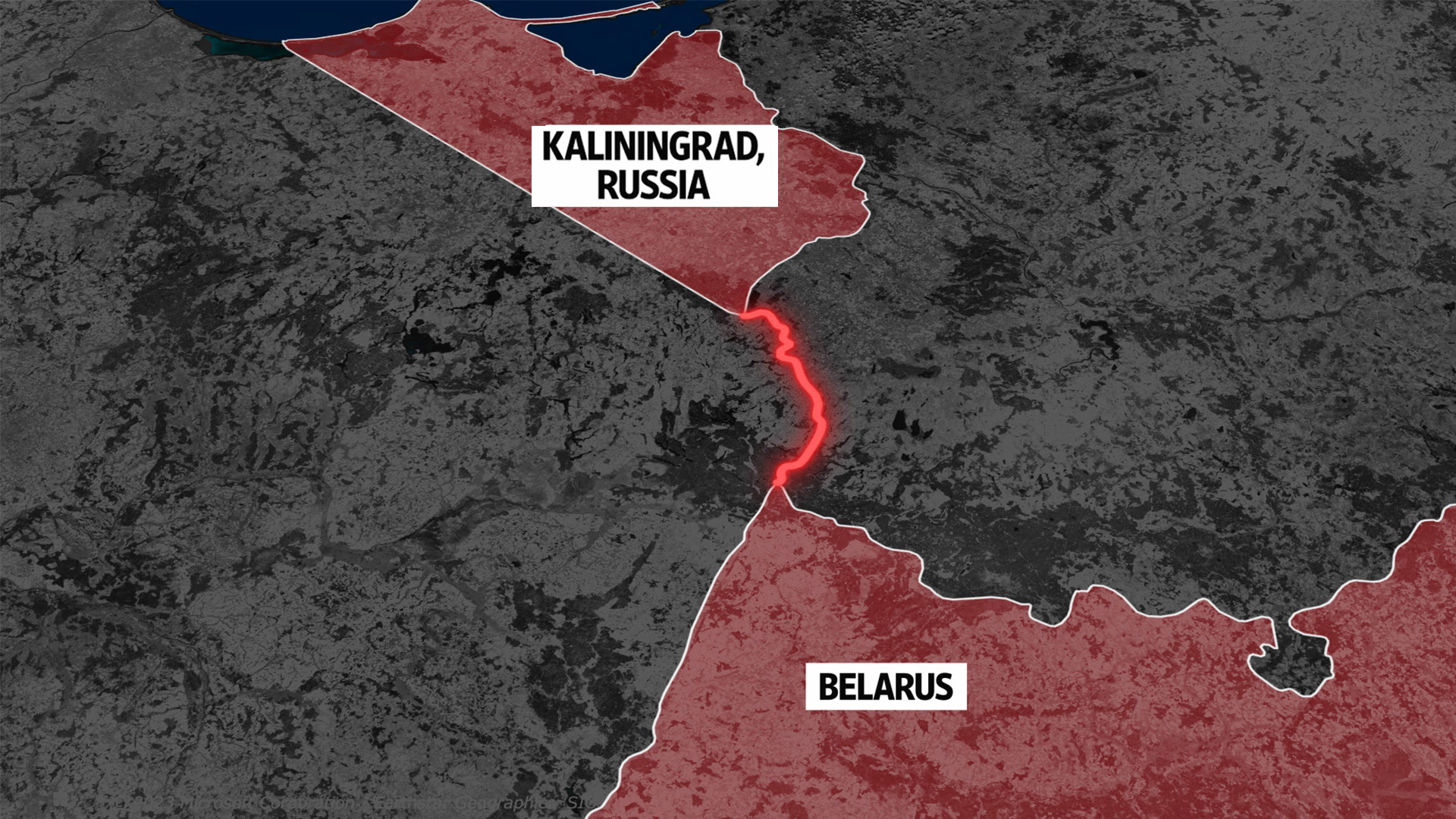
This geographical configuration makes the area a critical transit route in a potential NATO-Russia conflict. The severing of the Suwalki Corridor could seriously complicate the delivery of military reinforcements by land to Lithuania, Latvia, and Estonia. Consequently, protecting the area occupies an important place in NATO’s defense planning on its eastern flank.
The Zapad exercises regularly conducted by Russia and Belarus are closely monitored for this reason. The inclusion of simulated nuclear weapons use in the 2025 exercises demonstrated that military scenarios in the region are not limited to conventional warfare. Such exercises allow Russia to demonstrate its military options against NATO’s eastern flank and exert pressure on the alliance’s defense planning.
However, Russia’s military capabilities must be distinguished from its political messaging. The execution of a particular scenario during an exercise does not mean that the same operation could be carried out easily in an actual war. Any attempt to target the Suwalki Corridor would confront not only Poland and Lithuania but also NATO’s collective defense mechanism.
One dimension of the messages delivered through Kaliningrad is therefore to force NATO to continually account for this possibility in its military planning. By keeping military risks in the region on the agenda, Moscow may be seeking to direct the alliance’s resources and attention toward its eastern flank while also influencing Western capitals’ policies toward Ukraine.
Hybrid warfare and Europe’s security challenge
The nuclear rhetoric centered on Kaliningrad is emerging at a time when competition between Europe and Russia is no longer conducted solely through military formations and missile systems. Allegations of sabotage targeting critical infrastructure, cyberattacks, GPS signal jamming, the use of unmanned aerial vehicles, and disinformation campaigns are increasingly prominent on Europe’s security agenda.
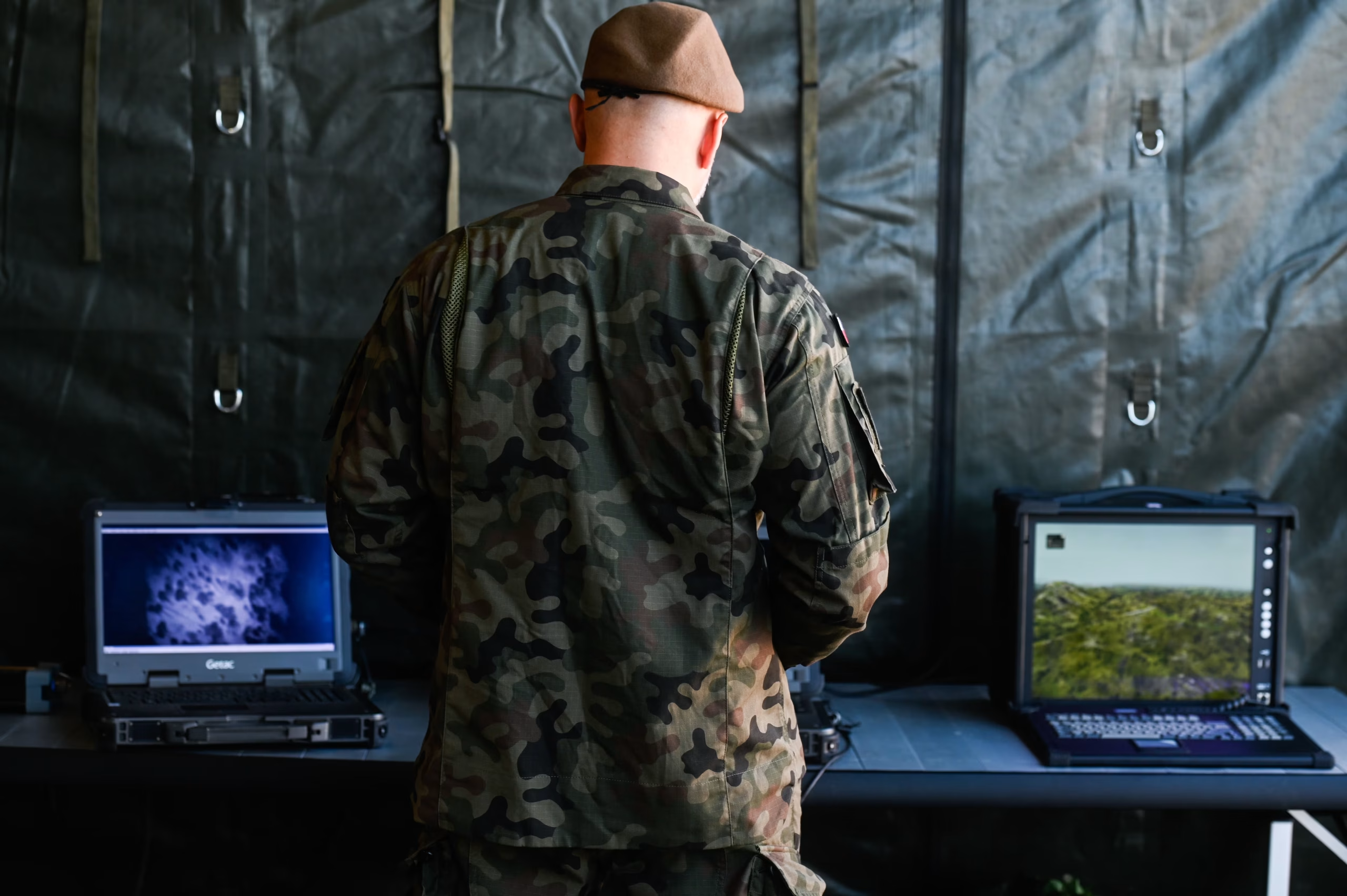
Each incident requires separate evidence before it can be directly attributed to Russia. Nevertheless, European governments’ concerns about Russian-origin hybrid threats help explain why NATO’s understanding of defense has expanded. Today, assessing a country’s security requires considering not only troops crossing its borders but also activities capable of targeting its energy grids, communications systems, ports, railways, and decision-making processes.
From Russia’s perspective, hybrid methods can offer a way to impose costs on its adversaries without entering into a direct NATO-Russia confrontation. Nuclear rhetoric complements the political dimension of this pressure. As risks to Europe’s critical infrastructure and military preparations are debated, the continued emphasis on the possibility of nuclear escalation further complicates the decision-making processes of Western countries.
NATO’s response, however, cannot be limited to military buildups. Protecting critical infrastructure, improving intelligence sharing, strengthening defenses against unmanned systems, and reliably identifying the sources of hybrid attacks are complementary elements of deterrence. The fundamental challenge for European security policy is not simply to respond to every new Russian threat with an equally forceful countermeasure, but to establish a resilient defense structure capable of managing the pressure such threats can create.
The central question of nuclear deterrence: Threat or capability?
Russia’s decision to present Kaliningrad as a new nuclear red line raises a fundamental question about deterrence: Is declaring that a country may use a particular weapon enough to change the behavior of its adversary?
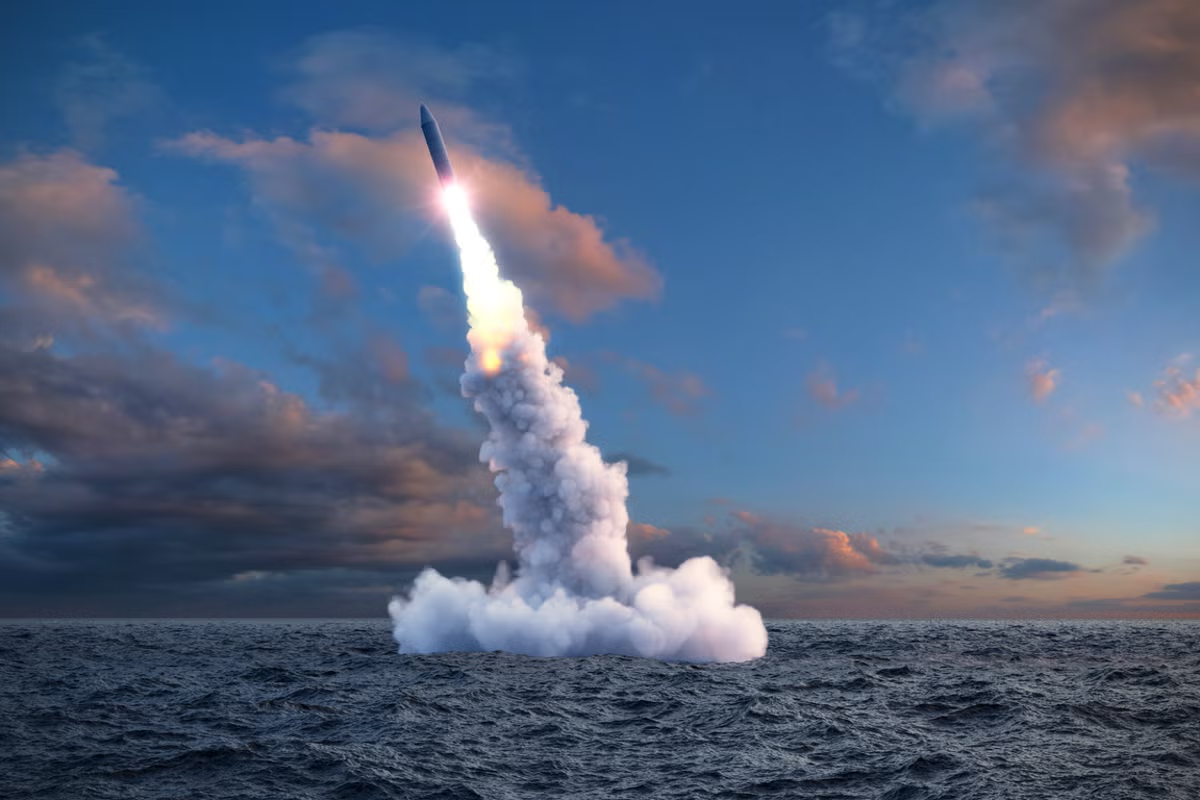
The Iskander-M missile systems stationed in Kaliningrad are among the key components of Russia’s deterrence capabilities in the region. Their ability to carry nuclear warheads makes the region a military center that NATO must take into account. However, the existence of these missile systems, the conditions under which they might be used, their potential effectiveness in a conflict, and the defensive capabilities of the opposing side are separate issues.
Nuclear deterrence does not depend solely on the number or range of weapons. It also depends on whether the opposing side believes an attack could occur, whether the threat is considered politically credible, and how the costs of a potential response are calculated. Nevertheless, excessive reliance on nuclear rhetoric may eventually undermine the credibility of a threat rather than strengthen its effect. Presenting every development as a nuclear red line also increases the risks of miscalculation and unintended escalation.
In the case of Kaliningrad, Moscow is attempting to limit NATO’s options by linking the security of the region to Russia’s fundamental interests. However, activities undertaken by NATO countries to defend their own territory and support their allies cannot be placed in the same category as a hypothetical operation intended to isolate Kaliningrad. Maintaining this distinction is important for both effective deterrence and sound crisis management.
A new era in European security and its strategic implications
The tensions surrounding Kaliningrad cannot be separated from the broader transformation of Europe’s security architecture caused by the war in Ukraine. While the war has accelerated military preparations on NATO’s eastern flank, European countries have been compelled to reassess their defense spending, ammunition production, air defense capabilities, and ability to sustain a prolonged conflict.
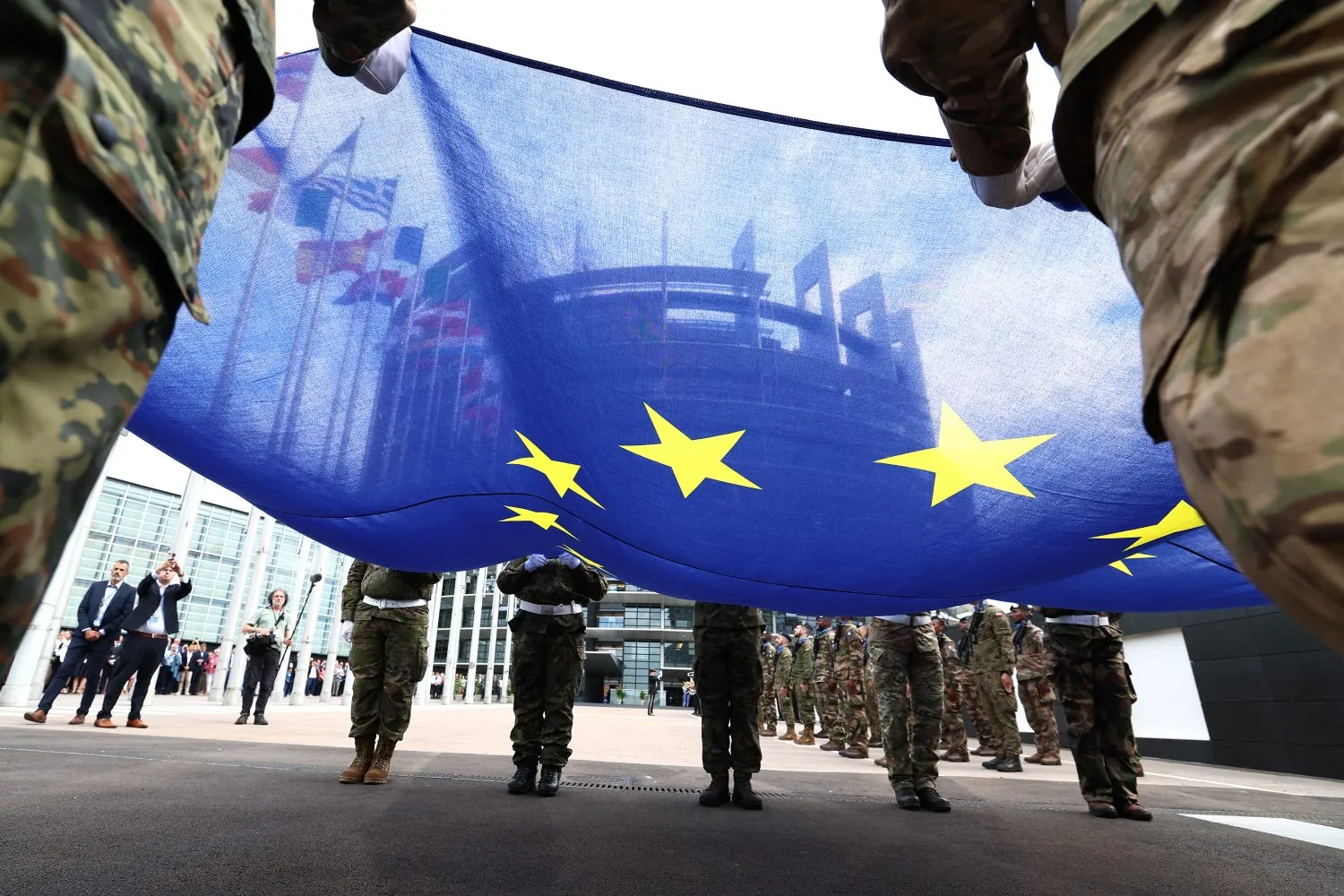
One of Europe’s main challenges in this process is to manage the risk of nuclear escalation while strengthening conventional defense capabilities. Completely backing down in response to Russia’s nuclear threats could encourage Moscow’s policy of coercion. Conversely, treating every statement as a challenge requiring a direct military response could cause the crisis to spiral out of control. Deterrence and efforts to keep tensions under control must therefore proceed together.
This transformation also has significant implications for the defense industry. Europe’s need for air and missile defense systems, electronic warfare capabilities, counter-drone measures, early-warning infrastructure, and secure communications systems is increasing. This need requires defense investment to focus not only on procuring platforms and weapons but also on integrated command-and-control systems and logistical infrastructure capable of supporting prolonged operations.
For NATO members such as Türkiye, this new era in European security also makes it necessary to address the alliance’s defense capabilities as an integrated whole. The security environment stretching from the Black Sea to the Baltic Sea is increasing the importance of coordination in air defense, unmanned systems, electronic warfare, intelligence, and the defense industry. However, the effectiveness of this cooperation depends on accurately assessing threats and distinguishing political rhetoric from actual military capabilities.
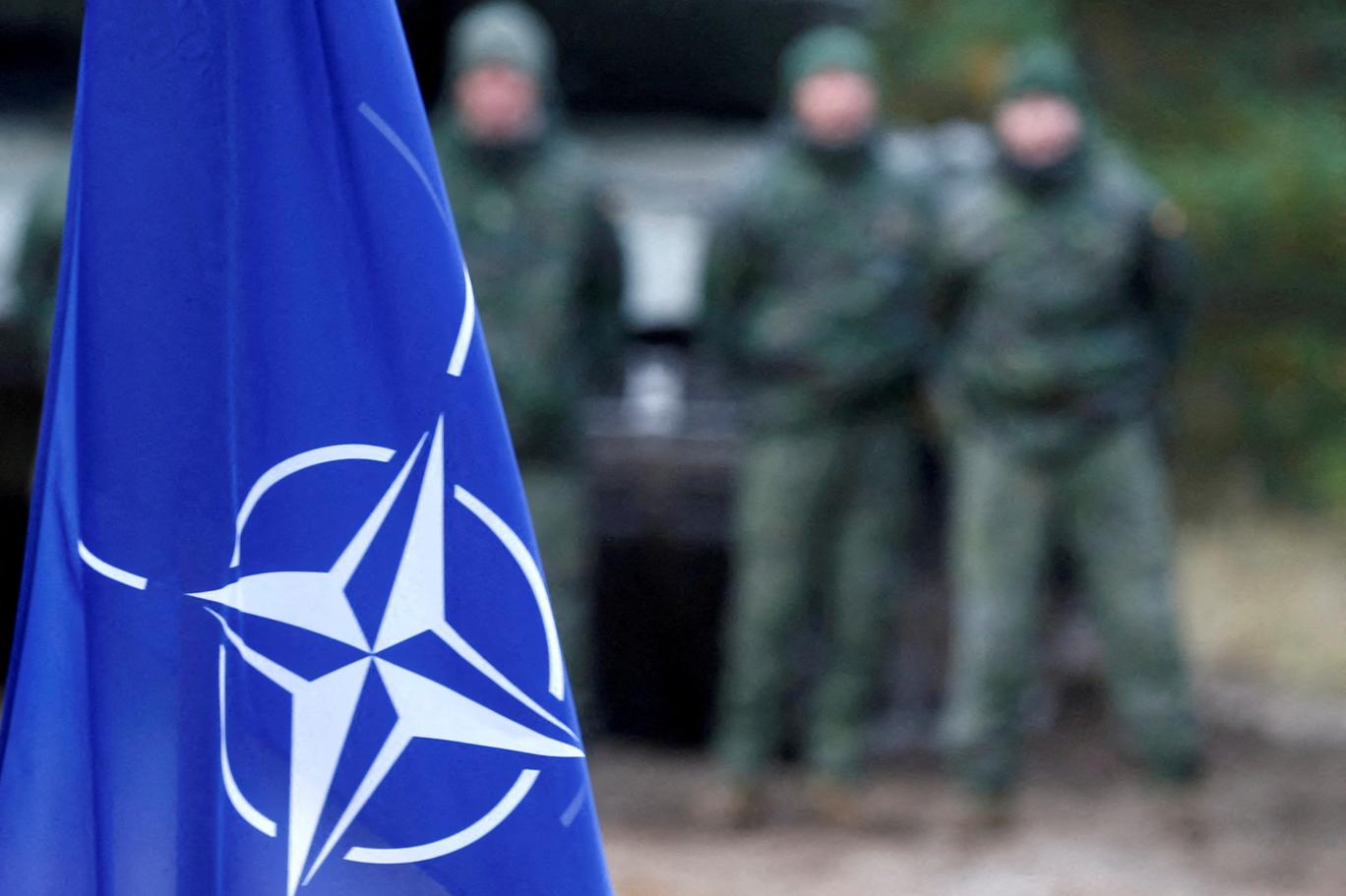
Ultimately, Kaliningrad is not a point where the confrontation between Russia and NATO has newly begun; it is a strategic area where the shifts in the balance of power caused by the war in Ukraine have become more visible. The Kremlin’s nuclear rhetoric can be understood not only as an attempt to preserve the region’s military significance but also as part of an effort to influence Western decisions and restrict support for Ukraine. However, debates over Russia’s conventional capabilities in the region do not mean that Kaliningrad has become irrelevant, just as they do not mean that Moscow’s nuclear threats are credible under all circumstances.
Europe’s real challenge is to avoid viewing Kaliningrad either as an untouchable Russian fortress or as an ineffective military outpost. What matters is accurately assessing the region’s actual military capabilities, strengthening NATO’s collective defense, and limiting the potential of nuclear rhetoric to push crises beyond control. After all, Europe’s security depends not only on the weapons Russia possesses but also on the extent to which the threats posed by those weapons can be managed.
Source: Times of Defence