

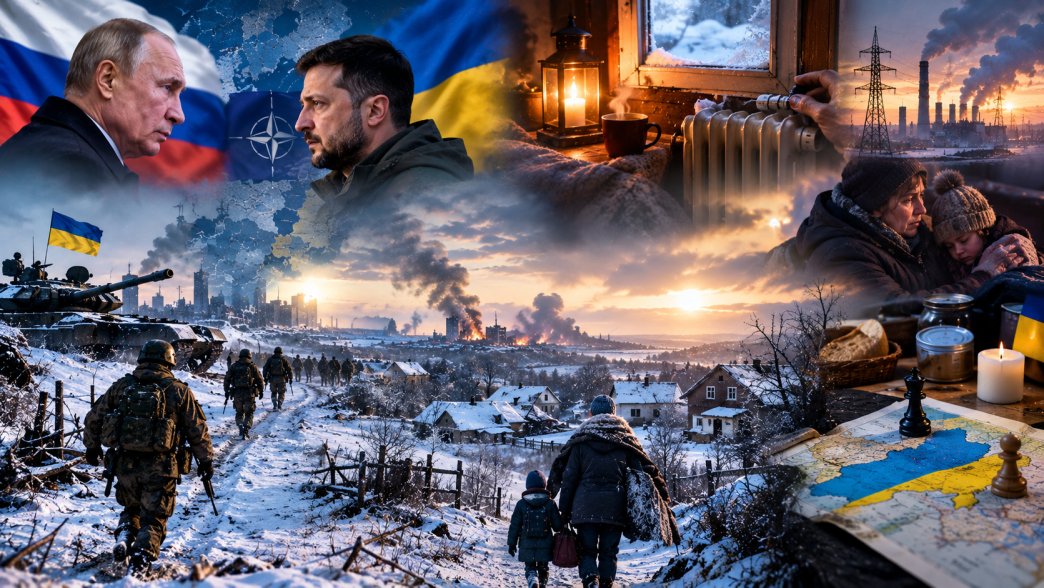
The Russia-Ukraine war can no longer be explained solely by kilometers on the Donbas front, captured villages, or tactical gains along the battlefield. The conflict, now stretching beyond four years, has moved beyond conventional ground warfare and evolved into a prolonged war of attrition targeting the economies, energy infrastructure, transportation networks, defense industries, and societal resilience of both countries. As of September 2026, the emerging picture also shows that even if the war ends with a short-term ceasefire, the strategic rivalry will not disappear.
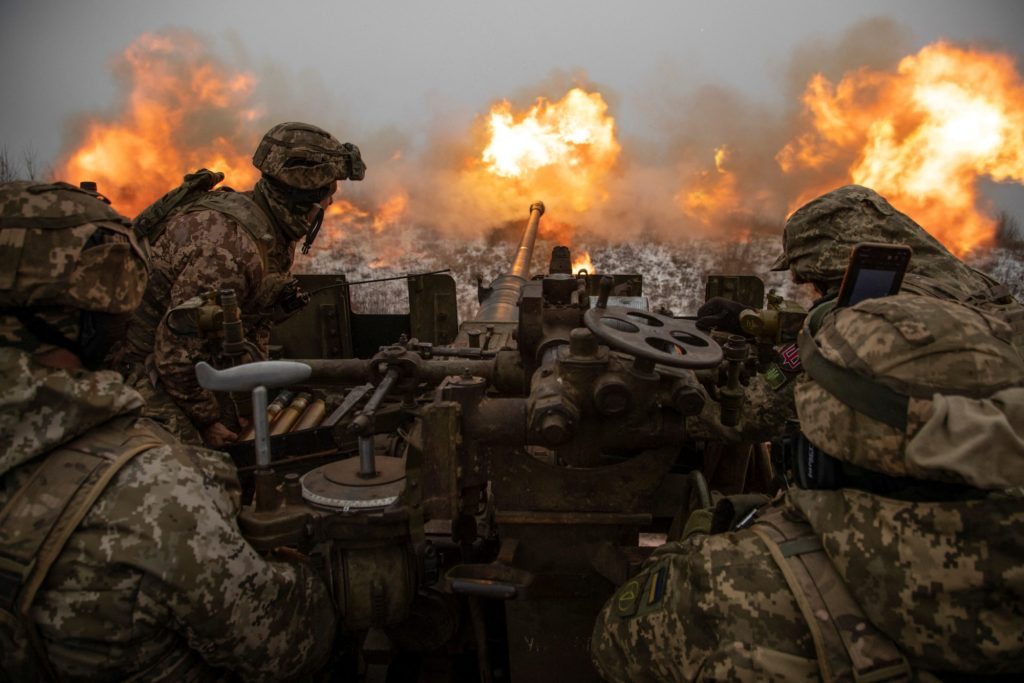
In recent weeks, intense Russian missile and drone attacks against Kyiv have once again exposed the vulnerability of Ukraine’s air defenses, particularly against ballistic threats. The attacks on Kyiv on September 28, followed immediately by further bombardments, demonstrated that Russia continues its strategic air campaign, while Ukraine is expanding its long-range drone attacks against Russia’s energy and military infrastructure. Thus, the war has developed two separate fronts: the first is the conventional ground war in and around Donbas, while the second is the economic and technological war being waged in the strategic depth of both countries.
A stalemate on the front line
The most important characteristic of the war is that neither side, under current conditions, has been able to impose a decisive military outcome on the other. Russia possesses considerable manpower, ammunition, and defense-industrial capacity, but its rate of advance comes at a high cost. Ukraine, meanwhile, is attempting to compensate for its more limited manpower through drone technology, precision-strike capabilities, and Western support.
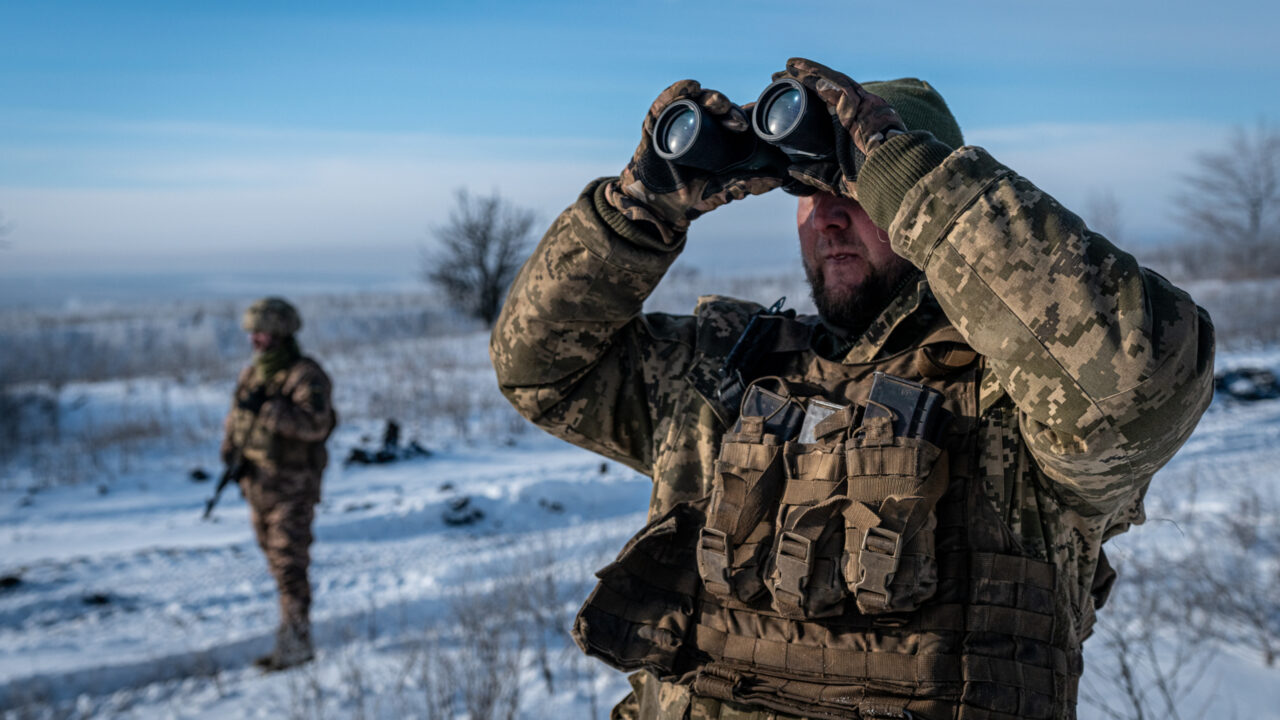
For this reason, the center of gravity of the war is no longer simply territorial gain, but the capacity to endure. Ukraine’s limited counteroffensive north of Donetsk in September does not mean that the stalemate on the battlefield has completely disappeared, but it does demonstrate that the war is still not developing as a one-sided advance.
For Russia, the fundamental problem is that despite committing resources on a massive scale to the war, it has been unable to achieve a strategic breakthrough. Moscow’s plan to increase defense spending by 27 percent to 17.1 trillion rubles in 2027 indicates that the Kremlin continues to prepare for a prolonged conflict rather than seeking to end the war in the short term. The same budget documents also show that expectations for the 2026 budget deficit have risen above previous estimates.
This reveals the fundamental paradox of the war: Russia is strong enough to sustain the war, but not strong enough to achieve a rapid victory at the current cost. Ukraine does not possess the capacity to end the war on its own, but it retains the ability to prevent Russia from achieving a decisive victory.
Ukraine’s challenge: manpower as much as technology
One of Ukraine’s most important advantages throughout the war has been its ability to turn limited resources into a force multiplier through technology. FPV drones, long-range unmanned systems, electronic warfare, and a rapidly expanding domestic defense industry have enabled Ukraine to partially offset Russia’s numerical superiority.
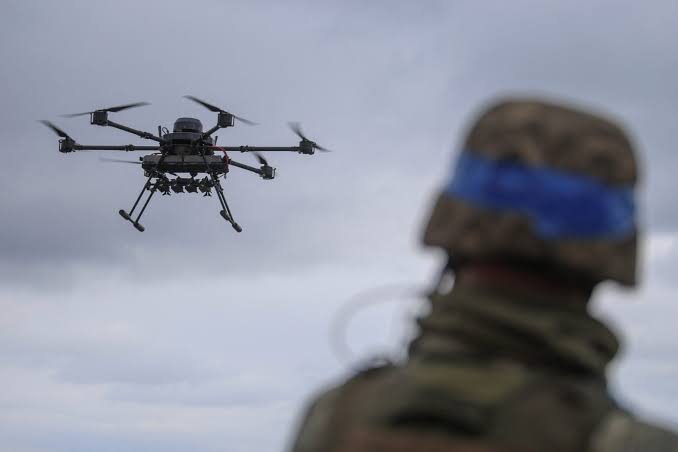
Yet technology cannot completely eliminate the manpower problem. The prolonged war, population losses, emigration, war fatigue, and mobilization difficulties remain among the most important structural challenges facing Kyiv. At the same time, the cost of the air-defense ammunition required to protect cities and energy infrastructure continues to rise. Global pressure on U.S. Patriot stocks and missile requirements in different theaters have turned Ukraine’s air-defense challenge into not merely a production issue, but also a question of global resource allocation.
Economically, Ukraine’s most important advantage is that its wartime economy can be sustained through external support. On September 24, the European Union approved a new payment of approximately €3 billion and stated that Ukraine continues to benefit from the €50 billion Ukraine Facility mechanism extending through 2027.
Consequently, Kyiv’s resilience depends not only on its own economic capacity, but also on the long-term political will of Europe and its other supporters. This is both Ukraine’s greatest strength and its most important strategic dependency.
Russia’s hidden vulnerabilities
Russia’s vulnerabilities are emerging less directly on the battlefield and more deeply within its economy. Energy revenues, high defense spending, labor shortages, rising public debt, and the pressure exerted by the wartime economy on civilian sectors are among the Kremlin’s principal challenges.
Ukraine’s attacks on Russian oil refineries, energy facilities, storage centers, and logistics infrastructure should therefore not be viewed solely as operations against military targets. Their purpose is to bring the cost of the war into Russia’s everyday economic life. Recent attacks on refineries and railway infrastructure in various parts of Russia demonstrate the deepening of this economic war.
Russia’s vast geography creates both an advantage and a disadvantage. Strategic depth provides Moscow with significant resilience, while the geographic dispersion of critical nodes such as railways, energy facilities, and refineries also creates an extensive economic network vulnerable to attack.
For this reason, in the future of the war, the more realistic risk may not be the complete collapse of the Russian economy, but a slowing economy increasingly dependent on military spending, creating greater pressure on the Kremlin.
The drone war has opened a new era
The Russia-Ukraine war has also transformed the cost equation of modern warfare. The ability of a drone costing several thousand dollars to repeatedly place air-defense systems worth millions of dollars on alert has highlighted the economic asymmetry between offense and defense.
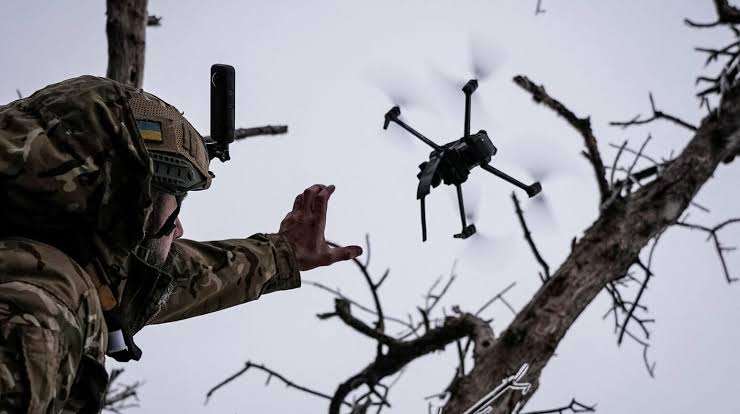
As a result, the wars of the future will not be determined simply by how many drones are produced. More important factors will include the ability of drone swarms to communicate, identify targets, operate under electronic warfare conditions, use artificial intelligence-assisted decision-making, and confront them with low-cost interception systems.
Ukraine’s attacks deep inside Russia and Russia’s intensive air strikes against Ukrainian cities demonstrate that the war is no longer merely a struggle between ground forces. Power plants, refineries, ports, railways, logistics hubs, and defense-industrial facilities have become as important as the front line itself. The European Union has also emphasized that Russian attacks are increasingly targeting energy, port, railway, and logistics infrastructure.
Between diplomacy and war
Washington’s renewed diplomatic efforts in September 2026 indicate that the war has entered a search for a political exit as well as a military one. While Trump’s representatives have been conducting contacts between Moscow and Kyiv, the possibility of a ceasefire aimed at limiting attacks on energy infrastructure has also emerged. However, despite the continuation of diplomatic contacts, the parties have yet to reach an agreement on the fundamental political conditions of the war.
The central problem here is the difference between a ceasefire and a resolution to the war. A temporary halt in fighting on the battlefield will not automatically resolve the territorial issue, security guarantees, sanctions, Ukraine’s future defense capabilities, or Russia’s position within the European security architecture.
For this reason, a possible ceasefire may represent the beginning of a new phase rather than the complete end of the war.
The real war is a battle of endurance
The future course of the Russia-Ukraine war will not be determined solely by advances on the battlefield. How long Russia can bear the economic cost, how much loss of manpower and infrastructure Ukraine can withstand, how long Europe can sustain its financial and military support, and whether defense industries can keep pace with the rate of wartime consumption will all be decisive.
Today, the most important front in the war may be the one that does not appear on maps: the resilience of societies.
For this reason, unlike the great ground wars of the 20th century, the Russia-Ukraine war has become a conflict not only between armies, but also between economies, technologies, energy systems, demographic structures, and political will.
The question determining the future of the war is therefore moving increasingly away from “Who will gain more territory?”
The real question is:
Who can sustain the economic, military, and social costs of the war for longer?
There is no definitive answer today. But as the war continues, it is becoming increasingly clear that the factor determining victory will not be firepower alone, but resilience and sustainability.
Source: Times of Defence