


The Chinese People’s Liberation Army (PLA) has deployed a multi-platform aerial surveillance vector—comprising long-range Unmanned Aerial Vehicles (UAVs) and electronic intelligence (ELINT) aircraft—to execute persistent intelligence, surveillance, and reconnaissance (ISR) operations around Japan’s southwestern island chain as U.S. and Japanese forces initiate the Keen Sword 27 joint exercise.
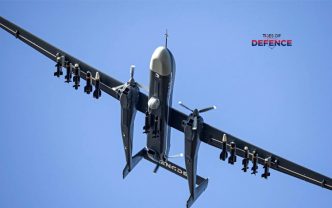
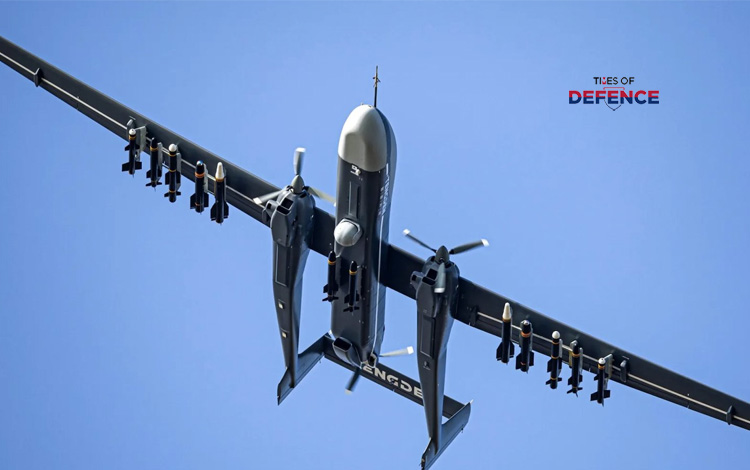
Confirmed by Japan’s Ministry of Defence Joint Staff, Japanese Air Self-Defense Force (JASDF) fighter jets were scrambled following detection of a Chinese BZK-005 medium-altitude long-endurance (MALE) reconnaissance drone and a Shaanxi Y-9 (GX-8) intelligence-gathering aircraft transiting from the East China Sea through the strategic Miyako Strait into the Western Pacific. Concurrently, a Tengden TB-001 “Twin-Tailed Scorpion” reconnaissance-and-attack drone executed a circuit flight between Yonaguni Island and Taiwan before tracking northeast toward Amami Oshima. The coordinated sorties directly targeted the peripheral maritime space of the Keen Sword 27 training zone, an exercise involving over 56,000 personnel (approx. 45,000 JSDF, 11,000 U.S. troops) alongside forces from Australia, Canada, France, Germany, the Netherlands, New Zealand, and the Philippines, focused explicitly on southwestern island defense and Taiwan Strait contingency scenarios.
TECHNICAL SPECIFICATIONS: PLA RECONNAISSANCE PLATFORMS & EXERCISE SURVEILLANCE VECTOR
Developer & Operating Branches
⚡ BZK-005: Harbin Aircraft Industry Group / Beihang University (PLAAF / PLANAF)
⚡ TB-001: Sichuan Tengden Sci-Tech Innovation Co., Ltd. (PLAAF / PLANAF)
⚡ Y-9 ELINT (GX-8): Shaanxi Aircraft Corporation (PLAAF / PLANAF) 
Primary Mission Roles
⚡ BZK-005: Strategic MALE Optical / SAR Aerial Reconnaissance & Signal Relay
⚡ TB-001: MALE Heavy Multi-Role Reconnaissance, Strike & Satellite Communications (SATCOM) Relay
⚡ Y-9 ELINT (GX-8): Airborne Electronic Intelligence (ELINT), Signals Intelligence (SIGINT), and Radar Emissions Mapping
Airframe Architecture & Physical Parameters
💥 BZK-005 Architecture: Twin-boom, pusher-propeller composite airframe | Length: 9.0 m | Wingspan: 19.0 m | MTOW: ~1,250 kg
💥 TB-001 Architecture: Twin-boom, dual-engine pusher/puller design | Length: 10.0 m | Wingspan: 20.0 m | MTOW: 2,800 kg
💥 Y-9 ELINT Architecture: Four-engine turboprop tactical transport derivative featuring large cheek/belly antenna radomes for passive RF interception
Kinematics & Operational Range Envelope
🚀 BZK-005 Limits: Cruise Speed: 150–180 km/h | Flight Endurance: ~40 hours | Service Ceiling: 8,000 m (26,200 ft)
🚀 TB-001 Limits: Max Speed: 360 km/h | Range: 6,000+ km | Flight Endurance: 35 hours | Service Ceiling: 9,000 m
🚀 Transit Corridors: High-altitude transit via Miyako Strait (Okinawa-Miyako gap) and Bashi/Yonaguni maritime corridors into the Philippine Sea
Sensor Suite & Electronic Reconnaissance Capability
🚀 Optical/IR Suite: Ventral Electro-Optical/Infrared (EO/IR) gimbal turrets for long-range visual surveillance
🚀 Radar & Signals SIGINT: Synthetic Aperture Radar (SAR) with Ground Moving Target Indicator (GMTI); passive RF direction-finding sensors mapping radar signatures of U.S./Japanese Type 25 air-defense units and naval assets
TIMES OF DEFENCE ASSESSMENT
The PLA’s synchronized deployment of the BZK-005, TB-001, and Y-9 ELINT platform during the opening phase of Keen Sword 27 demonstrates China’s mature real-time ISR-strike complex across the First Island Chain. By routing surveillance drones simultaneously through the Miyako Strait and the narrow corridor between Yonaguni Island and Taiwan, the PLA effectively completed a multi-angle sensor envelope surrounding Japan’s southwestern Nansei Islands.
From an electronic warfare perspective, the inclusion of the Y-9 intelligence-gathering aircraft alongside SATCOM-linked drones allows China to map radar emissions, command-and-control communication frequencies, and operational logistics patterns of the 56,000 participating allied troops. As Western and Pacific nations expand multilateral exercises around Taiwan’s eastern flanks, the PLA is leveraging its MALE drone fleet to build high-fidelity tactical target databases necessary for long-range anti-access/area-denial (A2/AD) fires in a potential regional crisis.

