


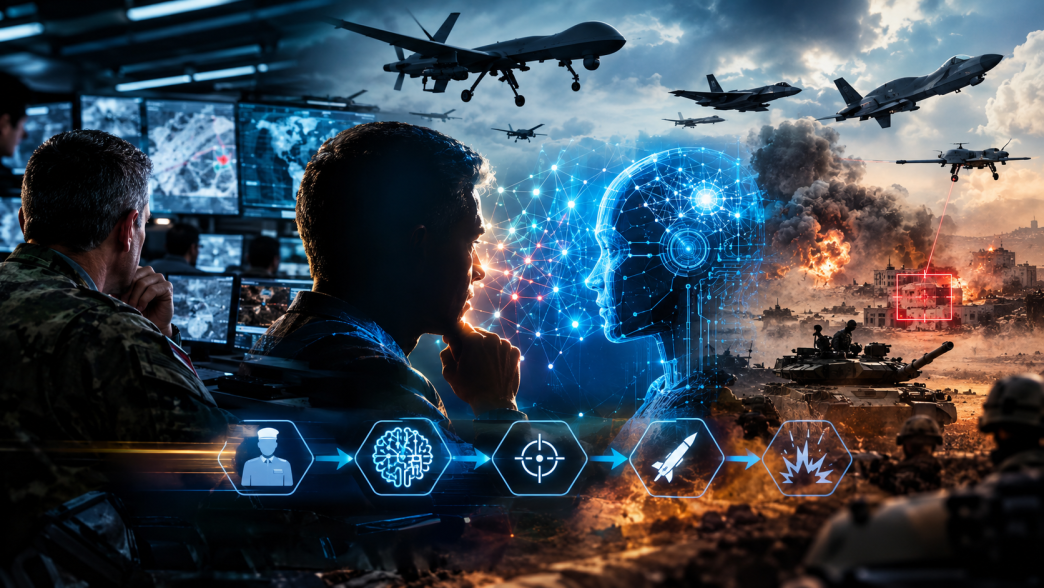
The transformation in warfare technology is moving toward unmanned systems evolving from platforms remotely operated by humans into systems that increasingly assume decision-making functions.
Today, a drone determining its own route, identifying targets from imagery, or continuing its mission when its connection with the operator is severed due to electronic warfare is no longer a theoretical future scenario. The truly critical change, however, is that artificial intelligence is beginning to determine not only “how” a weapons system will move, but increasingly “what” it will consider a target.
Therefore, the issue is no longer simply about producing smarter drones, faster missiles, or more advanced robots. The real question is at what stage in the decision to use lethal force in war humans may be removed from the process and who will bear responsibility for that decision.
The joint appeal issued by the United Nations and the International Committee of the Red Cross on August 25, 2026, also demonstrates the point the debate has reached. UN Secretary-General António Guterres and ICRC President Mirjana Spoljaric emphasized the urgent need to establish binding international rules concerning autonomous weapons systems. The two institutions warned in particular that machines independently targeting human beings could create serious legal and ethical problems.
Immediately before this appeal, the United Nations Group of Governmental Experts on Lethal Autonomous Weapons Systems met in Geneva from August 31 to September 4, 2026. At the center of the discussions was the establishment of a normative and operational framework for the future of autonomous weapons.
However, while the diplomatic process is advancing, technology on the battlefield is moving much faster.
The war in Ukraine is testing the warfare of the future
The Russia-Ukraine war has become one of the most important laboratories demonstrating how the combination of artificial intelligence and unmanned systems can be used in a real war environment. The transformation taking place here cannot be explained merely by the increase in the number of drones being used. The real change is emerging in the development of these systems’ capabilities to find targets, assess imagery, navigate, operate in an electronic warfare environment, and process information coming from different sensors.

Research concerning the Ukrainian front shows that a significant portion of the systems currently in use has not yet created a fully independent kill chain from beginning to end. At the same time, technologies that reduce the need for human intervention in areas such as automatic target recognition, autonomous navigation, image analysis, and the final approach phase are spreading rapidly. Particularly in an environment where GPS and communications links can be disrupted because of electronic warfare, the ability of platforms to perceive their surroundings and continue their missions has become operationally highly important.
At this point, the direction of change in warfare technology becomes clearer. The autonomous system of the future will not simply be a flying vehicle. A software infrastructure that combines information from sensors, intelligence sources, satellite imagery, electronic warfare data, and other unmanned platforms will also become part of the warfare system.
Indeed, assessments made in 2026 point out that the real transformation is taking place not so much in drone platforms themselves as in the “AI-enabled kill chain” behind them. The increasing management by software of processes such as detecting targets, combining data, prioritizing targets, and assigning the appropriate weapons system is taking the concept of autonomous warfare far beyond robots in the traditional sense.
The United Kingdom’s decision in September 2026 to allow battlefield data from Ukraine to be used in the development of AI-enabled drone swarms also demonstrates how far this trend has progressed from a defense industry perspective. Real data obtained on the battlefield is no longer merely becoming a resource for improving existing systems, but also a strategic resource for training next-generation autonomous warfare architectures.
The real struggle is not over hardware but the decision-making mechanism
The most critical dimension of the debate over autonomous weapons systems is the extent to which artificial intelligence will be incorporated into the targeting process.
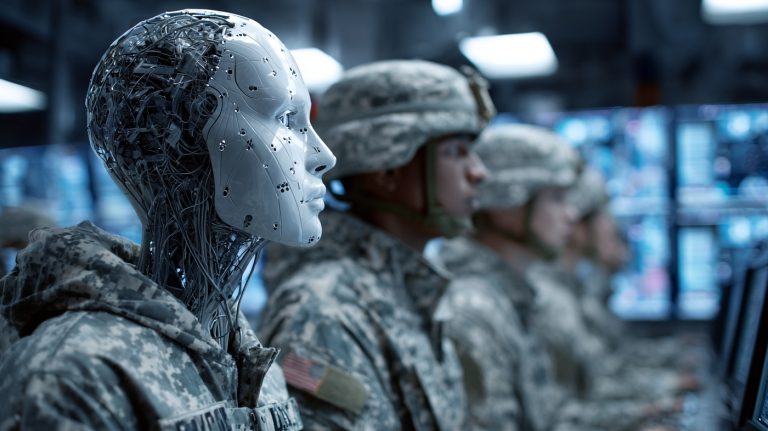
A system finding its way without GPS and a system independently deciding to identify and kill a human being as a target are not the same thing. The first is a technical autonomy problem. The second represents a very different stage in terms of international law, ethics, and human responsibility.
International humanitarian law requires the assessment of factors such as the nature of the target, potential harm to civilians, military necessity, and proportionality when making decisions about attacks. These assessments are not merely mathematical calculations. The same target can produce different legal consequences under different circumstances.
Artificial intelligence, meanwhile, attempts to assess the world through data points and probabilities. It may be technically possible to determine that a building is being used for military purposes. However, questions such as whether civilians are present around that building, whether civilians have left the building at that particular moment, or what secondary consequences an attack might create are not matters that can be resolved solely through an algorithm’s accuracy rate.
For this reason, technical precision and legal legitimacy should not be confused with one another. Even if an artificial intelligence system identifies a target with 99 percent accuracy, this does not mean that an attack on that target is lawful.
This is precisely why the ICRC advocates banning unpredictable autonomous weapons, banning systems designed to directly target human beings, and strictly limiting other autonomous weapons in terms of their targets, geographical scope, duration, and conditions of use.
Electronic warfare is accelerating autonomy
One of the factors accelerating the shift toward autonomous systems is electronic warfare.

GPS jamming, communications disruption, and electromagnetic deception are becoming increasingly widespread on the modern battlefield. A drone that remains constantly dependent on a human operator may be unable to complete its mission when its connection is severed. Therefore, a solution that appears attractive from a military perspective is to give the platform greater decision-making capabilities.
This creates a direct competition between electronic warfare and artificial intelligence. While one side attempts to sever the enemy’s connection with its drone, the other side develops systems that do not require such a connection. As a result, electronic warfare is unintentionally becoming a powerful driver of the development of autonomous weapons technology.
This situation could create an important paradox in future wars: while preserving human intervention is considered necessary from a legal and ethical perspective, the technical conditions of the battlefield may force militaries toward greater autonomy.
As speed increases, so does the risk of error
One of the most important advantages of autonomous systems is speed. Artificial intelligence can process enormous amounts of data much faster than humans can assess them within seconds or minutes.
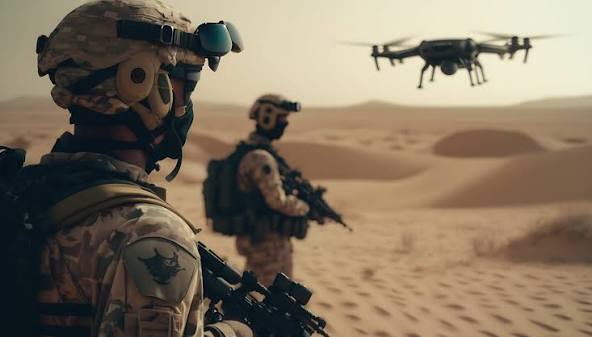
But speed does not always mean security in war.
A sensor error, a misclassified object, or a flawed dataset can turn into a direct attack in a system that bypasses the human final check. More importantly, if the opposing side is also using similar systems, decision-making cycles may become increasingly shorter. In such an environment, a movement misinterpreted by one side could cause the other side to respond automatically, followed by the beginning of a new chain of automated reactions.
Therefore, the introduction of artificial intelligence into the battlefield does not only raise the question, “Will machines become more accurate?” It also raises the question, “How much time will humans have left to make decisions during a crisis?”
The beginning of early-warning systems, air defenses, unmanned systems, and long-range precision weapons operating within the same network could create new risks for strategic stability.
An autonomous arms race is on the horizon
Another characteristic of the technology is that it is becoming increasingly cheaper.
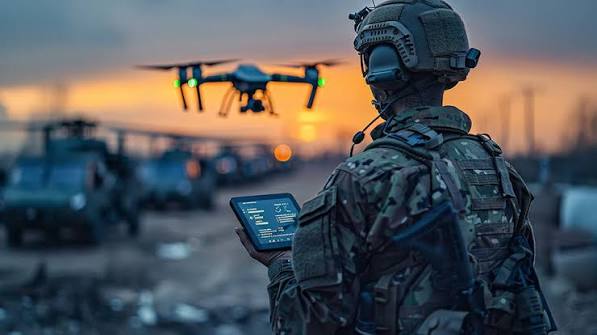
Unlike high-cost platforms, the production threshold for unmanned systems that can make use of commercial electronic components, open-source software, advanced cameras, and small processors is falling. This increases the possibility that not only major military powers but also smaller states and non-state actors could gain access to advanced autonomous capabilities.
Therefore, the arms race of the future may not progress merely through the production of more missiles, fighter jets, or tanks. The ability of large numbers of inexpensive platforms to move in a coordinated manner within an AI-supported network could change the cost and scale calculations of warfare.
The issue that emerges here is not so much “how many drones have been produced” as how effectively these drones can operate within a network.
This transformation is also creating a new area of competition for the defense industry. Although hardware remains important, sensor fusion, AI models, resilience against electronic warfare, secure communications, autonomous navigation, and real-time decision-support systems are becoming increasingly decisive.
Human control will become the strategic boundary of the future
All these developments make it necessary to establish a new international balance between completely banning autonomous weapons and leaving technological development without limits.
The fundamental issue here is not stopping technology, but determining within which boundaries the technology will be used.
Because it does not appear realistic to completely prevent the use of artificial intelligence on the battlefield. AI’s role will continue to grow in areas such as intelligence analysis, logistics, air defense, reconnaissance, electronic warfare, mine detection, target identification, and the navigation of unmanned systems.
The critical threshold will emerge when humans move from being decision-support systems to becoming systems that make the decisions themselves.
For this reason, the question facing the international community in the coming period is more concrete than the question, “Will robot wars begin?” The question is: Can a machine make the final decision to end a human life?
The 2026 appeals by the UN and ICRC, the negotiations in Geneva, and the experiences emerging from the battlefield in Ukraine show that this question is no longer a problem of the distant future. States have not yet reached a common conclusion on a binding regulation within the UN process; however, preserving human control and ensuring compliance with international humanitarian law are becoming increasingly prominent at the center of the debate.
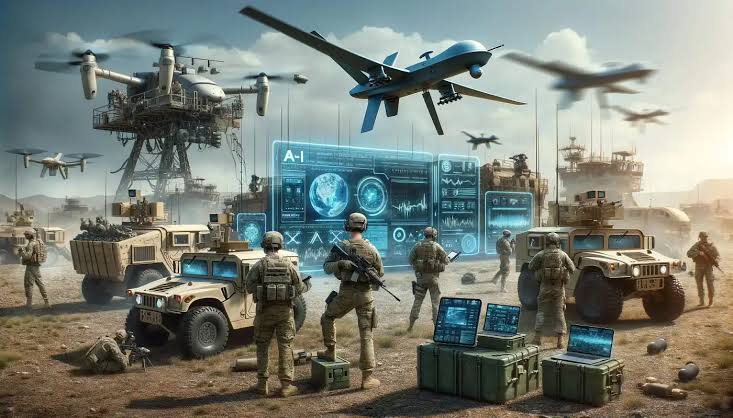
The outcome of the race between warfare technology and law could determine the character of warfare in the coming years. If technology advances rapidly while the law falls behind, the human share in the decision-making process may gradually shrink. Conversely, if states establish common and binding limits, artificial intelligence could be kept as a tool that enhances human capabilities on the battlefield rather than completely replacing humans.
In the wars of the future, the decisive factor will not only be who produces more drones. The real strategic advantage will take shape in the hands of the side that can bring together the speed of artificial intelligence and human legal, political, and moral responsibility within the same system.