

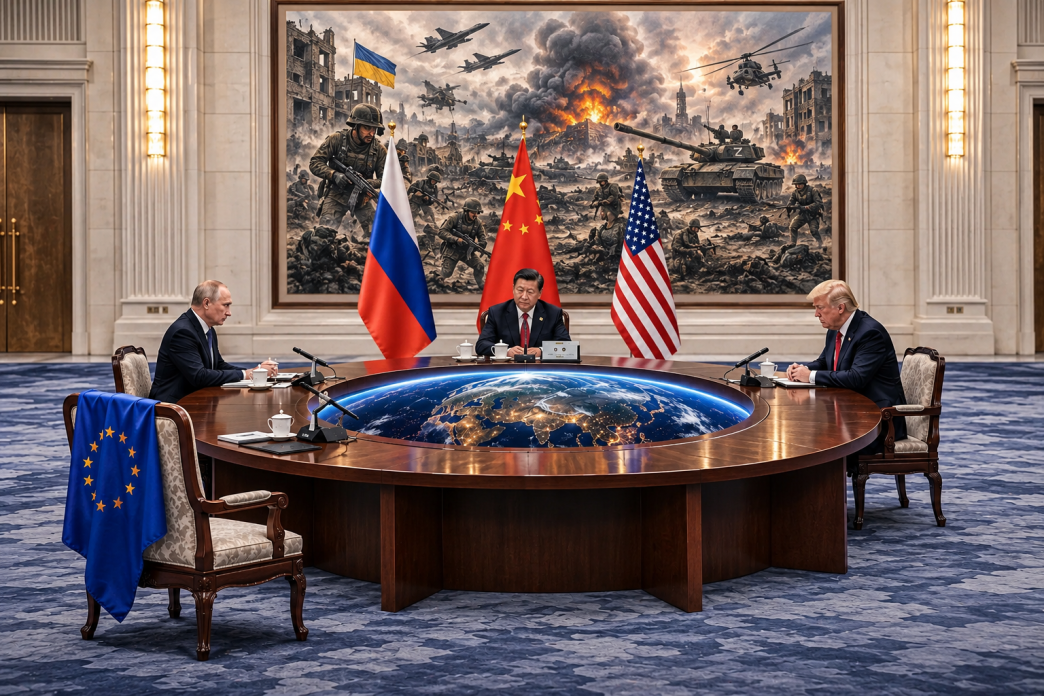
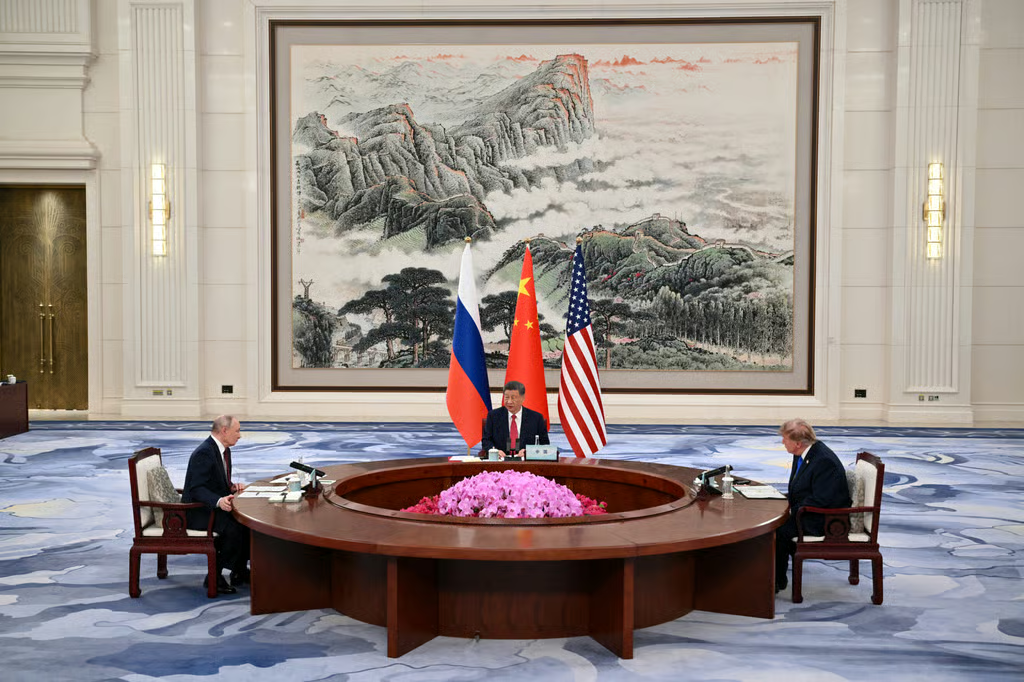
Recent developments in the international system have brought renewed attention to the question of which actors will shape global politics and under what rules. In addition to the rivalry between the United States, Russia, and China, the fact that these three countries have begun engaging in direct diplomatic contacts signals the emergence of a new era for the future of the international order. However, the first U.S.-Russia-China trilateral summit, held in Shenzhen, China, on November 18, 2026, marked a significant turning point not only in relations among the great powers but also in terms of Europe’s position in global politics.
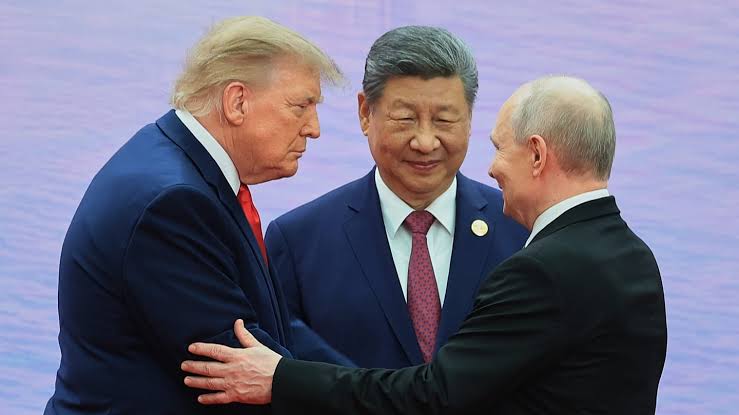
The exclusion of European countries from the summit attended by U.S. President Donald Trump, Russian President Vladimir Putin, and Chinese President Xi Jinping has raised questions about the continent’s diplomatic influence. More importantly, leaving European leaders outside the decision-making process while issues directly affecting Europe’s security, economic future, and political stability were being discussed became a concrete indication of the structural transformation taking place in transatlantic relations. 
In fact, it is not sufficient to explain this development solely through the Trump administration’s approach toward Europe. Washington’s growing departure from traditional alliance relationships, Moscow’s efforts to redefine its relations with the West, and Beijing’s rise to a more influential position in an increasingly multipolar international system are creating a new geopolitical environment in which Europe’s influence is becoming increasingly constrained. Therefore, the real question is not whether Europe will be invited to the table of the new global order, but whether that table can now be established without Europe.
The Shenzhen summit and changing power balances
The Tehran and Yalta conferences held during World War II were historic turning points at which the great powers jointly shaped the future of the war and the postwar international order. British Prime Minister Winston Churchill’s description of himself in 1943 as an actor caught between U.S. President Franklin Roosevelt and Soviet leader Joseph Stalin revealed the limited position even Britain occupied in the balance of power at the time.
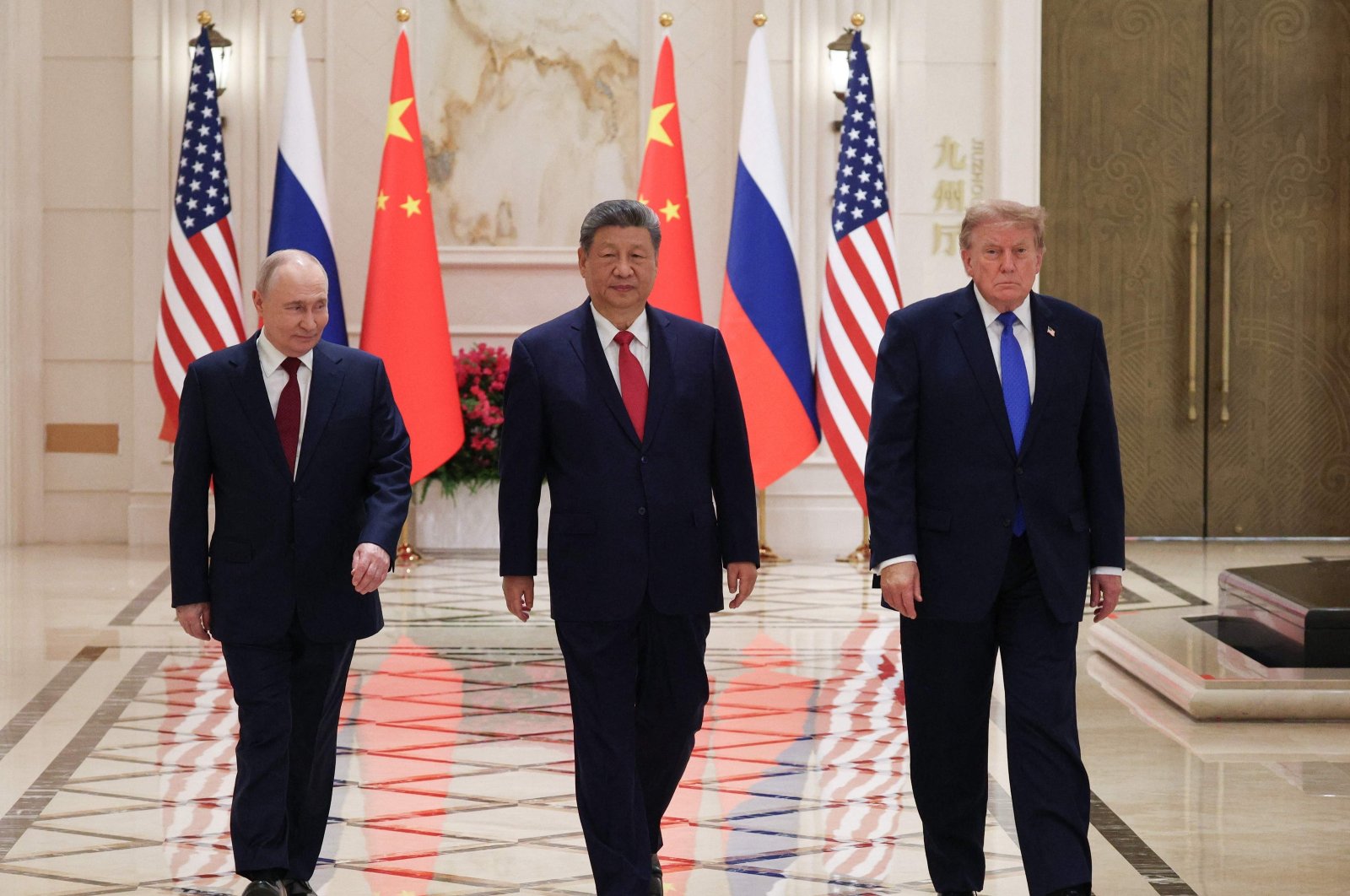
However, Churchill at least had a seat at the negotiating table. The Shenzhen summit presented a very different picture for Europe. Although Trump had consulted European leaders ahead of his meeting with Putin in Alaska in 2025, the absence of a similar consultation mechanism before the 2026 trilateral summit was particularly noteworthy. The failure to involve leading European Union and NATO countries even in the preparatory process for discussions directly affecting their own security became a significant indication that Washington no longer regards Europe as an indispensable strategic partner.
Europe’s absence from the summit does not mean that the continent’s territory is being redistributed among the great powers. Indeed, German Chancellor Friedrich Merz’s emphasis in his post-summit remarks that a division resembling Yalta would not be accepted reflected these concerns. However, in contemporary international politics, it is no longer necessary to physically divide a geographical region to determine its future. Countries’ strategic room for maneuver can also be restricted through security guarantees, economic dependencies, energy routes, sanctions, and regional spheres of influence.
For this reason, it would be inaccurate to regard the Shenzhen summit merely as a symbolic diplomatic gathering. The limited concrete outcomes of the discussions, the differences between the three countries’ long-term strategic objectives, or the leaders’ efforts to prioritize their own political gains do not eliminate the summit’s geopolitical significance. On the contrary, the emergence of a diplomatic platform where three major powers can discuss global issues without requiring Europe’s participation has the potential to accelerate the transformation of the existing international system.
The United States is no longer standing alongside Europe but pursuing its own interests
One of the most significant challenges facing Europe is the shift in priorities within U.S. foreign policy. Following World War II, Washington regarded Europe’s security as one of the fundamental pillars of its global leadership. The establishment of NATO, the Marshall Plan, and the military and economic cooperation maintained throughout the Cold War demonstrated that the United States viewed Europe not merely as an ally but also as a strategic partner supporting its leadership in the international system.
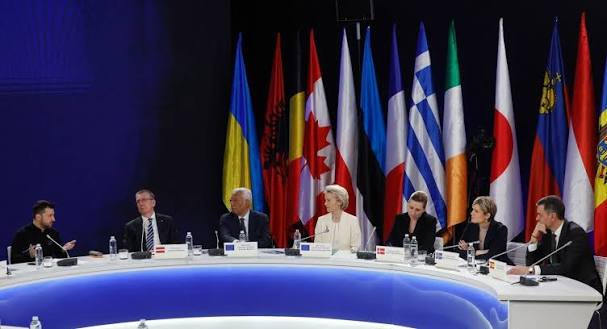
However, the approach underpinning this relationship is gradually changing. For the Trump administration, alliances are increasingly evaluated in terms of their direct economic and political returns rather than shared values and historical ties. Demands for increased defense spending, disagreements over trade policies, the cost of supporting Ukraine, and efforts to normalize relations with Russia are deepening differences between Washington and European capitals.
Trump’s decision to contact European leaders gathered in Berlin to discuss Ukraine aboard Air Force One following the Shenzhen summit was another significant example of this approach. By emphasizing Putin’s willingness to reach a peace agreement and expressing skepticism about Europe providing further financial support to Ukraine, the U.S. president demonstrated that Washington is pursuing a strategic calculation different from Europe’s security priorities.
The fundamental divergence here is not limited to how the Russia-Ukraine War should end. While Europe considers Russia a long-term threat to the security of the continent, the Trump administration may prefer to restructure relations with Moscow and establish a new basis for cooperation built around economic interests. This approach causes Europe’s security concerns to become secondary in Washington’s broader global negotiations.
Therefore, the situation facing Europe involves more than occasional diplomatic disagreements with Washington. It reflects Europe’s loss of its privileged position in U.S. global strategy and Washington’s willingness to pursue policies that may conflict with European interests when necessary. Although this does not mean that the transatlantic alliance has legally or institutionally come to an end, it demonstrates that its political and strategic cohesion has been seriously eroded.
Russia and China are establishing a new diplomatic platform without Europe
One of the most significant gains for Moscow from the Shenzhen talks was the reinforcement of the image that Russia is once again being recognized as a great power within the international system. Facing extensive Western sanctions because of the war in Ukraine, Putin sent a message that Russia is not internationally isolated by appearing on the same diplomatic platform as Trump and Xi.
The summit’s statements on expanding cooperation in energy markets and increasing the production and supply of refined petroleum products are also significant for Moscow. This approach creates a political atmosphere that could weaken the effectiveness of sanctions designed to restrict Russia’s energy revenues. The joint assessment that the International Criminal Court and similar institutions must not abuse their jurisdiction is also particularly noteworthy in light of the international legal pressure facing Putin.
China, meanwhile, emerged as the most cautious actor at the summit. By hosting both Trump and Putin on the same diplomatic platform, Xi Jinping strengthened Beijing’s central role in global politics. However, China’s decision to preserve its own strategic priorities rather than fully embrace the agendas of the other two countries also reveals Beijing’s long-term calculations.
From this perspective, it would be inaccurate to characterize the trilateral summit as a permanent alliance between the United States, Russia, and China. Economic and technological competition between Washington and Beijing, the power asymmetry between Moscow and Beijing, and mutual distrust in U.S.-Russia relations all remain in place. Nevertheless, the ability of these three countries to conduct direct negotiations on the future of the global system despite their rivalries signals an important change.
The most significant development is that decisions concerning the future of the international order can now be shaped outside Western-centered institutional mechanisms. Addressing issues such as United Nations reform, energy markets, nuclear risks, and international law jointly among the three great powers demonstrates that global governance may increasingly depend on political agreements between major states.
Europe must build its own security and strategic autonomy
Europe’s fundamental problem is that its economic and institutional capacity is not translating into an equivalent level of influence in global politics. Despite being one of the most important actors in the world economy and possessing a strong industrial infrastructure and advanced technological capabilities, the European Union is struggling to establish a common foreign policy and defense strategy.
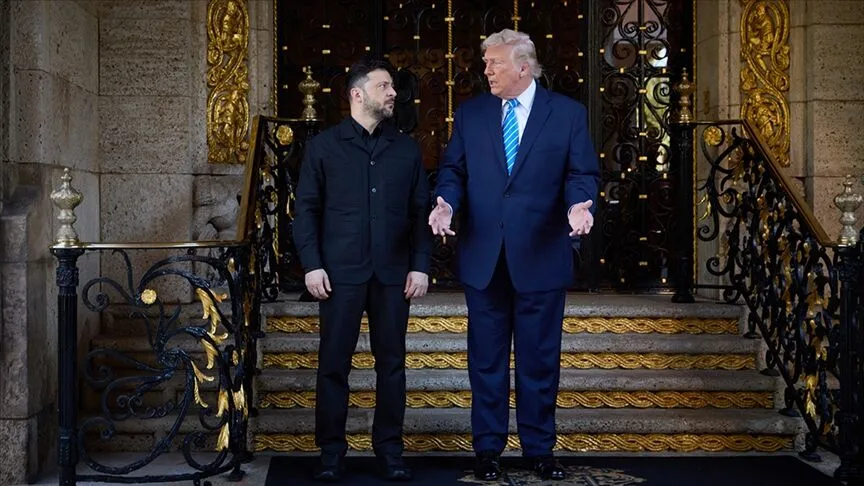
The Russia-Ukraine War has made this weakness more visible. Although European countries have committed substantial resources to supporting Ukraine and containing Russia, they remain dependent on U.S. decisions in the key negotiations concerning the future of the war. Washington’s direct talks with Moscow and Europe’s exclusion from this process demonstrate that the continent has been unable to establish an independent decision-making mechanism even on matters directly affecting its own security.
Europe therefore faces two fundamental options. The first is to remain dependent on the U.S. security umbrella and continue adapting to Washington’s changing priorities. The second is to establish a more independent strategic structure in the fields of defense industry, military capabilities, energy security, and foreign policy.
Implementing the second option will not be easy. Differences in threat perceptions among European countries, national competition in defense industry projects, political reservations about joint military decision-making, and technological dependence on U.S.-origin systems are among the major obstacles to strategic autonomy.
Nevertheless, developing Europe’s own production capacity in defense, reducing its external dependence on ammunition and critical components, strengthening air and missile defense, and establishing joint military planning mechanisms are no longer optional. In the new international environment, economic size alone does not guarantee political influence. Maintaining that influence also requires military deterrence and the ability to act independently.
Will the new global order depend on agreements among the great powers?
The long-term consequences of the Shenzhen summit should be assessed less by the number of agreements signed and more by the political message it conveyed. The gathering of the leaders of the United States, Russia, and China at the same table demonstrates that the international system is moving away from its liberal, rules-based structure toward a more competitive order based on direct negotiations among the great powers.
This transformation carries significant risks, particularly for small and medium-sized states. In a system where great powers seek to expand their spheres of influence, the deterrent capacity of international institutions weakens, and security issues are increasingly addressed through bilateral bargaining, countries with limited military and economic capabilities may find their room for maneuver restricted. However, as the example of Ukraine demonstrates, agreements among great powers do not always suffice to change realities on the ground. The resistance of smaller states and the independent policies of regional actors will continue to determine the limits of the new order.
For Europe, the fundamental question is not whether the United States will resume its former role as a security guarantor, but whether the continent can succeed in becoming an influential actor in global politics without Washington’s support. The Trump administration’s approach demonstrates that the United States is not necessarily abandoning Europe altogether, but rather no longer considers Europe’s security and political future a priority in its broader global negotiations. Although it remains uncertain to what extent future U.S. administrations will change this approach, the risks of tying Europe’s security to the preferences of a single political leadership have now become unmistakably clear.
Ultimately, the possibility that Europe may have no place at the table of the new global order is no longer a distant scenario. Indeed, the Shenzhen summit provided a concrete diplomatic example of this possibility. The United States, too, is no longer positioning itself alongside Europe in the traditional sense, but is acting as an independent great power prioritizing its own interests. Consequently, Europe must confront not only the rise of Russia and China but also the transformation of transatlantic relations.
The defining challenge in the coming period will not be Europe’s continued defense of the rules of the old order, but its ability to establish a new strategic architecture capable of protecting its interests amid changing power balances. Otherwise, rather than remaining one of the actors shaping the future of global politics, Europe could become a region left to deal with the consequences of decisions made by others.