


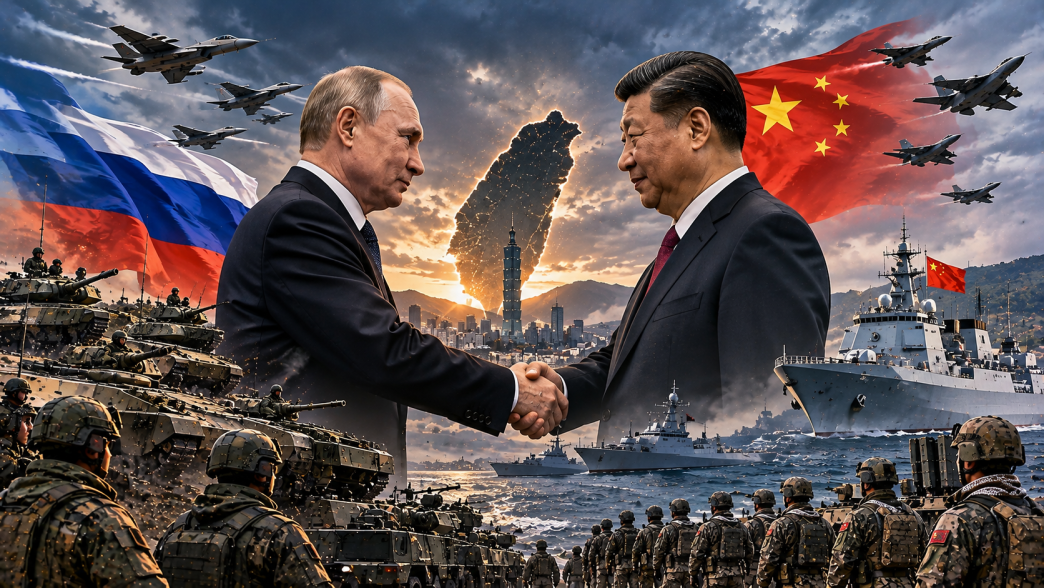
Russia’s military activities in the Asia-Pacific region indicate that strategic cooperation between Moscow and Beijing is entering a new phase. The growing military activity around Taiwan, in particular, suggests that Russia’s support for China’s regional objectives may extend beyond diplomatic statements. Through its recent military flights and displays of force directed at regional countries, Moscow is sending a message that has direct implications for the US security architecture in the Indo-Pacific.
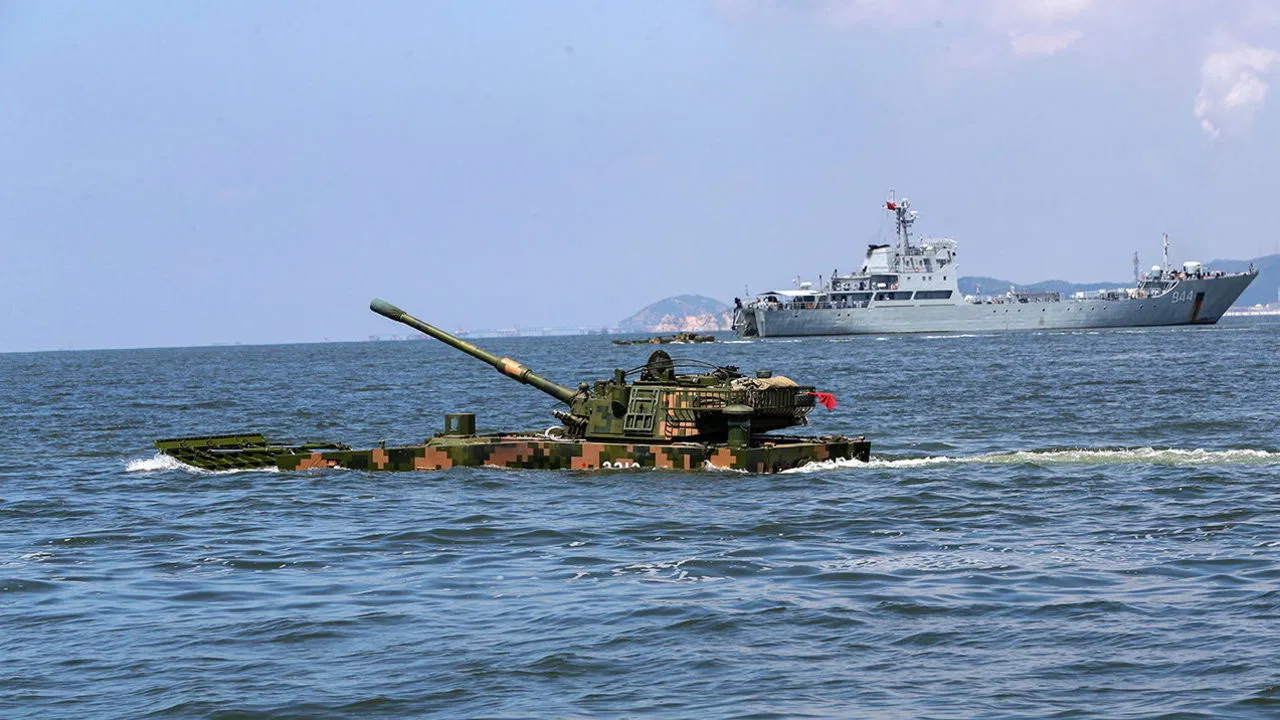
The flight conducted by two Russian military bombers over East Asia on 17 November was a particularly noteworthy development in this regard. The Russian aircraft entered South Korea’s Air Defence Identification Zone (ADIZ), violated Japanese airspace and appeared in Taiwan’s ADIZ for the first time since 2010. The timing of this development, just days before the expected trilateral summit between Donald Trump, Vladimir Putin and Xi Jinping in Shenzhen, made the incident even more significant. 
The flight demonstrated that Moscow is placing greater emphasis on the military dimension of its relationship with Beijing and is prepared to take steps that align with China’s regional interests when necessary. Russia’s stance has also brought renewed attention to the question of what position Moscow might adopt in a potential crisis centred on Taiwan.
The aircraft involved are believed to have been Tu-95MS strategic bombers, which are capable of carrying nuclear weapons. Their landing at an airport in Da Nang, Vietnam, on the same day also attracted attention. The visit was recorded as the first publicly acknowledged visit by Russian strategic bombers to Vietnam since 1993.
Vietnam’s position as an important partner for Russia’s defence industry adds to the diplomatic and military significance of this activity. Moscow is demonstrating that it can exert military pressure on US allies while simultaneously maintaining its traditional relationships in Southeast Asia. In this way, Russia is showing that it is not merely an actor operating alongside China in the Indo-Pacific, but is also seeking to expand its own diplomatic and military spheres of influence.
Military activity around Taiwan is entering a new phase
Russia’s latest flights should not be viewed as isolated military activities. In recent years, Moscow has increased its air and naval operations around Japan, occasionally violating Japanese airspace. Flights into South Korea’s Air Defence Identification Zone have also become a familiar feature of Russian military activity in the region.
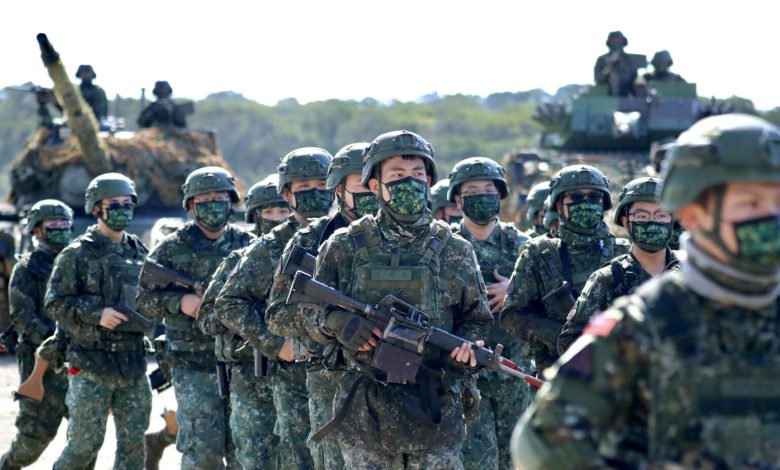
However, the flight into Taiwan’s ADIZ carries a different significance. It was reportedly only the second known instance of Russian military aircraft entering the zone since the dissolution of the Soviet Union. Moreover, crossing Taiwan’s ADIZ is not necessary for aircraft travelling from Russia to Southeast Asia. The decision to use this route therefore strengthens assessments that the flight was intended to convey a military and political message beyond that of a routine transit operation.
One point that needs to be considered is that Air Defence Identification Zones do not have the same legal status as a country’s sovereign airspace. These zones are established by countries to identify and track aircraft approaching their national airspace in advance. Nevertheless, Russian aircraft operating around Taiwan are significant because they increase Moscow’s military visibility in an area at the centre of Beijing’s sovereignty claims.
Russia’s moves are taking place at a time when its military coordination with China is becoming increasingly visible. In recent years, the two countries have expanded the scope of their joint air and naval exercises while diversifying the geographical reach of their military activities. These developments are giving Moscow-Beijing cooperation a more coordinated appearance in the face of the security architecture shaped by the United States through Japan, South Korea and Taiwan.
The China-Russia partnership is moving beyond regional competition
It would be inaccurate to suggest that relations between Russia and China develop along the same lines in every international crisis. In different regions, such as the Middle East and Venezuela, the priorities and room for manoeuvre of the two countries can sometimes diverge. For this reason, it would not be appropriate to describe the relationship between Moscow and Beijing as a fully integrated military alliance that acts jointly in every situation.
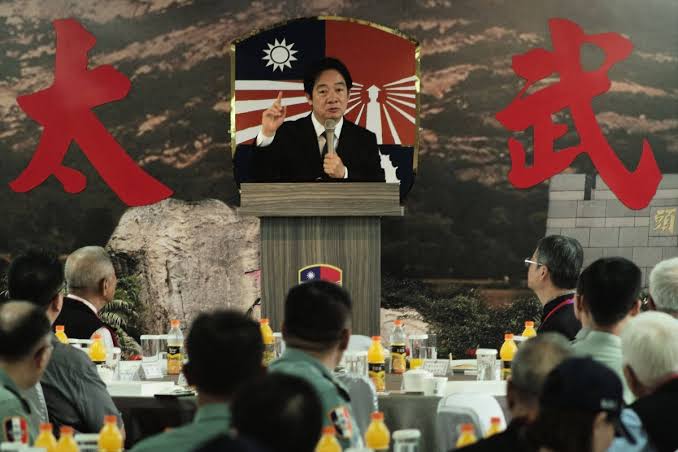
Nevertheless, Taiwan is emerging as one of the areas where the strategic interests of the two countries substantially overlap. Both governments regard limiting the United States’ military and political influence in the Asia-Pacific as important to their respective security and foreign policy objectives. This shared approach provides a basis for potentially expanding the scope of the support Russia could offer China.
A statement made by Russian Foreign Minister Sergey Lavrov in December 2025 was particularly noteworthy in this respect. Lavrov said that, in the event of a potential conflict over Taiwan, Moscow would support China in matters concerning the protection of state unity and territorial integrity. This statement demonstrates that Russia does not view the Taiwan issue solely as a matter of China’s domestic politics, but also associates it with its own foreign policy and security interests.
The bomber flights on 17 November can also be interpreted as a military reflection of this political approach. Rather than limiting its support for Beijing to diplomatic statements, the Putin administration is seeking to make its military presence and operational capabilities in the region more visible. This raises the possibility that, even without directly participating in a war centred on Taiwan, Russia could undertake activities that strengthen China’s strategic position.
The possibility of Russian military intervention in a Taiwan crisis
Russia’s potential role in a conflict over Taiwan can be assessed through several different scenarios. The first would involve Moscow providing direct military support to China. In such a situation, Russia’s Pacific Fleet, particularly its submarine capabilities, could emerge as a factor capable of creating considerable operational pressure on Japanese and US military forces in the region.
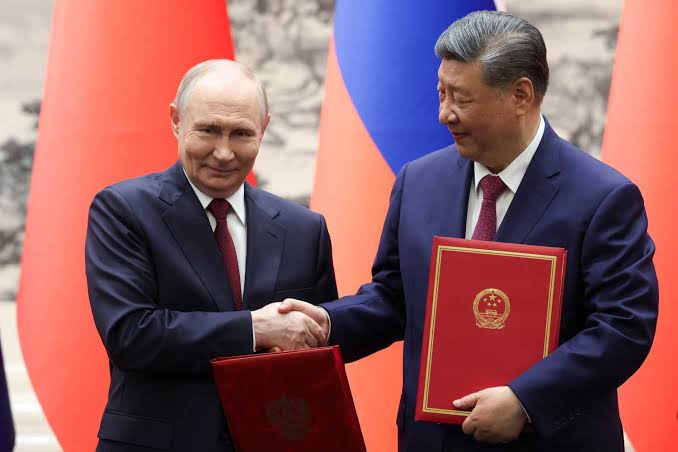
Even if Russia’s submarine force in the Pacific were not directly involved in China’s military operations around Taiwan, it could still complicate US and Japanese military planning. An increase in Moscow’s naval and aerial activities around Japan could require the United States to keep its regional forces prepared to respond to different threat areas. Consequently, while focusing on developments in the Taiwan Strait, Washington could also be forced to take security risks around Japan and the North Pacific into account.
A broader scenario could involve a direct military confrontation between Russia and NATO developing simultaneously with a potential Chinese operation against Taiwan. In such circumstances, the United States would have to manage its military resources and operational capabilities across two separate geographical theatres. However, it should also be noted that there is no conclusive evidence that Moscow and Beijing have a predetermined joint war plan for such a scenario.
On the other hand, Russian support for China would not necessarily have to take the form of direct military intervention. Moscow could expand Beijing’s room for manoeuvre through methods that remain below the threshold of armed conflict, commonly described in strategic literature as grey-zone activities. Airspace violations, provocative naval operations in nearby waters, sabotage targeting critical infrastructure and pressure on commercial maritime transport could all fall within this category.
Grey-zone activities are creating new security risks in the Indo-Pacific
Russia’s recent statements indicate that Moscow is preparing to use economic and logistical instruments of pressure alongside traditional military deterrence. In August 2026, Putin stated that if European countries intervened against vessels belonging to Russia’s shadow fleet, Moscow could retaliate by seizing European commercial ships in Asia.
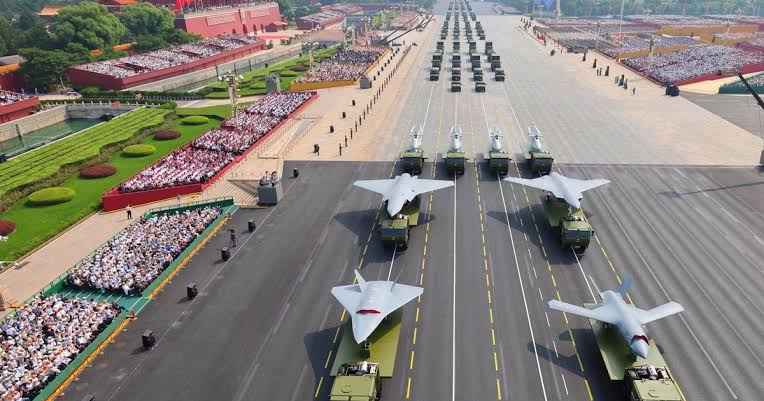
Although no concrete action of this kind has yet taken place, the statement serves as a reminder that Russia possesses instruments capable of extending its confrontation with Europe into the Asia-Pacific. Such an approach could directly affect the security of commercial maritime routes and international shipping in the region. It could also enable Moscow to exert pressure on US allies without crossing the threshold of military conflict.
Another significant risk concerns undersea communication cables and critical infrastructure. Suspected disruptions and allegations of sabotage targeting undersea cables in the Baltic Sea have increased concerns that Russia could undertake similar activities in other geographical regions. The Indo-Pacific contains undersea cables that are vital to international internet traffic, energy connections and commercial communications.
Potential interference with these infrastructures could affect not only the communication systems of the countries concerned but also the functioning of regional trade and military coordination. Such Russian activities could create a mechanism of pressure that serves Beijing’s regional interests without requiring Moscow to participate directly in Chinese military operations.
Therefore, Russia’s military activity in the Indo-Pacific should not be assessed solely in terms of bomber flights or naval operations. Cyberattacks, interference with undersea cables, pressure on commercial shipping and airspace violations could all form parts of a broader strategic approach in which these activities complement one another.
Pressure on the US security architecture in the Asia-Pacific is increasing
The expansion of Russian support for China presents a new planning challenge for the US Indo-Pacific strategy. While seeking to balance China’s military capabilities around Taiwan, Washington may also have to take Russia’s activities in the Pacific into account. This is particularly important for US regional security partners such as Japan and South Korea.
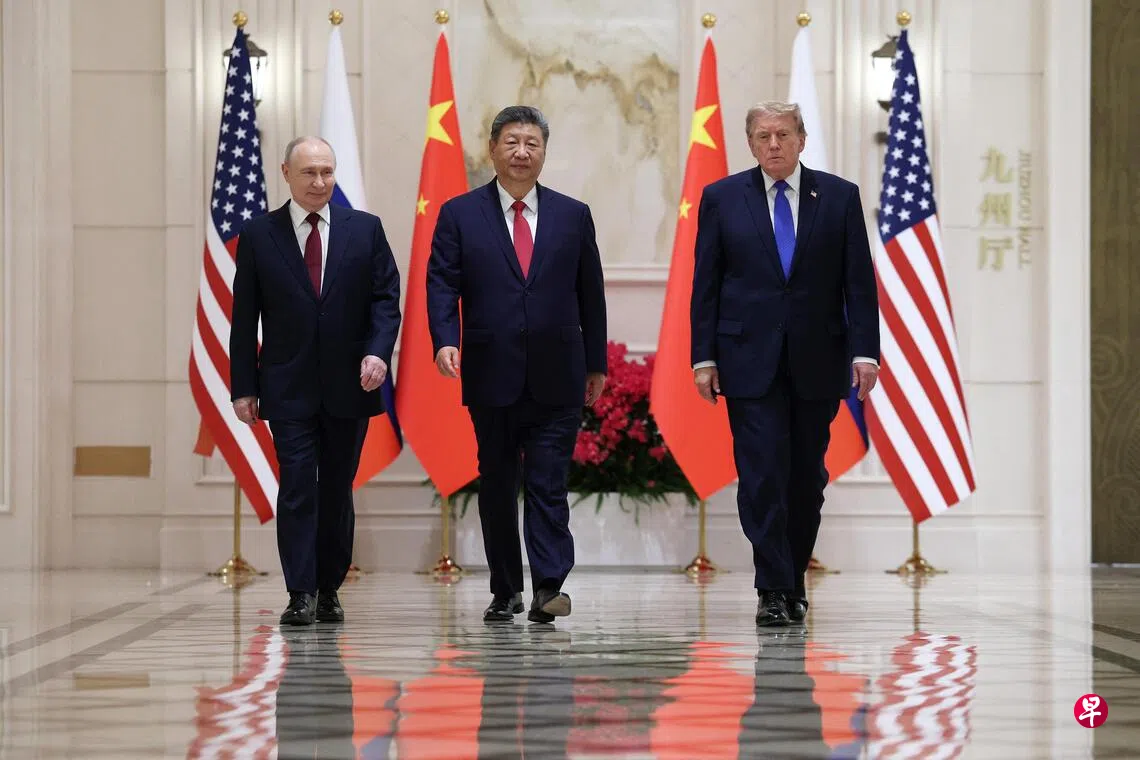
Due to its geographical position, Japan is among the countries most directly exposed to both developments in the Taiwan Strait and the activities of Russia’s Pacific Fleet. South Korea, meanwhile, must monitor not only security threats originating from North Korea but also the military coordination between Russia and China in the region. As a result, US allies in Asia could face several strategic pressures simultaneously.
A similar security assessment is necessary for Australia and other US partners in the region. The military and strategic support Russia could provide to China demonstrates that a crisis centred on Taiwan may not remain confined to East Asia. In particular, the security of maritime trade routes, energy transportation and critical infrastructure could extend the economic consequences of a potential confrontation across a much wider geographical area.
For this reason, it may no longer be sufficient for regional countries to shape their defence planning solely around China’s military capabilities. Russia’s submarine force, strategic bombers and capacity to conduct hybrid operations are also becoming part of regional security calculations.
The Taiwan issue could become a new front in the global power struggle
Russia’s flight on 17 November carries important implications for the military dimension of Moscow-Beijing relations. In particular, the timing of the flight into Taiwan’s Air Defence Identification Zone suggests that Russia is seeking to make its support for China more visible. However, this development does not necessarily mean that the two countries will conduct a joint military operation over Taiwan.
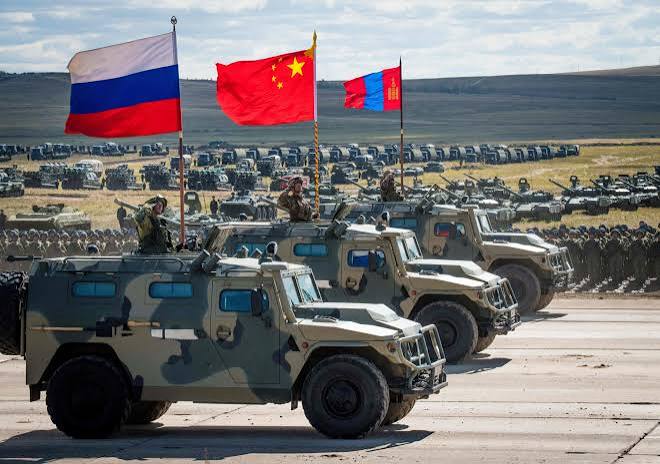
The main point to consider is Russia’s ability to play a significant role in supporting China’s regional objectives without directly entering a war. The military pressure Moscow could exert through its Pacific Fleet, its activities around Japan, strategic bomber flights and grey-zone operations could expand Beijing’s room for manoeuvre in the region.
As strategic competition between the United States and China deepens within the international system, Russia also appears to be moving towards a more active role in this rivalry. Having come into confrontation with the West over the war in Ukraine, Moscow could regard its partnership with Beijing in the Asia-Pacific as a means of preserving its global influence and forcing the United States to divert its military capabilities to different regions.
In the coming period, developments requiring close monitoring will include an expansion of Russia’s joint exercises with China, intensified military activities around Japan and Taiwan, and the use of methods capable of placing pressure on critical infrastructure across the region. The possibility that a potential conflict centred on Taiwan may not remain a military confrontation exclusively between China and the United States, and that Russia could become involved at different levels, is gaining increasing significance.
In this context, Russia’s position on the Taiwan issue is becoming one of the factors that will shape not only the future of Moscow-Beijing relations but also the evolution of the global balance of power.

