


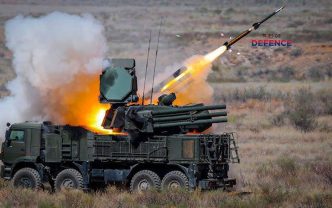
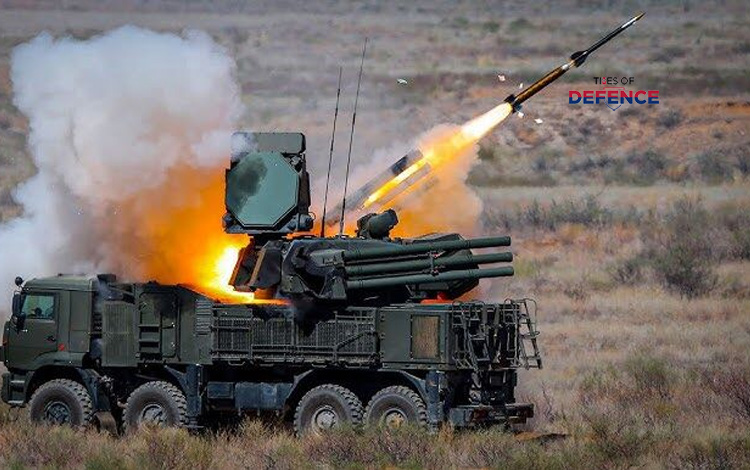
The Russian military has increasingly utilized the Belarusian-built MZKT-7930-312 eight-wheeled heavy chassis for its Pantsir air defense systems. This transition addresses longstanding mobility, stability, and rollover vulnerabilities associated with the system’s standard domestic truck platform.
While the baseline Pantsir-S1 and its variants have historically relied on the KamAZ-6560 eight-wheeled truck, operational usage across demanding combat environments—including the Ukrainian theater—exposed structural limitations. The heavy sensor suite, radar arrays, surface-to-air missile containers, and twin 30mm autocannons mounted on the KamAZ platform create a high center of gravity relative to the truck’s narrower track width. This geometry has contributed to field reports of vehicles overturning during high-tempo tactical maneuvers and struggling with soft-soil off-road mobility.
TECHNICAL SPECIFICATIONS: PANTSIR CHASSIS MIGRATION & MZKT-7930 ARCHITECTURE
Chassis Platform Comparison & Comparative Metrics
⚡ Legacy Platform (KamAZ-6560):
• Configuration: 8×8 heavy tactical truck platform
• Vulnerabilities: Narrower track width combined with a high center of gravity; higher propensity for vehicle rollover during aggressive off-road maneuvers; restricted unpaved mobility under heavy combat loads
⚡ Upgraded Platform (MZKT-7930-312):
• OEM / Developer: Minsk Wheel Tractor Plant (MZKT / Belarus)
• Drive Configuration: Heavy-duty 8×8 all-wheel-drive platform with robust track width and high payload capacity (engineered for loads ranging from 17.8 to 22.4+ tons)
• Proven Russian Military Heritage: Standardized baseline chassis already deployed across major strategic Russian systems, including the Iskander-M tactical ballistic missile system and the Bastion coastal defense missile system 
Operational Integration & Combat Deployment Timeline
💥 Early Prototypes: Initial integration of a Pantsir system on an MZKT-7930 chassis debuted at the MAKS air show in 2009 but was not adopted as the primary Russian service standard at the time.
💥 Combat Prototyping & Verification: Field evidence from the Ukrainian theater (including a destroyed unit near Mariupol) confirmed that MZKT-mounted variants had progressed beyond exhibition concepts into active service.
💥 Public Demonstration: Russia officially showcased the Pantsir-S1M configured on the Belarusian MZKT platform during the Tsentr strategic military exercises, signaling a strategic shift in procurement priorities to correct platform instability.
TIMES OF DEFENCE ASSESSMENT
The operational pivot toward utilizing Belarusian MZKT chassis for the Pantsir system highlights vital lessons in ground mobility:
1. **Correcting High Center of Gravity and Rollover Risks**: The combination of a top-heavy multi-band radar and weapon turret on the narrower KamAZ-6560 chassis compromised high-speed off-road repositioning. Adopting the wider, heavier-duty MZKT-7930 platform—designed explicitly for major missile systems like Iskander—substantially improves lateral stability and survivability during evasive tactical driving.
2. **Prioritizing Operational Reliability Over Domestic Localization**: Despite historical efforts by Moscow to phase out reliance on foreign-built automotive components, combat realities in Ukraine forced a pragmatic revision. When vehicle stability directly impacts the combat readiness and crew safety of frontline air defense assets, performance trumps localization mandates.
3. **Enhancing Mobility for Point-Defense Assets**: Because the Pantsir system must continuously reposition to shield high-value command posts, airfields, and logistics hubs against multi-axis drone, missile, and rocket threats, off-road agility is paramount. Upgrading to a robust, high-payload 8×8 chassis ensures the system can maintain pace with mobile mechanized forces across unpaved terrain.

