


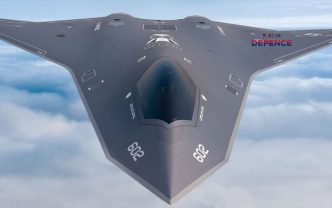
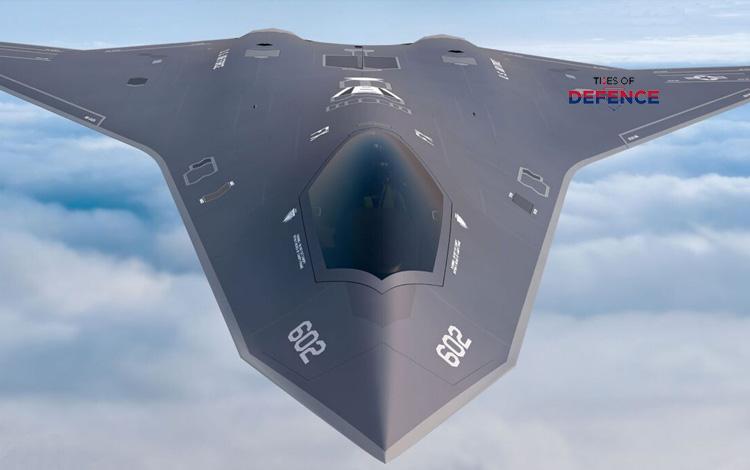
The U.S. Air Force’s Next Generation Air Dominance (NGAD) primary platform, designated the F-47, is scheduled to initiate initial flight testing in 2028 utilizing an interim surrogate engine baseline. Serial integration of advanced adaptive-cycle powerplants under the Next Generation Adaptive Propulsion (NGAP) program is projected for the early 2030s.
Following Assembly Readiness Reviews (ARR) completed in May 2026 by primary propulsion contractors General Electric Aerospace (XA102) and Pratt & Whitney (XA103), the service is mitigating timeline dependencies by conducting initial aerodynamic and systems integration flights on existing fifth-generation propulsion derivatives. The parallel development strategy aims to validate airframe kinematics and stealth flight envelopes while the Next Generation Adaptive Propulsion suite matures toward high-rate production.
TECHNICAL SPECIFICATIONS: F-47 PROPULSION & ADAPTIVE CYCLE ARCHITECTURE
NGAP Propulsion Candidates & Assembly Milestones
⚡ Program Authority: U.S. Air Force / Next Generation Adaptive Propulsion (NGAP) Office
⚡ Aircraft Integration: Boeing F-47 Sixth-Generation Air Superiority Fighter
⚡ Interim Engine Baseline: High-thrust fifth-generation surrogate baseline (e.g., Pratt & Whitney F135 derivative) for 2028–2029 initial flight testing
⚡ NGAP Adaptive Engine Competitors:
• General Electric XA102: Three-stream adaptive cycle engine featuring Ceramic Matrix Composites (CMC) and high-heat turbine alloys; Assembly Readiness Review completed May 11, 2026
• Pratt & Whitney XA103: Advanced three-stream adaptive cycle demonstrator; Assembly Readiness Review completed May 8, 2026
⚡ Estimated Thrust Class: ~35,000 lbf (156 kN) with afterburner per engine 
Kinematics, Thermal Management & Adaptive Cycle Dynamics
💥 Three-Stream Airflow Architecture: Dynamically redirects airflow into a third bypass stream during high-efficiency cruising to reduce fuel consumption and infrared signature, or channels mass flow into the engine core/fan for maximum combat thrust
💥 Range & Electrical Generation:
• Power & Thermal Management System (PTMS): Generates elevated electrical output to drive high-capacity AESA arrays, advanced EW suites, and high-energy directed-energy weapons
• Extended Combat Radius: Delivers a projected >70% increase in combat radius over legacy F-22 platforms (>1,000 nautical miles)
💥 Airframe Kinematic Envelope: Mach 2.0+ maximum speed rating with optimized supercruise capability
TIMES OF DEFENCE ASSESSMENT
The decision to decouple initial F-47 flight testing from serial adaptive-cycle engine delivery highlights critical strategic realities:
1. **Decoupling Engine Readiness to Protect 2028 Flight Milestones**: Staging the F-47’s maiden flight with a surrogate interim engine preserves the overall flight-test schedule against propulsion delays. Flight testing the airframe, mission computers, and flight controls independently allows Boeing and the U.S. Air Force to address aerodynamic and structural risk before retrofitting mature XA102 or XA103 production units in the 2030s.
2. **Matching Regional Sixth-Gen Parity and Indo-Pacific Range**: Rapid advancements in Chinese sixth-generation tactical aircraft programs accelerate the U.S. Air Force’s imperative to field high-end combat mass. The three-stream adaptive cycle engines are essential for Indo-Pacific operations, where extended unrefueled combat radius and cooling capacity for advanced sensors are critical to penetrating anti-access/area-denial (A2/AD) networks.
3. **Overcoming Historical Engine Development Lead Times**: Designing, testing, and manufacturing a clean-sheet military turbofan has historically taken longer than airframe development. Utilizing interim engines mitigates supply chain and metallurgical maturing delays while driving competitive pressures between General Electric and Pratt & Whitney to deliver operational adaptive-cycle powerplants by the 2030s.

