


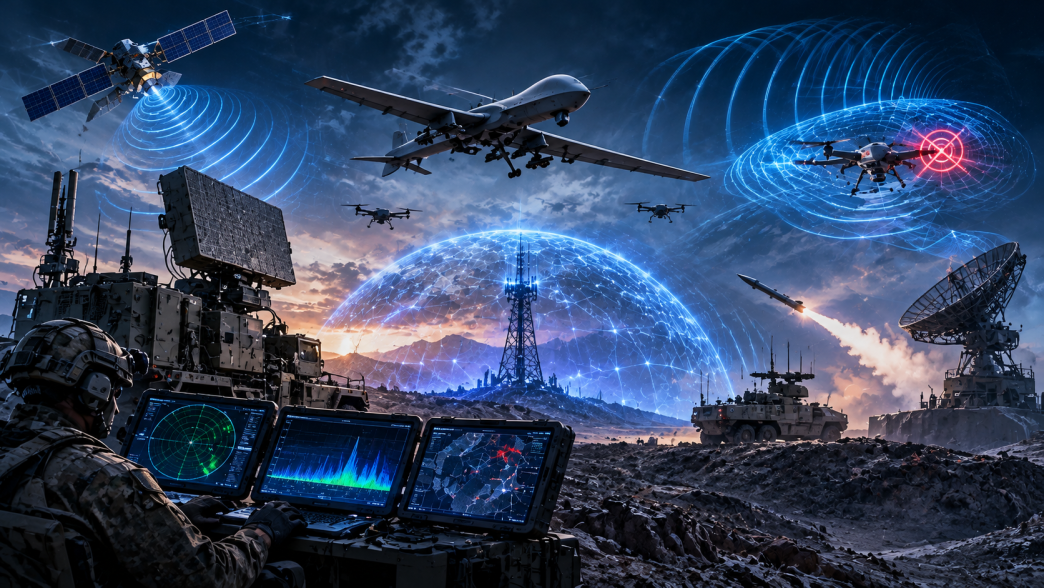
The Russia-Ukraine war has become one of the most significant examples of how the modern battlefield is being transformed. The extensive use of unmanned aerial vehicles (UAVs) is challenging the traditional understanding of warfare, which has long revolved around land, naval and air platforms. Today, UAVs play a decisive role in reconnaissance, target detection, intelligence gathering and precision strikes, while their effectiveness is increasingly dependent on electronic warfare capabilities.
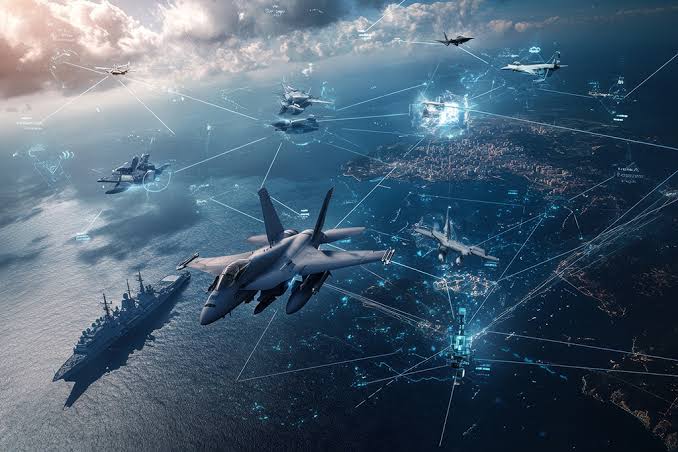
There is a substantial difference between today’s conflicts and the military doctrines employed by the United States in Iraq in 2003, which relied on rapid maneuver, overwhelming firepower and shock effects. The low cost of UAVs, their relatively simple production requirements and their ability to be deployed rapidly have ushered in a new era in the use of military force. However, the effectiveness of an unmanned aerial vehicle is not determined solely by its payload or technical specifications. Its ability to receive targeting information, maintain communication with command centers and coordinate with other military assets is equally important. Consequently, future military competition will be shaped not simply by the production of the most advanced UAVs, but by the ability to operate them under electromagnetic threats. 
The hidden vulnerability of UAVs: Electromagnetic signatures
UAVs require continuous data exchange to perform their missions. Every communication signal used for video transmission, target coordinates, flight control and coordination between military units also generates an electromagnetic signature that an adversary can detect. This creates a significant vulnerability on the battlefield, even for technologically advanced systems.
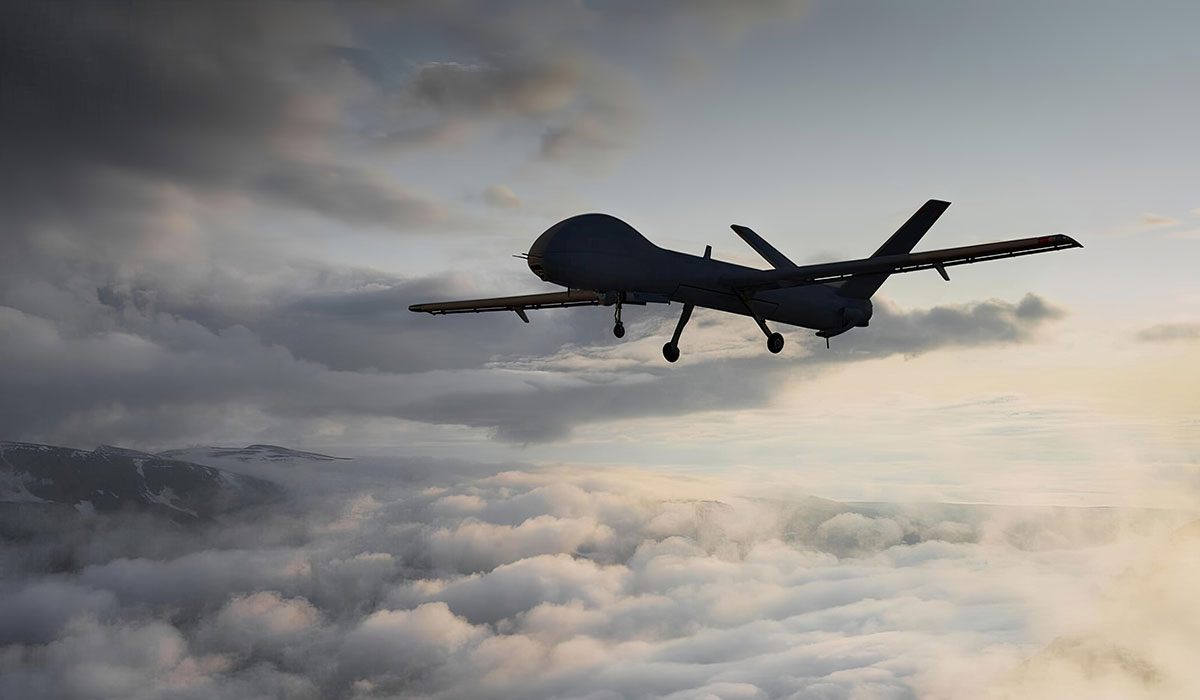
Enemy forces can detect these signals, determine the location of a UAV, disrupt its communications or prevent it from completing its mission through electronic jamming. Moreover, the threat is not limited to unmanned platforms themselves. The control stations used by UAV operators can also be identified through their electromagnetic emissions. The emergence of drone operators as direct targets in the Ukraine war demonstrates the seriousness of this vulnerability. Attacks against facilities housing UAV operators in the Russia-Ukraine conflict illustrate how the human element behind unmanned systems has also become a major target on the modern battlefield.
Electronic jamming systems, however, have their own vulnerabilities. They often require heavy equipment, can restrict operational mobility and do not guarantee effectiveness under all conditions. Furthermore, the powerful signals emitted during jamming operations can make electronic warfare units themselves detectable to the enemy. Therefore, electromagnetic warfare is not simply about disrupting an adversary’s communications; it is also about concealing one’s own electronic signatures as effectively as possible.
Electromagnetic superiority in future warfare
The decisive factor on the modern battlefield will not simply be the number of UAVs an army possesses, but its ability to keep those systems operational despite electronic attacks. Regardless of how advanced an army’s unmanned platforms may be, easily detectable or vulnerable communication networks can put its operational superiority at risk.

For this reason, electronic warfare should no longer be regarded as a supporting element of defense planning, but as one of the fundamental components of military power. Technologies that provide a low probability of interception and a low probability of detection are becoming particularly important for future military systems. Encryption alone is no longer sufficient. An adversary does not need to decipher the content of a message to identify its source or disrupt the communication. Detecting the existence of a signal may be enough.
To counter this threat, technologies such as frequency hopping, spread-spectrum communications and distributed network architectures need to be adopted on a much wider scale. These technologies can enable unmanned systems to exchange data while reducing their electromagnetic signatures and continue operating even in environments where communications are heavily disrupted. Training military personnel to manage their electronic signatures is equally important. Electromagnetic discipline depends not only on the technical characteristics of military systems but also on the operational habits and practices of the personnel using them.
A new defense industry priority: Electromagnetic signature management
Although the U.S. Department of Defense’s increased investment in unmanned systems is important, these investments must also incorporate the electronic warfare dimension. A low electromagnetic signature should not be treated as an optional feature that can be added to UAV projects at a later stage. Instead, it should become a fundamental requirement throughout the design and procurement process. Communication systems must also be capable of rapid upgrades, integration into low-cost platforms and continued operation under intense electronic attacks.

One of the main challenges in this area concerns the priorities of defense bureaucracies. Highly visible platforms such as fighter jets, aircraft carriers and missile systems are often easier to promote politically and institutionally, while electromagnetic superiority tends to remain a less visible investment priority. In addition, militaries that have spent decades conducting operations without facing a technologically capable adversary in the electromagnetic domain have often come to regard communications superiority as a natural and permanent advantage. The Ukraine war has demonstrated that this assumption is no longer valid.
Defense procurement processes must also adapt to changing threats. Instead of relying exclusively on large-scale projects that take years to complete, greater emphasis should be placed on systems that can be upgraded through software, developed through competitive procurement and renewed at shorter intervals. Electronic resilience must be treated as a core investment priority within unmanned systems budgets. The U.S. Army’s efforts to reduce the electromagnetic signatures of its command posts represent a positive development in this regard. However, this approach must extend beyond command centers and reach the thousands of low-cost UAVs that are likely to define future battlefields.
The defining factor in the new military competition
The Russia-Ukraine war clearly demonstrates that technological superiority alone will not be sufficient in future conflicts. Alongside UAV production capacity, AI-assisted targeting and precision-strike systems, the protection of communication networks and the ability to disrupt an adversary’s electromagnetic activities will also determine military outcomes.

This transformation is not relevant only to major military powers such as the United States and Russia. All countries developing their defense industries need to address unmanned systems, electronic warfare and secure communications as interconnected capabilities. In an environment where low-cost UAVs can be deployed on a massive scale, it is becoming increasingly clear that traditional force structures built around expensive platforms will not be sufficient on their own.
For Türkiye, these developments also highlight the importance of supporting its technological achievements in UAV and armed UAV development with electronic warfare capabilities, jamming-resistant communications, autonomous mission capabilities and distributed command-and-control systems. On the battlefields of the future, superiority will belong not simply to the side that detects or strikes first, but to the military that can preserve its operational integrity even under intense electromagnetic pressure.
Ultimately, the future of warfare will not be determined solely by unmanned vehicles flying through the skies. The communication networks behind these platforms, their electromagnetic signatures and electronic warfare capabilities will also occupy a central place in military competition. Developments on the Ukrainian battlefield demonstrate that this invisible front has become at least as important as traditional combat domains. In future conflicts, victory will not necessarily go to the military with the largest number of UAVs, but to the one capable of operating its systems without being detected and neutralizing its adversary’s electromagnetic superiority.

