


General Atomics Electromagnetic Systems (GA-EMS) announced it has been selected under a multiyear subcontract by Leidos to produce precision-machined structural components and specialized cable assemblies for the Common-Hypersonic Glide Body (C-HGB).
The agreement extends GA-EMS’s involvement in the joint U.S. Army and U.S. Navy hypersonic program through 2031. The contract aligns with a broader acquisition strategy led by Leidos, which unifies the C-HGB design and Thermal Protection System (TPS) programs under a single contract vehicle to streamline subcomponent manufacturing, reduce supply chain bottlenecks, and accelerate serial production.
TECHNICAL SPECIFICATIONS: C-HGB INTEROPERABLE HYPERSONIC GLIDE ARCHITECTURE
Program Structure & Joint Acquisition Envelope
⚡ Lead Systems Integrator: Leidos (Reston, Virginia)
⚡ Precision Component Subcontractor: General Atomics Electromagnetic Systems (GA-EMS / San Diego, California)
⚡ Subcontract Operational Horizon: Multiyear production execution through 2031
⚡ Interservice Deployment Mandate: Supplies standardized glide body hardware for both land-based U.S. Army Long-Range Hypersonic Weapon (LRHW “Dark Eagle”) and sea-based U.S. Navy Conventional Prompt Strike (CPS) platforms
⚡ Manufacturing Deliverables: Precision-machined aero-structural components, internal payload support structures, umbilical/internal cable assemblies, and specialized integration hardware 
Flight Kinematics, Thermal Protection & Payload Integration
💥 Vehicle Configuration: Biconic unpowered boost-glide vehicle featuring moveable control surfaces for high-altitude aerodynamic maneuvering
💥 Kinematic Performance: Mach 5+ (Hypersonic regime) with operational strike range exceeding 2,750 km (1,725+ miles)
💥 Booster Systems:
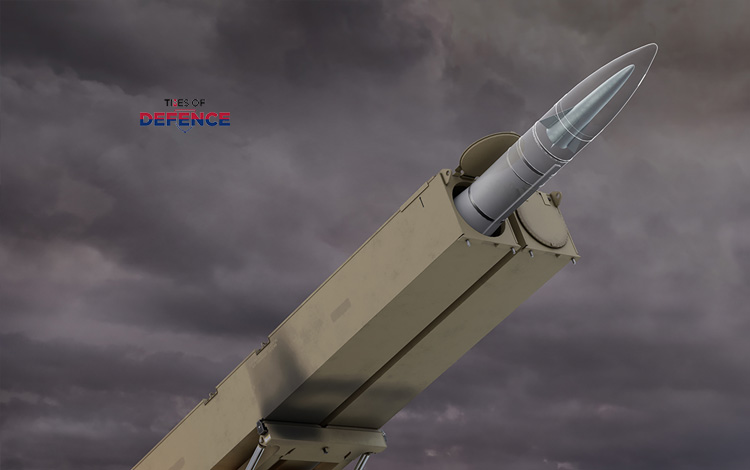
• U.S. Army (Dark Eagle): Fired from a 34.5-inch two-stage solid rocket motor mounted on a mobile Transporter Erector Launcher (TEL)
• U.S. Navy (CPS): Launched via ocean-going cold-launch/hot-launch VLS tubes on Zumwalt-class (DDG-1000) destroyers and Block V Virginia-class (SSN) attack submarines
💥 Thermal Protection System (TPS): Advanced carbon-carbon / ceramic matrix composite thermal shielding engineered to resist kinetic heating and structural degradation during extended atmospheric re-entry glide phases
TIMES OF DEFENCE ASSESSMENT
The selection of GA-EMS by Leidos to support C-HGB production through 2031 reinforces the U.S. Department of Defense’s transition from hypersonic prototyping to industrial-scale manufacturing.
From an aerospace defense and industrial base perspective, this contract provides three main strategic insights:
1. **Mitigating Industrial Bottlenecks via Single-Prime Integration**: Unifying the C-HGB and Thermal Protection System contracts under Leidos streamlines prime contractor oversight. Subcontracting precision machining and cabling to GA-EMS—which supported earlier prototype manufacturing and the 2020 C-HGB flight tests—ensures established quality control standards are maintained during rate production.
2. **Economies of Scale Across Joint Service Platforms**: Deploying an identical glide body for both the land-based Army Dark Eagle and sea-based Navy CPS programs reduces per-unit production costs. GA-EMS supplying shared hardware ensures component interchangeability between land-based TEL batteries and naval launch tubes.
3. **Securing Long-Term Industrial Capacity Through 2031**: Extending the manufacturing agreement through 2031 establishes supply chain stability for strategic raw materials, precision machining schedules, and specialized wiring harnesses. This multi-year commitment helps avoid procurement gaps as both services move toward operational fielding.

