


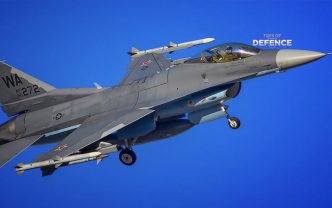
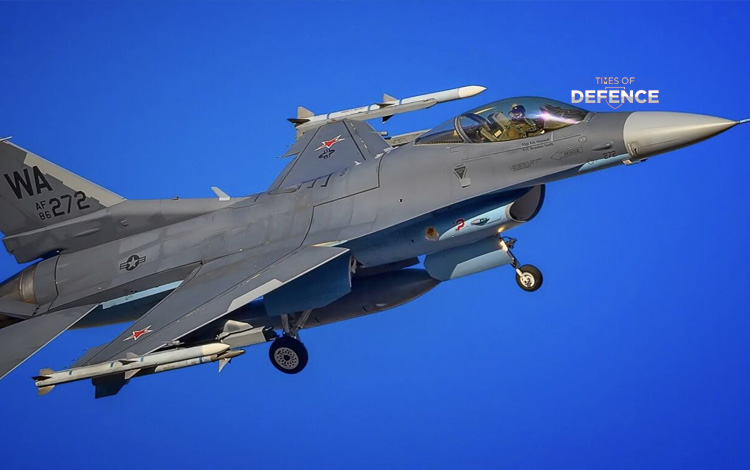
The U.S. Air Force is evaluating the potential acquisition of newly manufactured General Dynamics/Lockheed Martin F-16 Fighting Falcons as it seeks to expand its combat-coded fighter inventory to 1,509 aircraft by 2035.
Speaking on October 20, 2026, Lieutenant General David Tabor, Deputy Chief of Staff for Plans and Programs, stated that while a firm procurement decision will not be finalized for at least another year, acquiring a modern F-16 variant—provisionally designated the F-16G—remains an active alternative for replacing aging legacy airframes during the 2030s. The potential revival of domestic F-16 procurements, which concluded for the U.S. armed forces in 2005, stems from persistent operational availability shortfalls, software integration delays (TR-3/Block 4 baseline), and elevated flight-hour sustainment costs associated with the Lockheed Martin F-35A Lightning II fleet. Lockheed Martin has presented the service with an enhanced derivative of the export-standard Block 70/72 architecture featuring conformal fuel tanks, infrared search-and-track (IRST) pods, modern cockpit displays, and an expanded 12,000-hour structural airframe limit.
TECHNICAL SPECIFICATIONS: PROPOSED USAF F-16G vs. CURRENT F-35A FLEET BASELINE
Managing Body & Operational Leadership
⚡ Executive Authority: Office of the Deputy Chief of Staff for Plans and Programs (USAF HQ, Pentagon)
⚡ Industry Integrator: Lockheed Martin Aeronautics (Greenville, SC production facility)
⚡ Key Program Metric: Expansion of combat-coded fighter TAI (Total Aircraft Inventory) to 1,509 airframes by 2035 
Proposed F-16G (Advanced Block 70/72 Derivative) Configuration
💥 Base Platform Architecture: Single-seat multi-role 4.5-generation tactical fighter derived from the F-16V Block 70/72 standard
💥 Airframe Structural Life: Extended 12,000 flight-hour design life (a 50% increase over legacy 8,000-hour Block 40/50 platforms)
💥 Avionics & Radar Architecture: Northrop Grumman AN/APG-83 SABR (Scalable Agile Beam Radar) AESA radar, high-resolution Center Pedestal Display (CPD), and Auto GCAS (Automatic Ground Collision Avoidance System)
💥 Sensor Enhancements: Integrated Legion Pod IRST (Infrared Search-and-Track) system and AN/AAQ-33 Sniper Advanced Targeting Pod (ATP)
💥 Range & Payload Vector: Conformal Fuel Tanks (CFTs) providing +440 gallons of internal fuel capacity without aerodynamic drag penalty; multi-weapon carriage across 9 external hardpoints
Comparative Operational & Logistics Metrics: F-16G vs. F-35A
🚀 Airframe Service Life: F-16G: 12,000 hours | F-35A: 8,000 hours
🚀 Mission Capable (MC) Rates: F-16 Fleet Average: ~65–70% | F-35A Fleet Average: ~51–55% (due to supply chain and TR-3 software delays)
🚀 Direct Operating Cost Per Flight Hour (CPFH): F-16 (Legacy/Block 70): ~$22,000–$25,000/hr | F-35A: ~$34,000–$38,000/hr
🚀 Uncrewed Integration Capability: Planned initial pairing with first-generation Collaborative Combat Aircraft (CCA) wingmen, including the General Atomics YFQ-42A and Anduril YFQ-44A
TIMES OF DEFENCE ASSESSMENT
The U.S. Air Force’s consideration of a new-build F-16 variant (provisionally designated F-16G) underscores a pragmatic shift in force-structure planning. While the F-35A was originally designed to serve as a high-volume, low-cost successor to the F-16, ongoing technical challenges—specifically surrounding Technology Refresh 3 (TR-3) hardware integration, Block 4 weapon software delays, and high life-cycle sustainment costs—have constrained the aircraft’s mission capable rates and reduced annual procurement numbers.
From an engineering and industrial perspective, procuring newly manufactured F-16 Block 70/72 derivatives offers an immediate fix for force capacity issues. Built on active export lines in Greenville, South Carolina, a modern F-16G provides an advanced 12,000-hour airframe life alongside AN/APG-83 AESA radar capabilities, providing an effective platform for continental defense, tactical air patrols, and low-to-medium threat operations. This approach allows the Air Force to preserve high-end F-35A airframes for high-threat A2/AD strike missions while maintaining tactical fleet capacity through 2035 alongside incoming Collaborative Combat Aircraft (CCA) uncrewed wingmen.

