


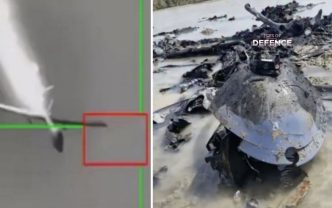
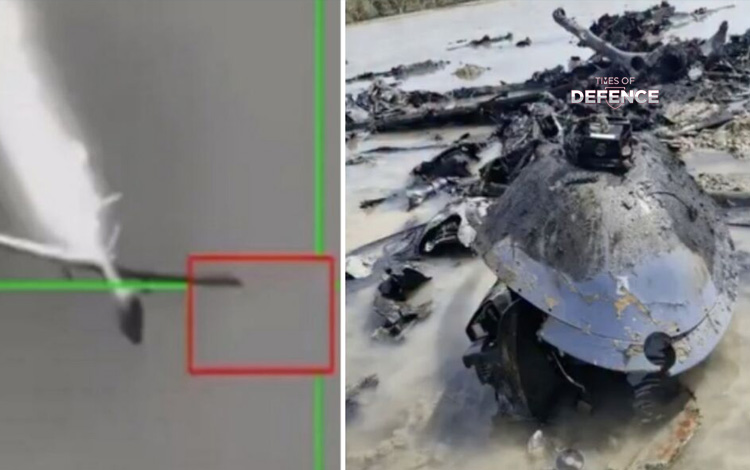
The Islamic Revolutionary Guard Corps (IRGC) Aerospace Force intercepted and destroyed a U.S. Air Force MQ-9A Reaper Remotely Piloted Aircraft (RPA) over the coastal sector of Sirik in southern Iran’s Hormozgan Province.
According to regional defense updates and IRGC command statements, the engagement occurred near the Strait of Hormuz as the uncrewed platform attempted a precision strike vector against a mobile Iranian anti-ship cruise missile (ASCM) coastal defense launcher. The interdiction was executed under the operational control of Iran’s Integrated Air Defense Network (IADN), utilizing a mobile multi-channel surface-to-air missile (SAM) platform. The downing marks a ongoing series of platform attrition incidents for U.S. uncrewed strike architectures operating in contested littoral environments, bringing cumulative USAF MQ-9 combat losses to over 45 airframes since early 2026. The incident highlights the vulnerability of non-stealthy, medium-altitude long-endurance (MALE) RPAs against integrated coastal air defense networks.
TECHNICAL SPECIFICATIONS: GENERAL ATOMICS MQ-9A REAPER & IRGC COASTAL DEFENSE SUITE
Manufacturer & Operational Command Structure
⚡ Aircraft Lead Integrator: General Atomics Aeronautical Systems, Inc. (GA-ASI — Poway, California)
⚡ Sponsoring Command: U.S. Air Force / U.S. Central Command (USCENTCOM)
⚡ Interdicting Authority: IRGC Aerospace Force / Integrated Air Defense Network (IADN) 
GA-ASI MQ-9A Reaper Platform Parameters
💥 Aircraft Type: Medium-Altitude Long-Endurance (MALE) Remotely Piloted Aircraft System (RPAS)
💥 Dimensional Envelope: Wingspan: 20.1 m (66 ft) | Length: 11.0 m | Max Takeoff Weight (MTOW): 4,760 kg (10,500 lb)
💥 Propulsion & Power Plant: 1× Honeywell TPE331-10GD turboprop engine generating 900 shaft horsepower (671 kW)
💥 Kinematic Performance: Max Speed: 482 km/h (260 knots) | Cruise Speed: ~313 km/h | Service Ceiling: 15,240 m (50,000 ft) | Operational Range: 1,900 km (1,000 nmi)
Sensor Payload, Target Acquisition & Armament Package
🚀 Electro-Optical / Infrared Suite: AN/DAS-1 Multispectral Targeting System (MTS-B) featuring HD EO/IR gimbals, laser designator, and laser spot tracker
🚀 Synthetic Aperture Radar: AN/APY-8 Lynx II Multi-Mode Radar providing Ground Moving Target Indicator (GMTI) and high-resolution SAR imagery
🚀 Ordnance Package Options: Up to 1,361 kg (3,000 lb) across 4 hardpoints — AGM-114 Hellfire air-to-ground missiles, GBU-12 Paveway II laser-guided bombs, GBU-38 JDAM, and GBU-54 Laser JDAM
🚀 Electronic Countermeasures (ECM): ALQ-257 Self-Protection Pod / RD-MALE threat warning receiver (limited against modern high-g active radar-guided SAMs)
IRGC Interdiction & Coastal Defense Architecture
🚀 Intercept Vector: Integrated SAM battery (3rd Khordad / Khordad-15 system using Sayyad-2/3 active/semi-active radar homing missiles)
🚀 Engagement Parameters: High-altitude terminal interception with proximity fragmentation warhead
🚀 Target Capability: Engagement of low-RCS and non-stealthy subsonic airframes at slant ranges >75–120 km and altitudes >27,000 m
TIMES OF DEFENCE ASSESSMENT
The loss of an MQ-9A Reaper off the coast of Sirik illustrates the tactical limitations of uncrewed MALE assets in high-threat, anti-access/area-denial (A2/AD) contested littoral zones. Designed primarily for permissive counter-insurgency operations, the MQ-9A lacks low-observable (stealth) shaping, high-speed maneuverability, and advanced self-defense electronic warfare suites. When tasked with time-sensitive strike missions against mobile, well-defended targets like coastal anti-ship missile launchers, the platform’s high radar cross-section (RCS) and moderate cruising speed make it vulnerable to radar-guided surface-to-air missile systems.
From a force structure and industrial perspective, replacing lost MQ-9A airframes presents severe logistical bottlenecks for the U.S. Air Force. Because General Atomics has transitioned its active assembly lines to the redesigned MQ-9B SeaGuardian platform—which features a distinct airframe, different wing geometry, modified avionics, and unique logistics support requirements—the USAF cannot simply order new-build MQ-9A models. This situation forces defense planners to rely on existing stored inventory or pivot toward uncrewed stealth platforms (such as Collaborative Combat Aircraft and specialized stealth RPAs) to survive inside heavily defended airspaces.

