


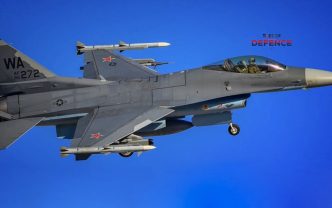
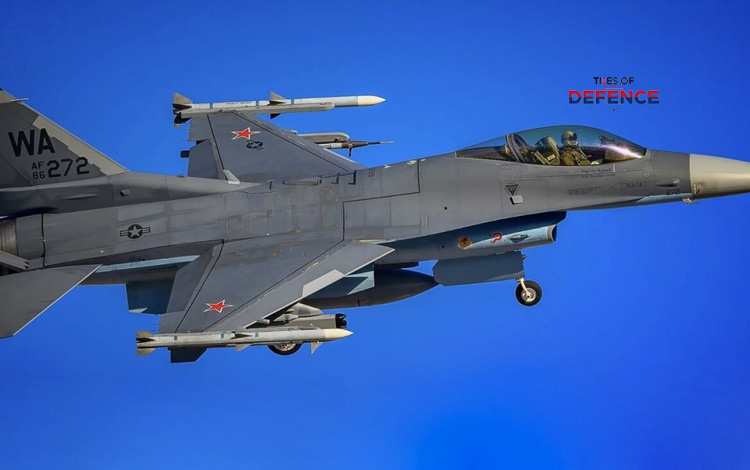
TAIPEI, Taiwan — The Republic of China Air Force (ROCAF) expects to take delivery of additional Lockheed Martin F-16C/D Block 70 (F-16V) multirole fighters from the United States by late October 2026, following the initial ferry arrival of the first two platforms at Chihhang Air Base in Taitung on October 2.
According to ROCAF and Ministry of National Defence (MND) statements by Defence Minister Wellington Koo, six of the 66 contracted aircraft have progressed through manufacturing acceptance and flight test procedures at Lockheed Martin’s Greenville, South Carolina facility. Of those six, two have landed in Taiwan, two remain stateside at Luke AFB for pilot conversion training, and two are undergoing final flight-acceptance trials ahead of transpacific ferry delivery. Acquired under the $8.2 billion “Peace Phoenix Soaring” Foreign Military Sales (FMS) program, the 66 new-build jets are destined for the 7th Tactical Fighter Wing at Chihhang Air Base to replace aging Dassault Mirage 2000-5 fighters. The delivery timeline comes amid scrutiny regarding software integration for the L3Harris AN/ALQ-254(V)1 Viper Shield electronic warfare suite and broader U.S. FMS backlogs exceeding $21.45 billion.
TECHNICAL SPECIFICATIONS: LOCKHEED MARTIN F-16C/D BLOCK 70 (F-16V VIPER) 
* Program Origin & Designation: US FMS “Peace Phoenix Soaring” / F-16C/D Block 70 (F-16V Configuration)
* Stationing & Primary Basing: ROCAF 7th Tactical Fighter Wing (Chihhang Air Base, Taitung County, Taiwan)
* Structural Airframe & Powerplant Parameters:
* Airframe Service Life: Extended structural airframe rated for 12,000 flight hours (~50% expansion over legacy Block 50/52)
* Powerplant: 1 x General Electric F110-GE-129 afterburning turbofan engine
* Thrust Output: 29,500 lbf (131.2 kN) with maximum afterburner
* Range Extensions: Integrated Conformal Fuel Tanks (CFTs) mounted on upper fuselage decking
* Avionics, Radar & C4ISR Architecture:
* Primary Fire Control Radar: Northrop Grumman AN/APG-83 SABR (Scalable Agile Beam Radar) AESA
* Commonality: Leverages 70% hardware and 95% software operational code from F-22 and F-35 radars
* Capability: Interleaved Air-to-Air / Air-to-Ground modes with High-Resolution Synthetic Aperture Radar (SAR) mapping
* Mission Computer & Displays: Commercial Off-The-Shelf (COTS)-based Modular Mission Computer (MMC) + 6×8-inch High-Resolution Center Pedestal Display (CPD)
* Flight Safety Architecture: Automatic Ground Collision Avoidance System (Auto GCAS)
* Pilot Cueing Interface: Joint Helmet Mounted Cueing System II (JHMCS II)
* Integrated Electronic Warfare Suite:
* System Nomenclature: L3Harris AN/ALQ-254(V)1 Viper Shield EW Suite
* Operational Architecture: Fully digital internal Radar Warning Receiver (DRWR) and active digital radio frequency memory (DRFM) jammer
* Software Integration Status: Physical hardware installed; active threat-library software development and flight-certification ongoing
TIMES OF DEFENCE ASSESSMENT:
The arrival of the initial F-16C/D Block 70 fighters at Chihhang Air Base represents a crucial operational reinforcement for Taiwan’s eastern air defenses. Positioning the new 7th Tactical Fighter Wing in Taitung allows the ROCAF to project air power directly into the Bashi Channel and eastern maritime approaches, countering PLA Navy carrier strike groups and long-range bomber sorties attempting to encircle the island.
From an avionics perspective, pairing the AN/APG-83 AESA radar with the internal L3Harris AN/ALQ-254(V)1 Viper Shield suite gives Taiwan’s F-16 Block 70 fleet fifth-generation sensor-fusion capabilities. However, the operational maturity of these jets remains constrained until software integration and threat-library encoding for the Viper Shield suite are fully certified. Furthermore, with significant FMS procurement backlogs and production bottlenecks delaying full delivery of the 66 aircraft past original schedules, Taipei must carefully balance maintenance sustainment for its legacy Mirage 2000-5 and F-CK-1 IDF fleets while accelerating pilot transition to the new Viper baseline.

