

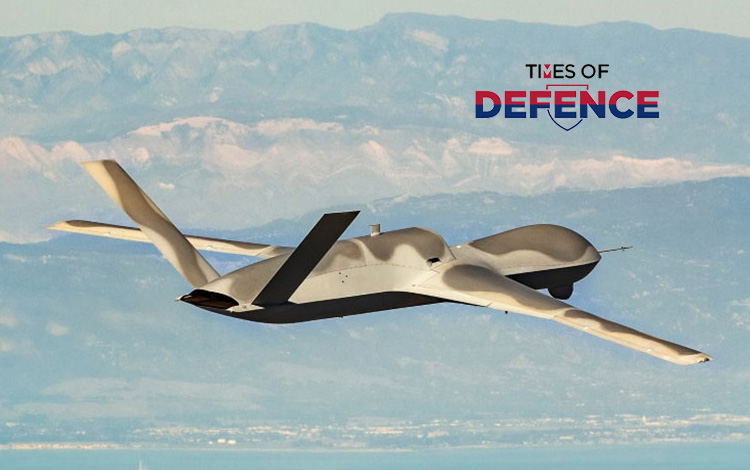
PALMDALE / POWAY, Calif. — General Atomics Aeronautical Systems, Inc. (GA-ASI), in collaboration with the U.S. Navy’s Strike Planning and Execution Systems program office (PMA-281), completed a live-flight demonstration of Collaborative Autonomy Mission Planning (CAMP) on September 10, 2026. Executed as part of the broader Gray Flag 2026 exercise series, the flight linked operations between GA-ASI’s Gray Butte Flight Operations Facility near Palmdale and the Poway Mission Operations Center in California using the jet-powered MQ-20 Avenger Autonomous Collaborative Platform (ACP) test surrogate.
The operational test validated the end-to-end mission autonomy architecture across the full kill chain using passive sensor feeds, automated behavior allocation, and Live, Virtual, and Constructive (LVC) participant coordination. Powered by GA-ASI’s Tactical Autonomy Ecosystem (TacACE) software suite, the architecture demonstrated real-time, human-machine collaborative mission planning, command and control (C2), dynamic artificial intelligence decision threshold adjustments, and post-flight mission debriefing. The capability enables force-level naval battle managers to translate operational plans into machine-readable autonomy commands without platform-specific software interfaces.
TECHNICAL SPECIFICATIONS: GA-ASI MQ-20 AVENGER ACP & TacACE SUITE
* Developer & Integrator: General Atomics Aeronautical Systems, Inc. (GA-ASI) / U.S. Navy PMA-281 Program Office
* Platform Variant: MQ-20 Avenger Jet-Powered Autonomous Collaborative Platform (ACP) Surrogate
* Primary Autonomy Architecture: Tactical Autonomy Ecosystem (TacACE) & Collaborative Autonomy Mission Planning (CAMP) framework
* Airframe & Propulsion Profile:
* Powerplant: Pratt & Whitney Canada PW545B turbofan (~3,991 lbf thrust)
* Maximum Takeoff Weight (MTOW): 18,200 lbs (8,255 kg)
* Cruising / Max Speed: 350 knots / 400 knots (Mach 0.6+)
* Operational Ceiling & Endurance: Up to 50,000 ft | ~18 hours flight endurance
* Sensor, Avionics & Autonomy Integration:
* Sensor Suite: Internal passive sensors, electro-optical/infrared (EO/IR), and AESA radar integration
* Software Ecosystem: GA-ASI TacACE w/ dynamic AI behavioral tasking, automated rules of engagement (ROE) configuration, and mission-debrief feedback loops
* Network Environment: Live, Virtual, and Constructive (LVC) multi-domain simulation integration supporting Collaborative Combat Aircraft (CCA) swarming architecture