

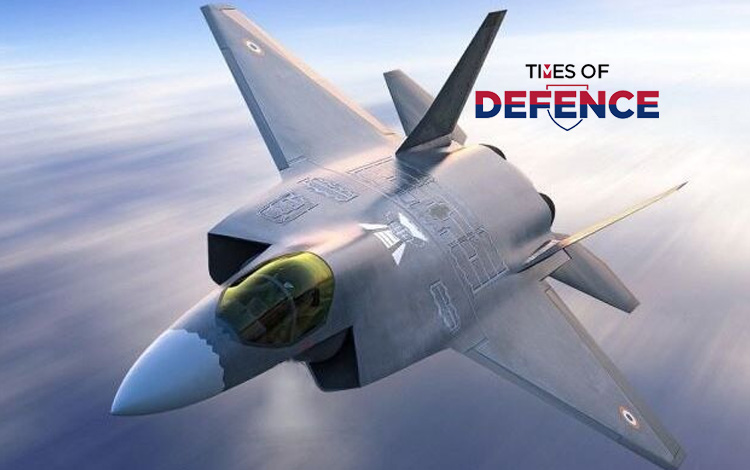
NEW DELHI — Indian Defence Secretary Rajesh Kumar Singh has confirmed that state-owned aerospace manufacturer Hindustan Aeronautics Limited (HAL) has failed to qualify for the prototype construction phase of India’s Advanced Medium Combat Aircraft (AMCA) fifth-generation stealth fighter program. Marking the first time HAL has been excluded from a major indigenous Indian combat aircraft project, the decision paves the way for private-sector industrial consortia to lead the manufacture and assembly of New Delhi’s frontline stealth platform.
According to Ministry of Defence (MoD) officials, HAL failed to meet specific technical criteria during initial bid evaluations. The exclusion aligns with a broader MoD initiative to establish a secondary, private-led military combat aviation manufacturing ecosystem in India rather than relying solely on state-owned infrastructure. Out of seven initial bidding entities, three private-sector consortia successfully met all technical and financial prerequisites:
1. Tata Advanced Systems Limited (TASL)
2. Larsen & Toubro (L&T)-led consortium (including Bharat Electronics Limited [BEL] and Dynamatic Technologies)
3. Bharat Forge-led consortium (including BEML and Data Patterns)
The winning consortium will form a joint venture Special Purpose Vehicle (SPV) within three months of contract award to build five flying prototypes and one structural test airframe in partnership with the Aeronautical Development Agency (ADA), which retains design authority. Under current schedules, the inaugural AMCA prototype is slated for its maiden flight in late 2028 (September 2028), with all five flying prototypes delivered within 64 months to conduct approximately 1,800 developmental flight-test sorties over an 84-month evaluation framework.
TECHNICAL SPECIFICATIONS: ADA / DRDO ADVANCED MEDIUM COMBAT AIRCRAFT (AMCA)
* System Classification: Twin-Engine 5th-Generation Stealth Multirole Air Superiority Fighter
* Design Authority: Aeronautical Development Agency (ADA) / Defence Research and Development Organisation (DRDO)
* Prototype Manufacturing Bidders: Tata Advanced Systems, L&T Consortium (w/ BEL & Dynamatic), Bharat Forge Consortium (w/ BEML & Data Patterns)
* Program Output Target: 5 flying prototypes and 1 static structural test airframe
* Flight-Test Roadmap: First flight targeted for late 2028; 64-month airframe build window; 1,800 planned test sorties across 84 months
* Physical & Airframe Characteristics:
* Length: 17.6 meters (57 ft 9 in) | Wingspan: 11.13 meters (36 ft 6 in)
* Composite Content: 38–40% carbon-composite airframe construction
* Internal Fuel Capacity: ~6,500 kg (~14,330 lbs)
* Flight Performance Objectives:
* Maximum Speed: Mach 1.8 (supercruise capable without afterburner)
* Combat Radius: ~1,620 km (870 nautical miles)
* Service Ceiling: 20,000 meters (65,000 feet)
* Stealth Features & Radar Cross-Section (RCS) Reduction:
* Serpentine Diverterless Supersonic Inlets (DSI) concealing engine fan faces
* Internal Weapons Bay (IWB), canted twin vertical tails, and platform edge alignment
* Anālakṣhya metamaterial surface cloaking coatings for multi-spectral radar/thermal absorption
* Propulsion Configuration:
* AMCA Mk1 (Prototypes): 2x General Electric F414-INS6 turbofans (98 kN class thrust with afterburner)
* AMCA Mk2 (Serial Production): Proposed 110–130 kN co-developed high-thrust indigenous turbofan
* Avionics & Armament Suite:
* AESA radar array, distributed passive electro-optical sensors, and AI-assisted data fusion
* Internal weapons capacity for Astra Mk1/2/3 BVR air-to-air missiles and precision-guided standoff munitions