


THE HAGUE — The Netherlands Ministry of Defence, led by State Secretary for Defence Derk Boswijk, has signed a strategic Letter of Intent (LoI) with Australian defense prime Electro Optic Systems (EOS) to advance the development and operational deployment of the Apollo High Energy Laser Weapon (HELW) system. The bilateral agreement establishes a framework to mature the counter-unmanned aerial system (C-UAS) capability into a fully operational air defense layer for the Royal Netherlands Armed Forces, while evaluating the establishment of an EOS production facility in the Netherlands supported by a Dutch-led European supply chain.
The initiative aims to solve the severe cost-asymmetry of countering low-cost drone swarms and loitering munitions. Operating at a marginal cost of under $1 per engagement, the Apollo directed-energy weapon delivers an effectively unlimited magazine by drawing directly on electrical power. The system is engineered to defeat Class 1, 2, and 3 unmanned aerial systems (UAS) at short ranges, preserving finite inventories of surface-to-air missiles (SAMs) for higher-tier threats. Under the proposed framework, the Netherlands aims to establish itself as a European manufacturing and sustainment hub for ITAR-free high-energy laser defense technologies.
TECHNICAL SPECIFICATIONS: EOS APOLLO HIGH ENERGY LASER WEAPON (HELW)
* System Classification: Transportable High-Energy Laser Counter-Unmanned Aerial System (C-UAS) / Directed Energy Weapon (DEW)
* Industrial Development: Electro Optic Systems (EOS, Australia) & Netherlands Ministry of Defence / Dutch Industrial Consortium
* Laser Beam Output Power: Scalable from 50 kW to 150 kW (100 kW core operational baseline)
* Engagement & Effective Ranges:
* Kinetic Hard-Kill C-UAS Range: 50 meters to 3.0 kilometers (~1.9 miles)
* Optical Sensor Denial / Dazzling Range: Up to 15.0 kilometers (~9.3 miles)
* Target Acquisition & Engagement Speed: Slew-to-cue and engagement time <1.5 seconds; engagement rate >20 Group 1/2 drone kills per minute
* Targeted Threat Profiles: NATO Group 1, Group 2, and Group 3 unmanned aerial systems, loitering munitions, and electro-optical surveillance sensors
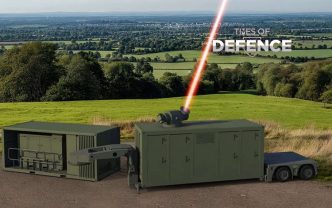
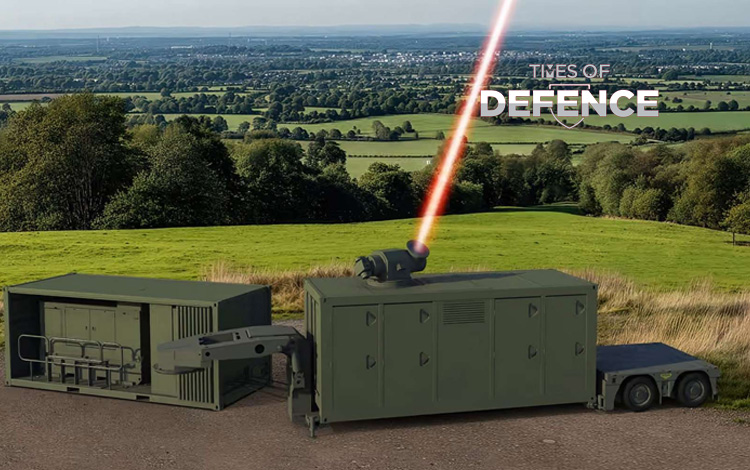
* Operational Footprint & Deployment: Housed within a transportable 20-foot ISO container with <2-hour deployment setup time
* Network & Command Integration: ITAR-free open architecture natively compatible with NATO-standard Command and Control (C2) and Integrated Air and Missile Defense (IADS) networks
* Engagement Economics & Power Draw: Less than $1 per shot engagement cost; unlimited magazine capacity via external power source or >200 engagements on internal battery storage