

How Lockheed Martin’s Secretive Design Bureau Turns Ideas Into Flying Aircraft
For decades, Lockheed Martin’s Skunk Works has been associated with aircraft that pushed the limits of speed, stealth and technology. But one of its most important advantages is not a particular aircraft or propulsion system.
It is the way the organization approaches development.
The central philosophy can be summarized in a simple rule: “Get to a prototype.”
The principle was publicly highlighted by Skunk Works in 2018 during an AIAA presentation. The idea is to avoid spending excessive time trying to perfect every detail before building and testing a physical aircraft. Instead, engineers move rapidly toward a prototype, allowing real-world testing to expose problems while there is still time to change the design.
The Kelly Johnson Legacy
The philosophy dates back to Clarence “Kelly” Johnson, the legendary engineer who established Skunk Works as Lockheed’s advanced development organization.
When the organization began in 1943, Johnson was given only six months to produce a working fighter prototype capable of reaching approximately 600 mph.
His team of roughly 30 engineers and 30 mechanics established an improvised facility and produced the XP-80 Shooting Star.
The prototype flew for the first time after only five months.
That development process became one of the foundations of the Skunk Works approach: small teams, limited bureaucracy, rapid decisions and an intense focus on producing a working aircraft rather than allowing development to become trapped in paperwork and endless refinement.
The “Get to a Prototype” Principle
Skunk Works linked its philosophy to Norm Augustine’s 15th Law, which states that the final 10 percent of performance can generate a disproportionate share of cost and problems.
The logic is straightforward.
As an aircraft design becomes increasingly mature, making major changes becomes more expensive and time-consuming. By getting a prototype into the air earlier, engineers can discover problems through actual testing instead of relying exclusively on analysis and simulations.
That creates a continuous cycle:
Design → Build → Test → Identify Problems → Modify → Test Again
Skunk Works describes rapid prototyping as a less-linear development process in which analysis, design and development occur concurrently.
From U-2 to F-117
The results of this philosophy can be seen throughout Skunk Works history.
The organization reportedly moved from the concept of the U-2 reconnaissance aircraft to a flying prototype in approximately eight months.
The A-12, the predecessor to the SR-71 Blackbird, followed in less than three years.
The Have Blue stealth demonstrator helped establish the technologies that ultimately led to the F-117 Nighthawk.
Later programs demonstrated that the philosophy was not limited to manned aircraft.
The P-175 Polecat unmanned aircraft demonstrator reached first flight in approximately 18 months, while the X-55A Advanced Composite Cargo Aircraft was developed and flown in approximately 20 months.
Why Prototyping Matters More With Modern Aircraft
Modern military aircraft are considerably more complex than the aircraft of the 1940s and 1950s.
They combine advanced sensors, electronic warfare systems, software, autonomous functions, low-observable structures, network connectivity and highly integrated propulsion and flight-control systems.
That complexity makes early physical testing increasingly valuable.
A computer model can predict how a system should behave. A flying prototype can reveal how the system actually behaves when exposed to vibration, aerodynamic loads, thermal effects, electromagnetic interference and real flight conditions.
The earlier those problems are discovered, the more opportunity engineers have to correct them before production.
The Modern Version: Vectis
Skunk Works is applying the same philosophy to its current projects.
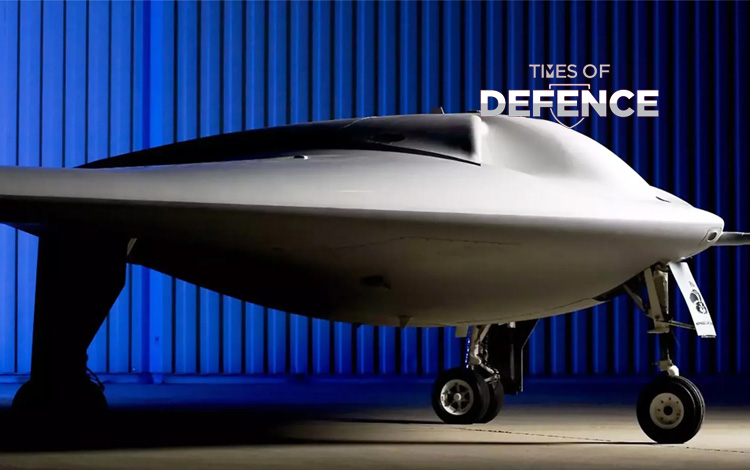
The clearest recent example is Lockheed Martin Vectis, an internally funded uncrewed aircraft being developed for future combat operations.
According to Lockheed Martin, the Vectis team moved from the first drawing to a wind-tunnel fly-off in less than two months.
The company says the first digital build was completed in six months and the first physical part was produced in eight months. Four additional Vectis vehicles were added to the production effort in September 2026, with first flight targeted for 2027.
Vectis is designed to operate independently or alongside crewed aircraft such as the F-35, with an emphasis on survivability, autonomy, adaptability and rapid technological evolution.
The approach is therefore not simply about building an aircraft quickly.
It is about compressing the feedback loop between an idea and a flying system.
Digital Engineering Is Changing the Process
Skunk Works has also invested heavily in digital engineering.
Lockheed Martin’s StarDrive environment connects design, manufacturing and sustainment through a digital thread. The company says its prototype work has demonstrated 50–70 percent reductions in assembly time for full-size determinant assembly compared with legacy approaches, while virtual builds can allow design clashes to be corrected up to four times faster.
This is important because rapid prototyping is not simply about working faster with traditional tools.
It requires the entire industrial process to become faster:
Digital design → virtual validation → advanced manufacturing → physical prototype → flight testing → design update
The result is a development cycle in which lessons from one prototype can rapidly influence the next.
Skunk Works Is Taking the Model Beyond Aircraft
Lockheed Martin has continued to expand this philosophy into a broader rapid-fielding model.
In March 2026, the company opened a Rapid Fielding Center designed to streamline development, testing and prototype production for next-generation systems for U.S. government customers.
The facility combines prototyping and manufacturing capabilities in a single environment so engineers can receive immediate feedback from production processes and accelerate the transition from design to hardware.
Lockheed Martin has also described a newer model in which it internally funds technology demonstrations before a government customer has necessarily established a formal requirement.
The objective is to demonstrate a working capability early and reduce the time between technological concept and operationally relevant hardware.
The Prototype Is Not the Finish Line
There is, however, an important limitation to the Skunk Works model.
Building a prototype quickly does not automatically mean that a production aircraft can be delivered quickly.
The original source makes this distinction clearly. Problems can reappear during production, certification, sustainment and large-scale manufacturing, particularly when a prototype transitions into a major acquisition program.
The F-35 provides a useful historical example of that distinction. The X-35 demonstrators reached flight relatively quickly, but the transition to a massive production program introduced a different set of engineering, cost, sustainment and concurrency challenges.
That means the true test of rapid development is not simply:
“How quickly can you fly the prototype?”
It is:
“How quickly can you turn what you learned from the prototype into a reliable, affordable and producible weapon system?”
A Philosophy Still Relevant in 2026
More than 80 years after the creation of Skunk Works, its basic development philosophy remains highly relevant.
The modern defense environment increasingly rewards systems that can be designed, tested, modified and fielded faster than traditional acquisition cycles.
Vectis demonstrates that Lockheed Martin is still applying the prototype-first philosophy, while digital engineering, advanced manufacturing and rapid fielding infrastructure are expanding the approach beyond individual aircraft programs.
From the XP-80 and U-2 to the F-117, X-55A and today’s autonomous aircraft programs, the underlying idea has remained remarkably consistent:
Build something real. Test it early. Learn quickly. Then build the next version better.