

LÜBECK, Germany — German defense technology firms Gabler Naval and Flanq have successfully completed the Sea Acceptance Test (SAT) for their jointly developed Ranger Torpedo-Tube-Launched Uncrewed Surface Vessel (TTL USV) in northern Germany. The milestone validates the maturity of the autonomous platform, marking a significant step toward delivering scalable, next-generation hybrid naval capabilities to European defense forces.
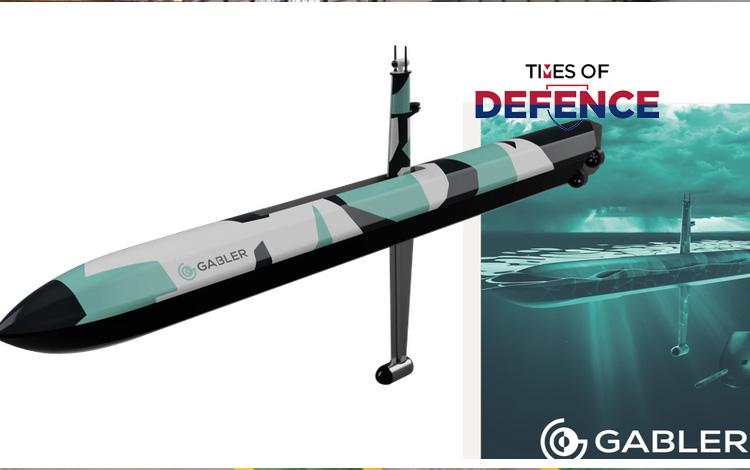
The Ranger TTL USV is designed to be deployed from a standard 21-inch (533 mm) submarine torpedo tube—the global standard for submarine fleets. Upon underwater ejection, the system autonomously ascends to the surface, deploys a retractable keel and sensor mast, and initiates covert intelligence, surveillance, and reconnaissance (ISR) missions. By pushing the risk to an attritable drone, the crewed host submarine can maintain its stealth, operational depth, and positional advantage while significantly expanding its situational awareness.
Gabler, a leading provider of mission-critical submarine systems, is leading the program’s commercialization and host platform integration, while Flanq provides the AI-enabled autonomy, mission software, and open-architecture operating systems. A one-way-attack (OWA) kinetic variant of the platform, designated as “Strike,” is also in active development to allow submarines to engage targets at extended standoff ranges without opening a vertical launch system (VLS) door or repositioning the host vessel.
TECHNICAL OVERVIEW: RANGER TTL USV
* Developer / Primary Contractors: Gabler Naval (Submarine Systems & Integration) and Flanq (AI Autonomy & Mission Software)
* Launch Mechanism: Fully compatible with standard 21-inch (533 mm) submarine torpedo tubes
* Dimensions: 4.5 meters (14.76 feet) in length
* Form Factor & Deployment: Features a folding keel and a retractable sensor mast that remain tucked against the hull during launch and automatically deploy upon surfacing
* Propulsion: Quiet electric drivetrain optimized for low acoustic and thermal signatures during surface operations
* Payload & Mission Architecture: Equipped with a mission-configurable payload bay designed for modular sensor packages (electronic surveillance, visual reconnaissance, and data relay)
* Combat Variants: A dedicated one-way-attack (OWA) variant named “Strike” (previously referenced alongside the “Raider” concept) is being developed to deliver precision kinetic effects.
The successful validation of the Ranger USV highlights a rapidly converging design pattern in naval warfare, where attritable autonomous systems are leveraged to extend the operational reach and survivability of high-value crewed submarines in contested maritime domains like the Baltic Sea.
