


Lockheed Martin’s Skunk Works is expanding its internally funded Vectis uncrewed combat-aircraft program, adding four more prototype aircraft to the one already under construction. The move will bring the planned Vectis fleet to five aircraft as the company accelerates development ahead of a targeted first flight by the end of 2027.
The announcement was made during the 2026 Air, Space & Cyber Conference in National Harbor, Maryland. Skunk Works says the additional aircraft will be used to accelerate flight testing and validate production processes rather than simply increase the number of demonstrators. Development work on the four additional vehicles is already underway.
A Stealth-Focused Group 5 CCA
Vectis is being developed as a Group 5 uncrewed aircraft and is intended to operate either independently or as part of a crewed-uncrewed team with aircraft such as the F-35 and future-generation combat aircraft.
Lockheed Martin describes Vectis as a survivable, lethal and customizable Collaborative Combat Aircraft (CCA) capable of missions including precision strike, intelligence, surveillance and reconnaissance (ISR), electronic warfare, and offensive and defensive counter-air operations.
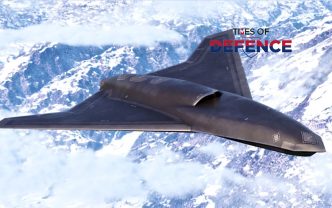
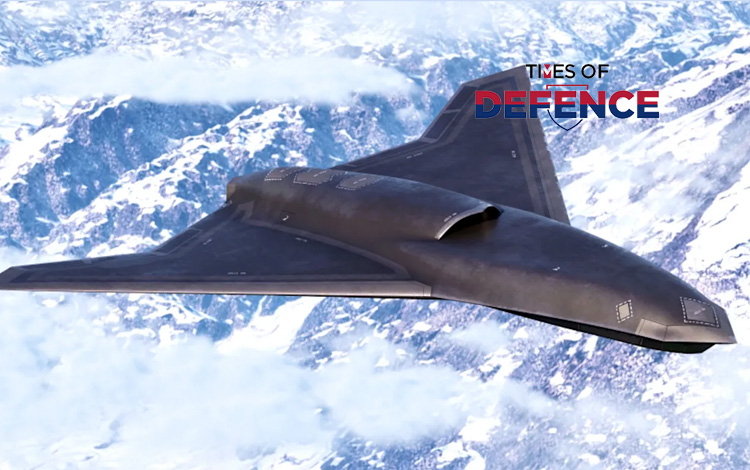
The aircraft uses a tailless lambda-wing configuration, a design approach that can reduce aerodynamic and radar-signature penalties associated with conventional vertical tails. Its configuration is clearly optimized around survivability rather than conventional fighter appearance.
Newly Revealed Dimensions
Lockheed Martin has now disclosed several physical characteristics of the aircraft.
- Length: approximately 34 ft / 10.4 m
- Wingspan: approximately 38 ft / 11.6 m
- Configuration: tailless lambda wing
- Propulsion: single turbofan
- Air intake: recessed dorsal/submerged intake
- Weapons: internal weapons bay
- Category: Group 5 UAS
- First flight target: by the end of 2027
The dimensions make Vectis roughly comparable in length to an MQ-9 Reaper, while its wingspan is in the same general range as an F-35.
The aircraft’s single-engine configuration incorporates a deeply recessed upper air intake. Lockheed says the intake arrangement can reduce drag and limit foreign-object ingestion, an important consideration for operations from austere locations. Open-source analysis of the configuration also points to an S-shaped internal duct and exhaust shielding as elements supporting the aircraft’s low-observable design.
Internal Weapons and Mission Flexibility
Vectis is being designed with an internal weapons bay, allowing weapons to be carried without relying on external pylons that could increase radar signature.
Lockheed has not publicly released a definitive production weapons-load specification. However, company-released imagery and promotional material indicate that the aircraft is being considered for both air-to-air and air-to-ground missions.
The company has described the platform as adaptable to customer requirements, with payloads and mission systems that can be configured for different missions.
Potential mission sets include:
- Air-to-air combat
- Precision air-to-ground strike
- ISR and targeting
- Electronic warfare
- Offensive counter-air
- Defensive counter-air
- Autonomous teaming with crewed aircraft
Lockheed has deliberately avoided publishing many performance figures, including maximum speed, combat radius, payload weight and detailed weapons compatibility.
Autonomy and F-35 Teaming
A major element of the Vectis concept is autonomous operation and human-machine teaming.
The aircraft is intended to integrate with fifth-generation and next-generation aircraft through Lockheed Martin’s MDCX command-and-control/autonomy architecture. Lockheed says Vectis can operate independently or participate in integrated missions alongside crewed aircraft such as the F-35.
In a potential F-35-Vectis formation, the uncrewed aircraft could perform missions that expose a manned aircraft to greater risk, while the F-35 provides advanced sensing, command-and-control and human decision-making capabilities.
The concept is therefore broader than simply replacing a fighter with a drone. It is based on distributing sensors, weapons, electronic warfare functions and risk across a network of crewed and uncrewed aircraft.
Designed for Affordable Production
One of the most notable aspects of the Vectis program is its manufacturing approach.
Lockheed says the aircraft is being developed using digital engineering and advanced manufacturing methods intended to reduce production time and labor requirements. The company is using a process called minimal-tooling determinate assembly to simplify airframe construction.
According to Skunk Works, this approach has demonstrated the potential to reduce aircraft build labor hours by as much as 80 percent in relevant manufacturing activities.
The company is targeting a price point competitive with the U.S. Air Force’s CCA program. For comparison, the Air Force’s Increment 1 CCA program established a target of roughly $20 million per aircraft for the selected designs from General Atomics and Anduril. Vectis itself has not yet been assigned a production price.
Five Prototypes Instead of One
When Vectis was unveiled in September 2025, Skunk Works planned to build a single prototype and fly it within two years.
The latest decision significantly expands that development effort.
The first aircraft remains under construction, while four additional aircraft are now being developed. Skunk Works says the larger fleet will allow the company to conduct testing more rapidly and validate manufacturing processes in parallel. The first flight remains targeted for the end of 2027.
The program is also being funded internally by Lockheed Martin rather than through a disclosed U.S. government procurement contract. The company has not publicly identified a specific customer for Vectis.
What Vectis Means for the CCA Competition
Vectis enters an increasingly competitive field of autonomous combat aircraft being developed for the U.S. military and potential international customers.
Unlike the first U.S. Air Force CCA Increment 1 competition, which was won by General Atomics’ YFQ-42A and Anduril’s YFQ-44A/Fury, Vectis is currently an internally funded Lockheed Martin development rather than one of the two selected Increment 1 aircraft.
Its significance lies in the combination of stealth-oriented shaping, autonomous operation, internal weapons carriage, modular mission systems and production-focused design.
The addition of four more aircraft suggests that Skunk Works is moving Vectis from a single demonstrator toward a more substantial flight-test and manufacturing-development program.
Editorial Note
Vectis should currently be described as an in-development prototype/CCA candidate, not an operational combat aircraft. Its first flight has not yet occurred, and detailed figures for speed, range, payload, sensor suite and final weapons integration remain undisclosed. Claims that Vectis is already capable of penetrating specific enemy air-defense networks should therefore be treated as projections rather than demonstrated operational performance.
If the program stays on its current schedule, the first major technical milestone will be the first flight by the end of 2027.
