


WASHINGTON — The U.S. Army is expanding operational concepts for low-cost, long-range one-way attack (OWA) drones, targeting adversary surface combatants and mobile ballistic missile launchers in contested Anti-Access/Area-Denial (A2/AD) theaters across the Indo-Pacific and European combat zones.
Formulated by U.S. Army Pacific (7th Infantry Division / Multi-Domain Task Force) and U.S. Army Europe and Africa (MDC-E), the doctrine leverages low-cost, attritable loitering munitions—specifically the Low-Cost Uncrewed Combat Attack System (LUCAS / FLM-136)—to achieve asymmetric “mission kills.” Rather than attempting hull-sinking kinetic strikes, swarms of low-cost OWA drones target external combat systems (such as phase-array radars, fire-control illuminators, optical sensors, and communications antennas) on enemy warships. Disabling these sensors degrades vessel combat effectiveness, creating temporary gaps in A2/AD umbrellas for U.S. Navy Carrier Strike Groups and USAF stealth bombers to penetrate. Simultaneously, in Europe, long-range OWA platforms are designated to counter mobile Transporter Erector Launchers (TELs), such as Russian 9K720 Iskander-M (SS-26 Stone) and Tochka-U (SS-21 Scarab) short-range ballistic missile systems.
TECHNICAL SPECIFICATIONS: LUCAS (LOW-COST UNCREWED COMBAT ATTACK SYSTEM) / FLM-136 
* Primary Developer & Manufacturer: SpektreWorks (Scottsdale, AZ)
* System Classification: Long-Range One-Way Attack (OWA) Uncrewed Combat Aerial Vehicle / Loitering Munition
* Airframe Architecture & Launch Modality:
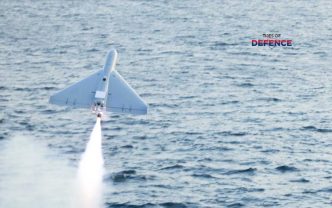
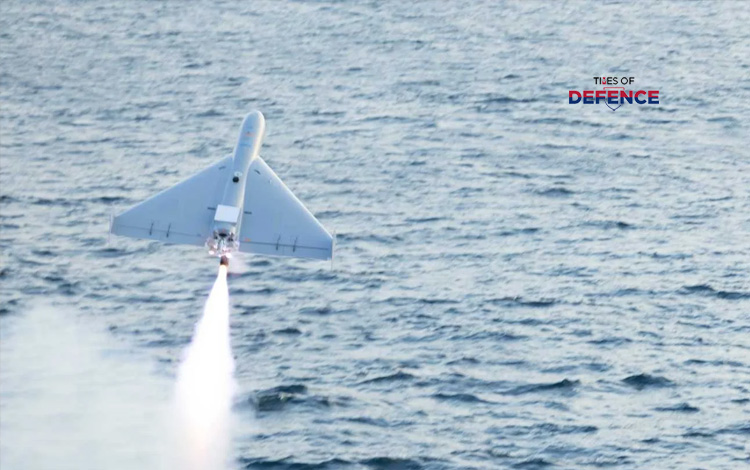
* Design Configuration: Delta-wing pusher-propeller airframe constructed from composite materials (Shahed-136 derivative footprint)
* Dimensions: Length ~3.0 m (9.8 ft) | Wingspan ~2.5 m (8.2 ft)
* Launch Dynamics: Pneumatic rail launcher, Rocket-Assisted Take-Off (RATO), or containerized ship-based deck launch (e.g., USS Santa Barbara LCS 32)
* Propulsion, Kinematics & Range Performance:
* Powerplant: 215 cc single-cylinder internal combustion engine (ICE) / 2-stroke carbureted engine
* Dash / Cruise Speed: 100 knots (185 km/h) dash | 55–74 knots cruise speed
* Operating Envelope: Service ceiling >10,000–15,000 ft DA | Endurance up to ~6 hours
* Maximum Range: ~820 km (444 nm / 500 miles)
* Payload, Guidance & Autonomy Architecture:
* Maximum Takeoff Weight (MTOW): ~81.5 kg (180 lbs)
* Kinetic Warhead Mass: ~18 kg (40 lbs) explosive blast-fragmentation / multi-purpose warhead
* Guidance & Autonomy Integration: Autonomous waypoint navigation; integrated with Shield AI’s “Hivemind” autonomous swarm software and satellite data links (e.g., SpaceX Starshield)
* Unit Economics: Estimated procurement cost ~$35,000 per unit
TIMES OF DEFENCE ASSESSMENT:
The U.S. Army’s strategy to employ low-cost LUCAS OWA drones for naval “mission kills” and counter-TEL interdiction marks a pivotal tactical evolution in counter-A2/AD warfare. At a fraction of the cost of conventional precision-guided munitions ($35,000 vs. $2M+ for a Tomahawk), deploying massed LUCAS swarms presents adversaries with a severe cost-imposition dilemma. Attacking external radar arrays, optical sensors, and fire-control suites with $35,000 drones can temporarily blind multi-billion-dollar surface combatants without requiring hull-penetrating warhead mass.
Furthermore, leveraging Shield AI’s Hivemind autonomy software enables decentralized, resilient swarm coordination capable of operating in dense electronic warfare (EW) and GNSS-denied environments. However, the operational success of this concept hinges on real-time target acquisition and tracking networks. While combat-proven against fixed targets in the Middle East, executing dynamic strikes against moving warships in heavy sea states or rapidly relocating mobile Iskander TELs requires continuous satellite and ISR feed integration to direct these slow-speed pusher-propeller platforms to their targets.

