

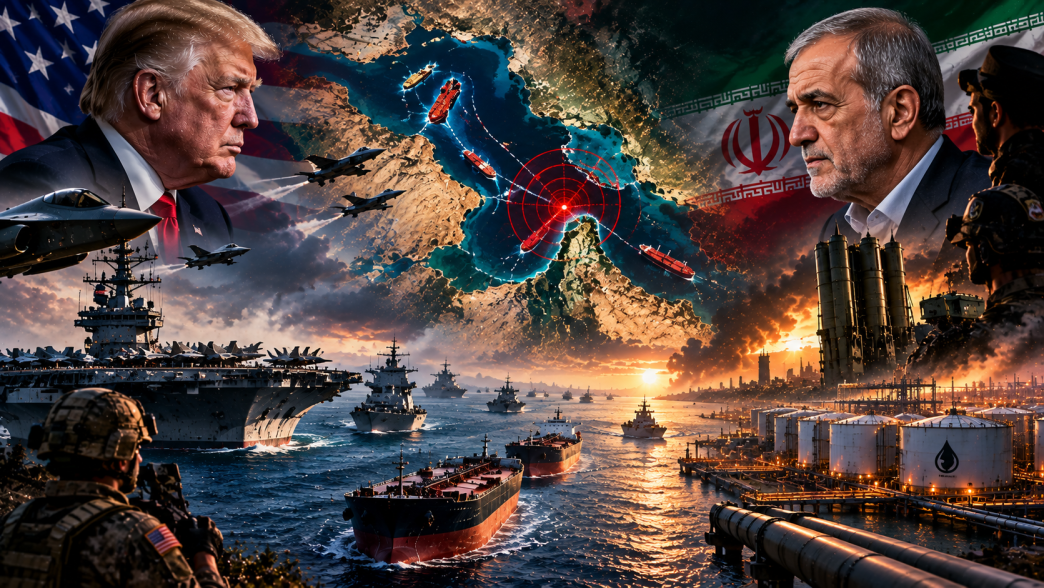
The war waged by the United States and Israel against Iran has evolved from a struggle measuring military capabilities and economic resilience into a prolonged confrontation in which the parties’ political objectives collide with regional power balances.
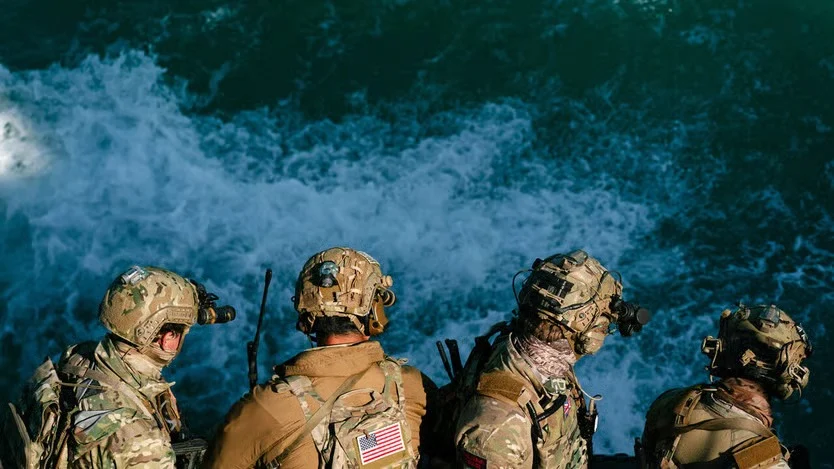
The Washington administration aims to force Tehran to back down by weakening Iran’s military infrastructure, restricting its oil revenues, and bringing maritime trade under control. However, the rapid results anticipated at the beginning of the war have not materialized. Iran’s state structure remains intact, while its failure to lose its capacity to exert pressure over the Strait of Hormuz entirely constitutes one of the fundamental dilemmas of the American strategy.
The renewed increase in oil shipments from the region may, at first glance, create the impression that one of Iran’s most important instruments of leverage is losing its effectiveness. The activation of alternative pipelines, the rerouting of tanker traffic, and the protection provided to commercial vessels by the US Navy can limit disruptions to energy flows. However, these developments do not mean that the security problem in the Strait of Hormuz has disappeared. Maintaining trade flows and ensuring maritime security are two different matters.
The real problem is that while Washington expects Iran to back down in the face of economic and military pressure, Tehran views the war as a struggle involving the very survival of the state. Consequently, Iran’s options are not limited to surrender or submission to the existing conditions. Even if its available capabilities become more constrained, Tehran may attempt to change the other side’s calculations by increasing the costs of the conflict for the United States and regional countries.
In this context, it appears extremely difficult for the war to come to a lasting end without a new military confrontation in which the parties directly face each other in the Strait of Hormuz. Such a confrontation would not necessarily have to develop into an all-out naval war. However, unless the tensions surrounding the naval blockade, the protection of commercial vessels, Iran’s attempts to obstruct passage, and the military responses to those attempts are resolved, even a declared ceasefire is likely to remain fragile.
Increased traffic through Hormuz does not eliminate Iran’s influence
Although the recovery in energy shipments represents an important development in terms of the war’s economic consequences, it is insufficient to conclude that Iran’s strategic position has changed entirely. According to a Reuters report dated October 2, 2026, liquefied natural gas shipments passing through the Strait of Hormuz reached their highest monthly level since the beginning of the war in September. Nevertheless, the fact that some tankers are switching off their Automatic Identification System transponders to avoid detection demonstrates that maritime traffic continues to operate under security concerns.
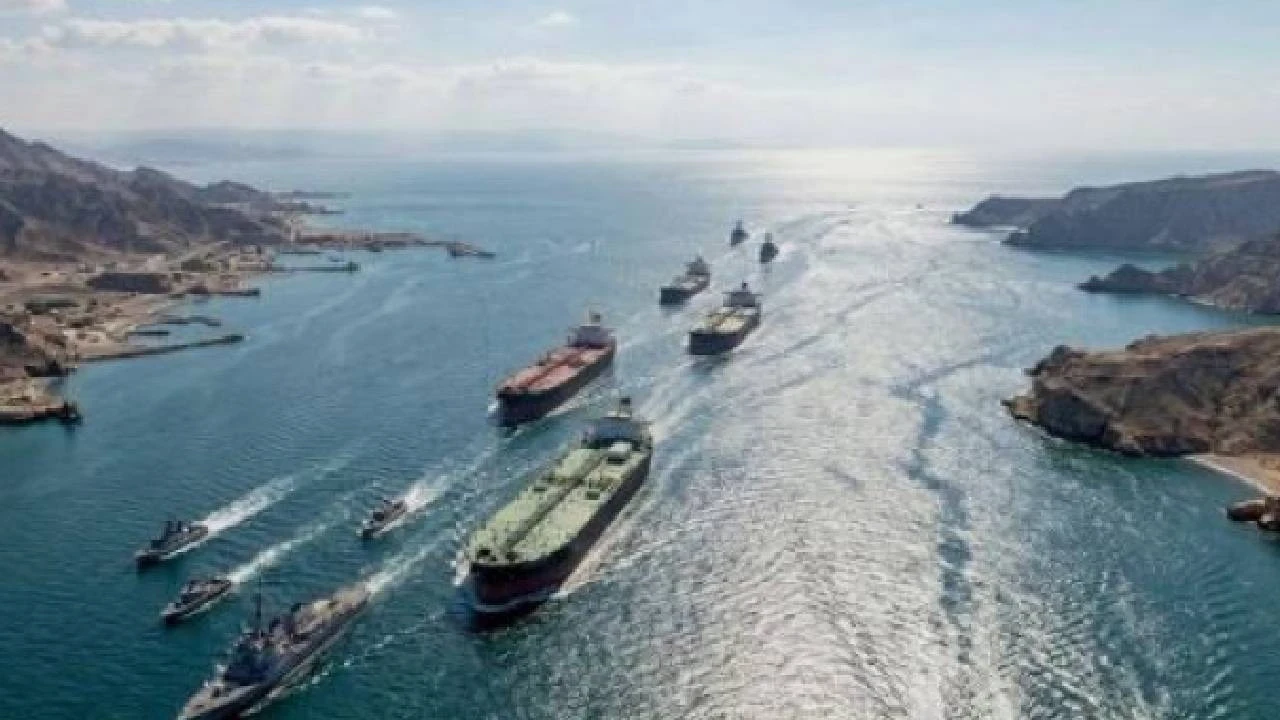
The Gulf countries are turning to alternative routes to reduce the war’s impact on their energy infrastructure. Shipments reaching the Red Sea through Saudi Arabia’s East-West Pipeline and the export infrastructure on the eastern coast of the United Arab Emirates are among the principal means of reducing dependence on Hormuz. However, these systems do not eliminate the strait’s importance to global energy trade. Moreover, the alternative routes themselves are not entirely protected against the risks of missiles, unmanned aerial vehicles, and sabotage.
Indeed, the extension of pressure from Hormuz to the Red Sea and the Bab el-Mandeb route demonstrates that the issue is not confined to Iran’s coastline. The spread of risks to energy transportation across different maritime chokepoints can affect the entire trade network extending from the Gulf to the Mediterranean and the Indian Ocean. Therefore, the continuation of oil flows through alternative routes should not be interpreted as an indication that military tensions have ended.
The fundamental distinction here lies between restoring energy flows and establishing lasting energy security. The former may be achieved through logistical and infrastructure solutions. The latter, however, requires a political settlement addressing the parties’ threat perceptions concerning maritime transportation, their military deployments, and their mutual security demands.
Why is US military superiority not translating into political results?
The fundamental problem facing the Washington administration is not its inability to inflict damage on Iran, but the difficulty of translating that capacity into lasting political outcomes. The United States can target Iran’s military facilities, missile infrastructure, and naval assets. It can also restrict Tehran’s revenues through economic sanctions and a blockade of Iranian ports. However, none of these instruments alone guarantees that the Iranian leadership will accept the conditions for ending the war.
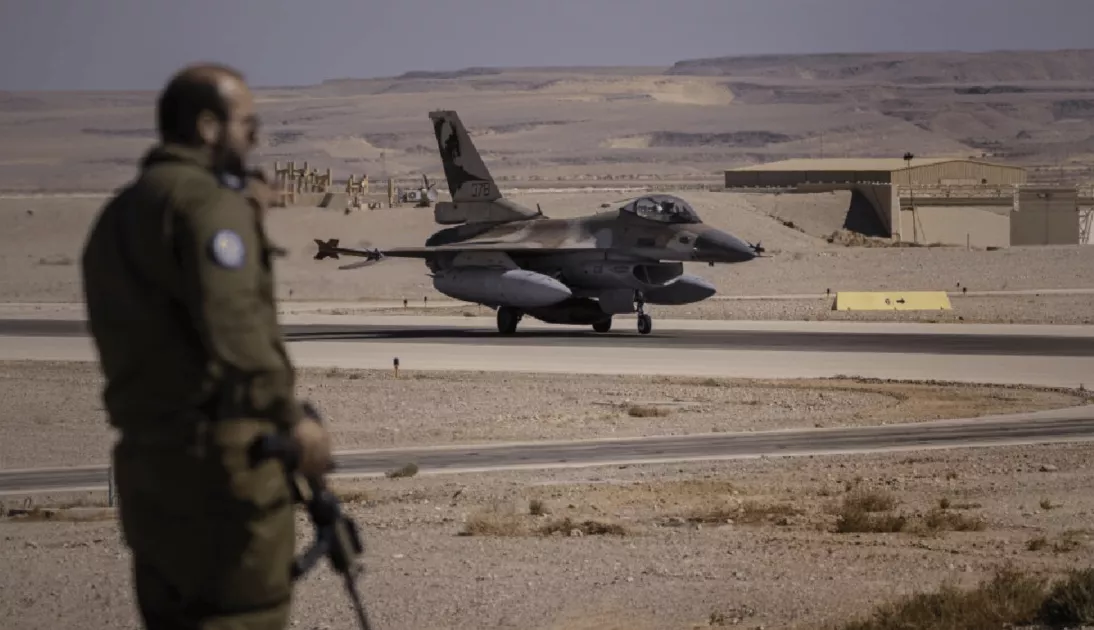
Expectations of a rapid outcome during the initial phase of the war have given way to a more complex picture as the conflict has dragged on. Losses suffered by Iran’s military do not mean that the country’s ability to retaliate has been completely eliminated. Dispersed military structures, coastal defense systems, unmanned aerial vehicles, naval assets, and networks of regional allies demonstrate that the challenge facing the United States cannot be explained solely in terms of conventional military power.
Moreover, the military operations the United States continues to conduct to protect maritime trade are generating substantial costs. The prolonged deployment of warships, the use of air defense systems, the consumption of missiles and ammunition, and the escorting of commercial vessels are increasing the economic burden of the operation. US military superiority neither eliminates these costs nor automatically brings Iran’s capacity to retaliate to an end.
This is where the fundamental contradiction in Washington’s strategy becomes apparent: operations intended to reduce Iran’s ability to wage war are simultaneously keeping US military resources tied up in the region for extended periods. Consequently, Washington is being assessed not only on how much damage it can inflict on Iran, but also on how long it can sustain this pressure.
The debate over American failure takes on significance at this point. This failure does not mean that the US military has been defeated on every front. The real issue is that military superiority has not produced the political outcome originally sought, and the conditions necessary to end the war have yet to be established. As long as the Iranian leadership remains in place, the security problem in Hormuz persists, and Washington needs a diplomatic settlement, military operations alone cannot serve as the measure of success.
Why might Iran escalate rather than back down?
The decisive factor in the Iranian leadership’s calculations is not so much the present cost of the war as the security environment it expects to face after the conflict. If Tehran concludes that yielding to the current pressure would not prevent it from facing similar operations in the future, it may continue resisting despite severe economic and military losses.
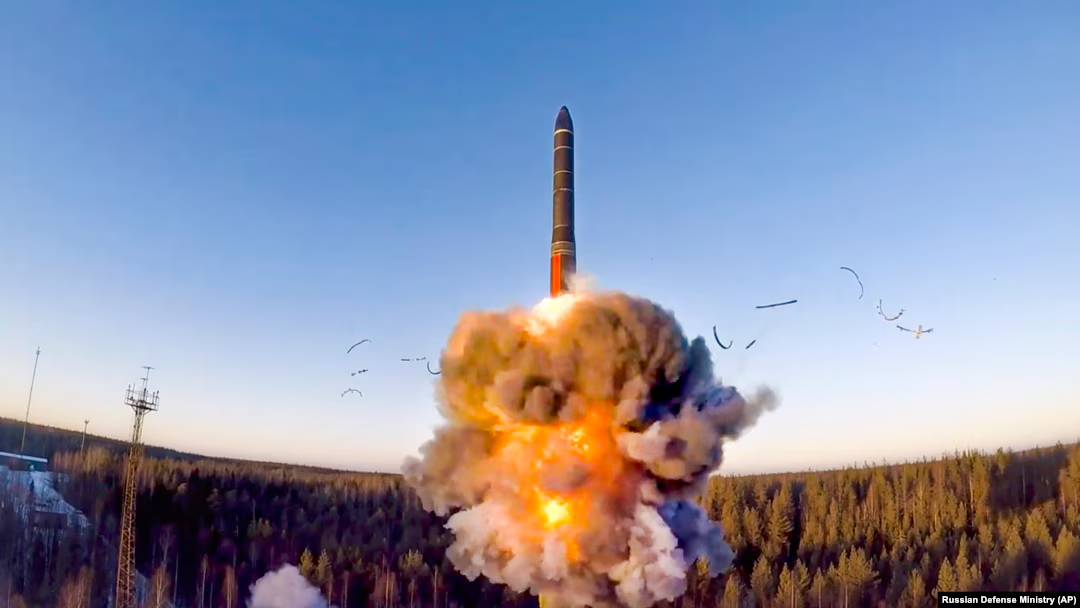
This approach does not mean that Iran will win the war. On the contrary, the country faces serious problems arising from economic contraction, infrastructure damage, sanctions, and social pressure. However, there is not always a direct relationship between the losses a state suffers in war and its decision to abandon its political objectives. Particularly in conflicts in which a government perceives its very existence to be under threat, its threshold for accepting costs may rise.
A Reuters report dated October 1 states that Iran is considering a broader retaliatory option in response to the possibility of the United States resuming large-scale attacks. According to the report, Tehran is taking into account the possibility that any response might extend beyond American targets and involve allied forces in the region. These are not developments that have already occurred, but reported assessments concerning Iran’s preparations and possible scenarios.
In this context, Iran’s priority may not be to achieve superiority in every military confrontation. Instead, it may seek to increase the operational costs for the United States, deepen the security concerns of the Gulf countries, and test Washington’s willingness to sustain the conflict.
The most sensitive aspect of such a strategy concerns energy infrastructure and maritime trade. New attacks on vessels passing through Hormuz or operations targeting the alternative export routes of Saudi Arabia and the UAE could bring Iran’s instruments of pressure back to the forefront. However, these actions could also prompt stronger military responses from the Gulf countries and lead to an expansion of the conflict. Escalation therefore represents both an instrument of pressure and a serious risk for Iran.
The confrontation in Hormuz will determine the course of the war
The Strait of Hormuz has become the central issue bringing together the military, economic, and diplomatic dimensions of the war. The United States wants to ensure the uninterrupted continuation of international maritime trade and break Iran’s ability to exert pressure over passage through the strait. Iran, meanwhile, is seeking to use its influence over maritime transportation and oil shipments to reduce the military and economic pressure directed against it.
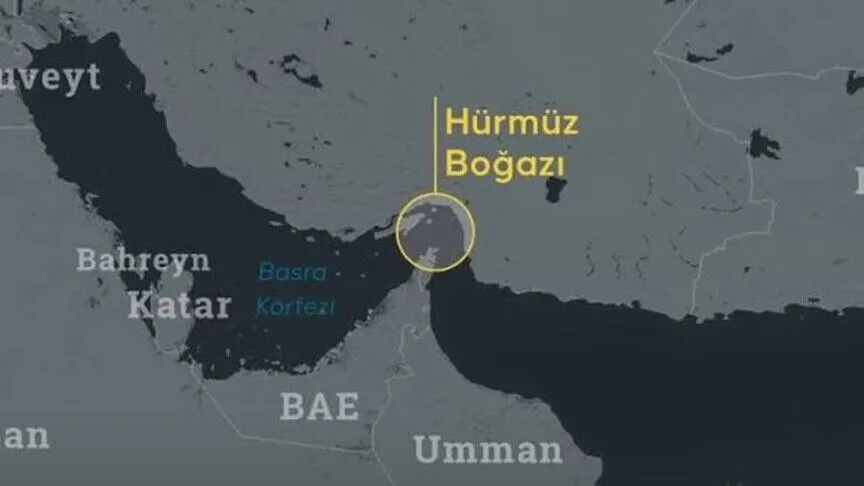
The conflict between these two objectives is not merely a technical issue concerning the passage of ships. The extent of the parties’ military presence in the region, the blockade imposed on Iranian ports, the future of sanctions, and disagreements over Iran’s nuclear program are all part of the same equation. Unless these issues can be resolved in a coordinated manner, the partial normalization of maritime traffic will not be an indication of lasting peace.
Diplomatic channels have not been completely closed either. A Reuters report dated September 30 stated that the US response to a seven-day confidence-building proposal submitted by Iran to reduce tensions and reorganize passage through Hormuz had been conveyed to Tehran through Qatar. A significant portion of the disagreements centers on which steps the parties should take first and what guarantees they would receive in return.
This indicates that a diplomatic solution remains possible, although it will not be easy to achieve. While Iran is seeking guarantees concerning the future of the blockade and sanctions, the United States may prioritize maritime security and concrete commitments on the nuclear issue. Expecting all the demands of either side to be met could bring negotiations to a deadlock.
Conversely, if military tensions in Hormuz develop into a new confrontation, the diplomatic space could narrow further. Attacks on commercial vessels, interventions by the US Navy, and new operations against Iran’s coastline could trigger one another and render a temporary ceasefire arrangement ineffective. Under such a scenario, the war could expand through its own dynamics, regardless of the parties’ original objectives.
The political cost of the energy crisis is becoming global
Tensions in Hormuz are not merely the result of the power struggle between Iran and the United States; they are also a security problem directly affecting the global economy. Disruptions to oil and natural gas shipments, rising transportation and insurance costs, reduced refinery activity, and the reorganization of supply chains are extending the consequences of the conflict beyond the region’s borders.
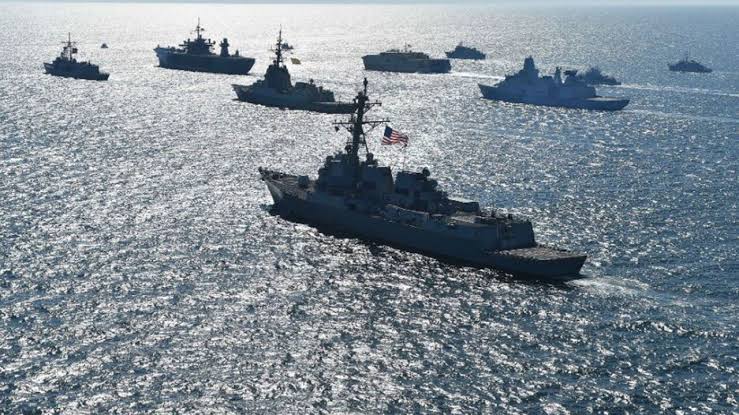
A Reuters report dated October 2 states that the US-Iran dispute and the possibility of renewed escalation are adversely affecting investor confidence in the markets of the United Arab Emirates. A Wall Street Journal assessment published on the same day also draws attention to continuing pressure on energy costs and financial markets despite the recovery in tanker traffic. This picture demonstrates that the resumption of shipments alone is insufficient to eliminate economic uncertainty.
For the United States, the economic dimension of the war is also becoming increasingly important. Rising energy prices, inflationary pressure, and prolonged military expenditures could increase the domestic political cost of the administration’s decision to continue the conflict. However, it is not possible to conclude that these costs will automatically force Washington to back down. Likewise, it cannot be assumed that economic pressure will necessarily force the Iranian leadership to surrender.
The decisive factor will be the point at which each side considers the costs it is bearing unacceptable. If Iran concludes that economic devastation threatens the continuity of its government, it may move toward a settlement. If the United States determines that military pressure is failing to produce the desired political outcome and that regional security costs are continuing to rise, it may reconsider the terms of negotiations.
Conclusion: From military pressure to a political settlement
The course of the war against Iran so far clearly demonstrates the difference between military superiority and strategic success. The United States and Israel may have inflicted significant damage on Iran’s military capabilities. However, this does not mean that Tehran has lost all its bargaining instruments or that the war will end on Washington’s terms.
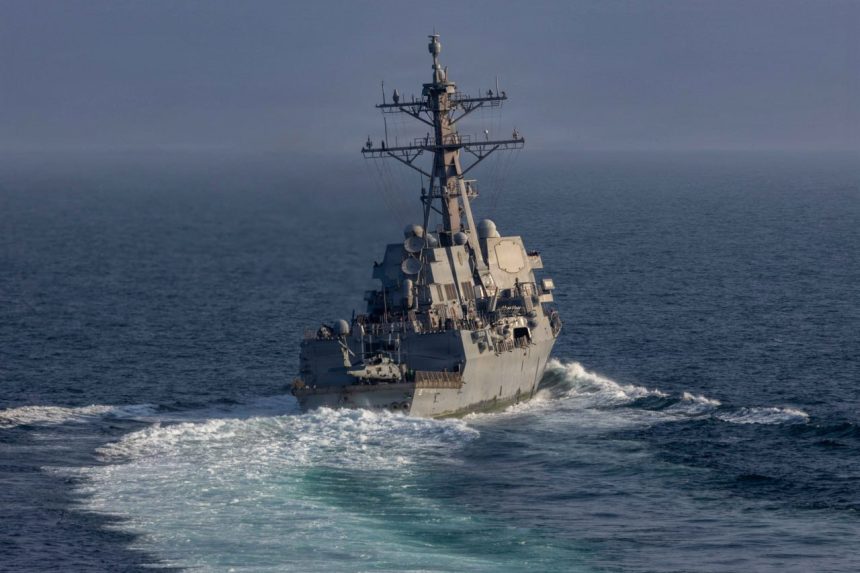
Iran’s capacity to exert pressure over the Strait of Hormuz is not unlimited either. Alternative pipelines, changing tanker routes, and interventions by the US Navy are narrowing Tehran’s ability to control energy flows. Nevertheless, the continued need for military protection to maintain maritime trade demonstrates that the problem has not yet been resolved permanently.
The central question in the coming period will not so much be which side can inflict greater damage, but which can bear the existing costs for longer. Yet this question alone is insufficient. Ending the war requires not only military pressure but also a settlement that addresses the parties’ concerns about the postwar security order.
A new military confrontation in Hormuz is not a necessary condition for the war to end; however, achieving lasting peace will be extremely difficult without resolving the dispute over control and security in the strait. The fundamental dilemma of the current US strategy is that, despite being able to weaken Iran, Washington has not yet managed to persuade Tehran to accept peace on its terms. Iran’s dilemma, meanwhile, is that it must bear the economic and social costs of sustaining its capacity to resist.
For this reason, the future of the war will be determined not only by military developments on the battlefield, but also by the political settlement through which maritime security in Hormuz can be established. As long as this deadlock remains unresolved, ceasefire initiatives will not eliminate the possibility of renewed escalation, and the region will continue to face the risk of a broader conflict.