


Defense transportation primes Siemens Mobility and Lufthansa Technik Defense signed a Memorandum of Understanding (MoU) on November 3, 2026, ahead of the Berlin Security Conference to co-develop a cross-border, high-capacity medical evacuation (MedEvac) hospital train.
The industrial partnership is engineered to support the German Armed Forces (Bundeswehr) and NATO allies during high-intensity NATO Article 5 territorial defense scenarios and civilian mega-disasters. Designed to transport over 150 casualties (including intensive care patients) along with 90 medical and support staff, the platform combines Siemens’ rail logistics with Lufthansa Technik’s modular aeromedical intensive care systems. The initiative directly reflects strategic lessons from the war in Ukraine, where air superiority remains contested and over 60% of wounded personnel rely on rail-based casualty evacuation (CASEVAC).
TECHNICAL SPECIFICATIONS: SIEMENS / LUFTHANSA TECHNIK MEDEVAC TRAIN ARCHITECTURE
Rolling Stock, Traction & Interoperability Envelope
⚡ Systems Consortium: Siemens Mobility (Locomotives & Coaches) & Lufthansa Technik Defense (Medical Integration & Aeromedical Hardware)
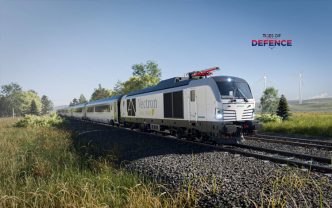
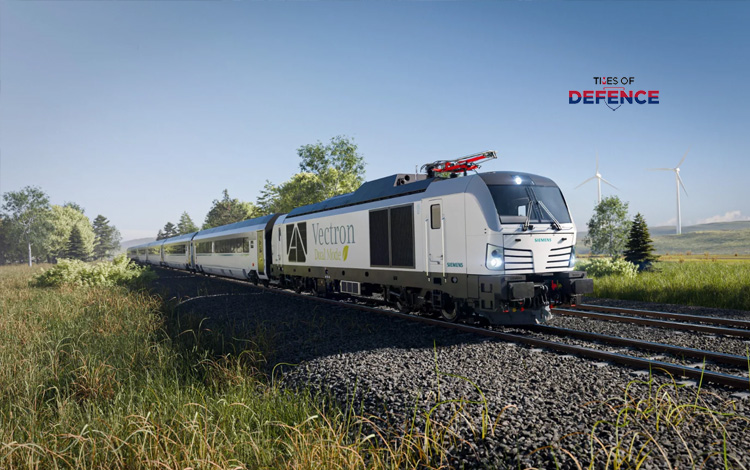
⚡ Traction Unit Baseline: Siemens Vectron X locomotive or dual-fuel Siemens Vectron X Dual Mode (overhead electric pantograph + high-output diesel engine)
⚡ Passenger Coach Configuration: Siemens Vectouro high-speed passenger coaches equipped with pressure-tight gangways and sound-insulated chassis
⚡ Multi-National Operational Envelope: Fully certified for multi-voltage European cross-border operation (eliminating locomotive swapping or border gauge delays across NATO lines)
⚡ Off-Grid Traction Capabilities: Vectron X Dual Mode permits continuous transit across damaged, un-electrified, or sabotaged rail lines without power loss
⚡ Convertibility & Lifecycle: Pressure-sealed coaches are modularly engineered for dual-use civil rail duty, allowing rapid conversion back to civilian passenger service when not deployed; operational design life >30 years 
Aeromedical Systems, ICU Integration & Patient Capacity
💥 Maximum Patient Payload: >150 casualties per trainset (ranging from walking wounded to critical surgical cases)
💥 Critical Care / Intensive Care Unit (ICU) Capacity: Modular intensive care stations featuring integrated ventilators, multi-parameter vital sign monitors, automated infusion pumps, and central oxygen delivery
💥 Aeromedical Commonality: Utilizes Lufthansa Technik’s standardized aeromedical transport modules (proven on Bundeswehr Luftwaffe A400M MedEvac aircraft), enabling direct bed-to-bed transfers without patient re-strapping
💥 Onboard Medical Crew Complement: Accommodates up to 90 specialized military doctors, intensive care nurses, triage officers, and logistical support personnel
💥 Environmental & Bio-Containment Controls: Pressure-sealed coach cabins allow high-speed running on mainline high-speed rail networks while protecting interior environments against dust, noise, and airborne contamination
TIMES OF DEFENCE ASSESSMENT
The joint Siemens-Lufthansa Technik hospital train concept highlights a major shift in NATO rear-area medical logistics and casualty evacuation strategy.
From a military logistics and defense engineering perspective, the development offers three key insights:
1. **Addressing NATO Article 5 Casualty Scale**: The Bundeswehr Joint Medical Service estimates potential casualty rates of up to 1,000 wounded soldiers per day along NATO’s Eastern Flank during a full-scale conflict. Traditional rotary-wing (MEDEVAC helicopters) and field ambulances cannot handle this volume. Establishing mass high-speed rail evacuation provides the throughput needed to clear frontline field hospitals and move patients to definitive care centers in Western Europe.
2. **Operational Lessons from Contested Ukrainian Airspace**: The war in Ukraine has shown that contested airspace and widespread S-300/S-400 anti-access/area-denial (A2/AD) networks make aerial MEDEVAC dangerous or impossible near the front lines. Consequently, Ukrzaliznytsia (Ukrainian Railways) converted over 78 passenger cars into specialized hospital trains to handle two-thirds of all military evacuations. Germany is adopting this approach, recognizing that heavy rail is the most reliable mode for mass casualty evacuation.
3. **Competing Industrial Approaches for Bundeswehr Tender**: The Siemens/Lufthansa Technik MoU enters an active industrial competition. While the German government initially considered converting three Deutsche Bahn ICE 3neo high-speed trains, the Ministry of Defence is now opening requirements for a broader tender. The Siemens/Lufthansa dual-mode passenger coach approach competes directly with the Rheinmetall/Alstom “MedEvacTrain” concept, which uses modular medical containers mounted on standard freight flatcars.

