


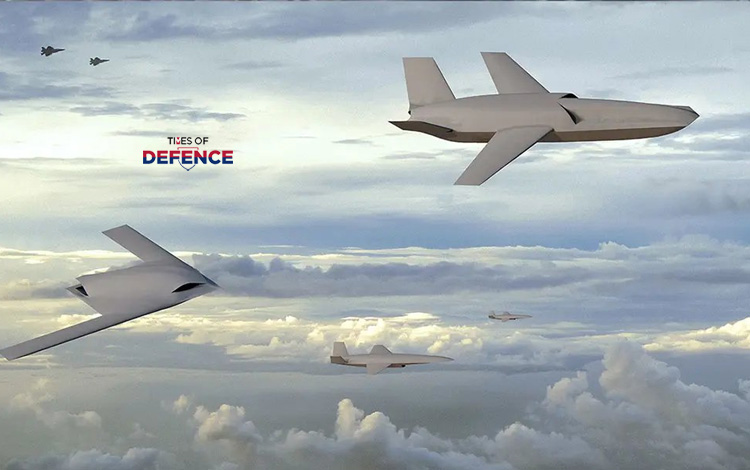
Next-generation U.S. uncrewed aerial vehicle (UAV) programs are pushing persistent airborne surveillance capabilities to multi-day envelopes. Advanced stealth concepts and ultra-long-endurance (ULE) platforms currently under development and testing aim to sustain continuous, unrefueled operations exceeding 48 hours in contested and permissive airspaces.
While existing high-altitude stealth platforms—such as the Northrop Grumman RQ-180 and Lockheed Martin RQ-170 Sentinel—typically operate within a 24-hour endurance window, ongoing initiatives by the Air Force Research Laboratory (AFRL) alongside major defense contractors are optimizing aspect-ratio aerodynamics, high-efficiency propulsion, and lightweight composite structures. These technologies bridge the gap between short-endurance stealth strike systems and long-endurance ISR platforms (such as the non-stealthy DZYNE ULTRA, which achieves up to 80 hours), aiming to establish an unrefueled, low-observable persistent surveillance capability.
TECHNICAL SPECIFICATIONS: LONG-ENDURANCE STEALTH UAV CONCEPTS
Program Governance, Concept Developers & Mission Profile
⚡ Sponsoring Entities: Air Force Research Laboratory (AFRL), DARPA & DoD Defense Innovation Unit (DIU)
⚡ Prime Aerospace Developers: Northrop Grumman (Skunk Works / Autonomous Systems), Lockheed Martin (Skunk Works), Boeing (Phantom Works)
⚡ Operational Objective: 48+ Hour Persistent ISR, Signal Intelligence (SIGINT), and Command & Control (C2) node capabilities within contested/A2-AD environments
⚡ Target Range & Ceiling: Service Ceiling: >60,000 ft (18,000 m) | Operational Ferry Range: >15,000 nautical miles unrefueled 
Aerodynamic Engineering, Stealth Geometry & Structural Composition
💥 High-Aspect-Ratio Planform: Extreme-span flying-wing geometry optimized for ultra-high aerodynamic efficiency (L/D ratios) at near-space cruise altitudes
💥 Radar Cross-Section (RCS) Minimization: Integrated flush dorsal air intakes, internal S-duct engine corridors, and edge-aligned trailing control surfaces to minimize multi-band radar reflections
💥 Composite & Energetic Weight Saving: Carbon-fiber/polyimide matrix structures paired with high-energy-density conformal fuel tanks integrated directly into structural wing spars
💥 Antenna & Sensor Conformal Integration: Low-observable Active Electronically Scanned Array (AESA) radar panels and passive ESM receivers embedded flush into the wing skin
Propulsion, Fuel Efficiency & Power Management Systems
🚀 Powerplant Architecture: High-bypass, fuel-efficient un-afterburning turbofan or adaptive-cycle engines optimized for low specific fuel consumption (SFC) at extreme altitudes
🚀 Thermal & Signature Suppression: Top-side exhaust nozzles utilizing passive cooling channels and IR-suppressive matrix coatings to mitigate thermal infrared (IR) signatures from surface/airborne sensors
🚀 Power Generation & Payload Margin: Modular internal bays delivering high electrical output to feed multi-mission payloads, wide-band communications relays, and synthetic aperture radar (SAR)
TIMES OF DEFENCE ASSESSMENT
Achieving a 48-hour unrefueled flight envelope for a stealth UAV alters operational planning for anti-access/area-denial (A2/AD) contested environments. Traditional stealth reconnaissance platforms require frequent air-to-air refueling or rotational sorties, introducing vulnerability vectors and high operational costs.
From an aerospace engineering and intelligence perspective, extended stealth endurance provides three primary advantages:
1. **Uninterrupted Target Tracking in A2/AD Zones**: A 48-hour flight endurance allows a stealth UAV to remain stationed inside heavily defended airspaces without exiting to refuel. This enables continuous target acquisition against mobile ballistic missile launchers, air defense batteries, and naval surface combatants.
2. **Mitigating Air Refueling Dependencies**: Operating aerial refueling tankers (such as KC-46A or KC-135) near contested airspace presents significant operational risk. Eliminating the need for mid-mission aerial refueling reduces the tactical footprint and preserves tanker capacity for crewed strike packages.
3. **Serving as Persistent Airborne C2 and Datalink Relays**: Beyond imagery and signals intelligence, an ultra-long-endurance stealth UAV can function as a high-altitude, low-observable communications gateway. Moving real-time targeting data between 5th-generation combat jets (F-35, B-21 Raider) and standoff naval strike platforms without revealing its position strengthens Joint All-Domain Command and Control (JADC2) networks.

