


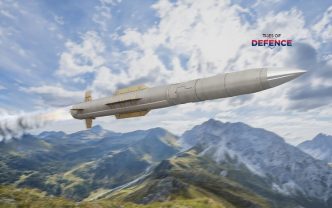
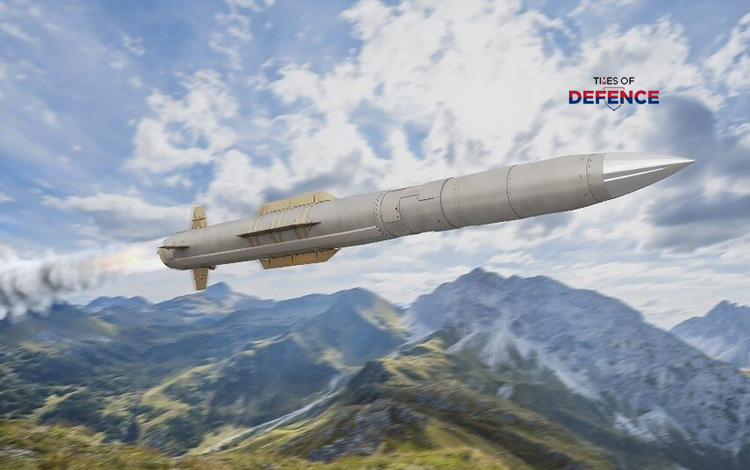
Lockheed Martin Missiles and Fire Control has conducted warhead testing supporting its new PAC-3 ACE (Adapted Capability Effector) low-cost Patriot air-defense interceptor, demonstrating effectiveness against Group 3 uncrewed aerial systems (UAS) as the program advances toward an initial flight test scheduled for 2027.
Unveiled in July 2026 at the Farnborough International Airshow, the PAC-3 ACE is engineered to provide a lower-cost, high-volume effector across a broad spectrum of air and missile threats—including Group 3 UAS, cruise missiles, and short-range ballistic threats—at less than half the unit cost of a PAC-3 Missile Segment Enhancement (MSE) interceptor. By leveraging existing Patriot fire-control architectures and integrating seamlessly with the Integrated Battle Command System (IBCS), the program pairs cost-optimized hardware choices with a co-development and co-production model spanning U.S. and European industrial partners to accelerate fielding and strengthen allied magazine depth.
TECHNICAL SPECIFICATIONS: LOCKHEED MARTIN PAC-3 ACE INTERCEPTOR ARCHITECTURE
1. Cost-Optimized Propulsion, Guidance & System Integration
⚡ Prime Developer & Program Scope: Lockheed Martin Missiles and Fire Control; designed for full compatibility with existing Patriot fire-control chains and the Integrated Battle Command System (IBCS)
⚡ Propulsion Simplification: Transitions from the PAC-3 MSE’s dual-pulse rocket motor to a simplified single-pulse rocket motor to lower unit cost and streamline manufacturing scalability
⚡ Guidance & Seekers: Retains proven PAC-3 guidance algorithms while incorporating streamlined, cost-effective subsystems tailored for high-rate production and multi-threat engagement
⚡ Transatlantic Industrial Model: Structured around collaborative U.S. and European supply-chain and production partnerships to boost industrial resilience and allied interoperability 
2. Lethality Envelope, Cost Benchmark & Flight Test Roadmap
💥 Warhead & Target Envelope: Validated in warhead testing against Group 3 UAS while engineered to counter broader airbreathing and missile threats alongside existing PAC-3 MSE and upcoming PAC-3 Edge interceptors
💥 Unit Cost Target: Engineered to cost less than half the per-unit price of a PAC-3 MSE interceptor (estimated around half to one-third of MSE pricing, compared to MSE unit costs cited around $4 million to $5.3 million depending on contract/fiscal year)
💥 Flight Test Milestone: Initial missile flight testing scheduled for 2027, following rapid ground and component risk-reduction milestones since its July 2026 unveiling
TIMES OF DEFENCE ASSESSMENT
Lockheed Martin’s warhead testing for the PAC-3 ACE interceptor highlights three critical shifts in integrated air and missile defense economics and force employment:
1. Restoring Cost-Exchange Ratios Against Proliferating Medium/Long-Range Drones: Firing high-cost interceptors at large numbers of Group 3 UAS and airbreathing threats rapidly erodes air-defense magazines and fiscal sustainability. A lower-cost Patriot-compatible effector allows defenders to preserve premium interceptors for high-end ballistic or hypersonic threats while maintaining dense layered coverage.
2. Leveraging Existing Command-and-Control for Rapid Developmental Velocity: Building directly upon established PAC-3 fire-control software and IBCS integration avoids starting from a clean-sheet command architecture, compressing development timelines from concept to 2027 flight testing.
3. Scaling Allied Magazine Depth Through Transatlantic Co-Production: Engaging both U.S. and European industrial partners on PAC-3 ACE addresses wartime munition consumption bottlenecks by distributing manufacturing capacity and standardizing an affordable interceptor across allied Patriot and IBCS operators.

