


U.S. military scholar John Spencer has pointed to Turkey’s military posture during the 2020 Nagorno-Karabakh war as an example of Ankara’s broader emergence as a regional power, arguing that Turkey used its airpower and diplomatic position to signal that outside powers should take its interests into account.
Spencer made the remarks in a September 16, 2026 interview on Real Talk with Marissa Streit. Discussing Turkey’s role in the South Caucasus and its broader regional ambitions, Spencer recalled that Turkey had indicated that if Russian fighter aircraft entered the airspace during the conflict, Turkish F-16s would also be present. He described this as a form of strategic signaling and linked it to what he sees as Turkey’s evolution toward a more influential regional role.
However, the historical record requires an important qualification: there is no evidence in the sources reviewed that Turkey officially announced a standing policy that “if Russian fighters fly, Turkish F-16s will fly.” Spencer’s statement appears to be his characterization of the deterrence message he believes Ankara was communicating. 
What Happened to the Turkish F-16s in 2020?
The Turkish Air Force deployed F-16 fighters to Azerbaijan in July 2020 for the TurAz Qartali-2020 joint military exercise.
Azerbaijan’s Defense Ministry confirmed that Turkish F-16s participated in the exercise alongside Azerbaijani aircraft. The drills included fighter and helicopter operations and were conducted at several locations, including Baku, Nakhchivan, Ganja, Kurdamir and Yevlakh.
The exercise ended before the September 27 outbreak of the Second Nagorno-Karabakh War, but some Turkish aircraft reportedly remained in Azerbaijan.
During the conflict, Armenia accused Turkey of using F-16s operationally against Armenian forces. Azerbaijan and Turkey rejected the allegation. Azerbaijani President Ilham Aliyev stated in October 2020 that the Turkish F-16s had remained in Azerbaijan as a form of support and said they would be used if Azerbaijan faced an attack from outside.
Armenia, meanwhile, formally alleged that Turkish F-16s had participated in combat operations and claimed that one Turkish F-16 had shot down an Armenian Su-25. Azerbaijan and Turkey denied that claim. Contemporary reporting did not establish the alleged shootdown as an independently verified fact.
This distinction is important when interpreting Spencer’s comments.
Why the F-16 Was a Significant Signal
The F-16 is a multirole fourth-generation fighter capable of air-to-air combat, precision strike, suppression of enemy air defenses and other missions depending on configuration and weapons.
The basic F-16C/D family is approximately 15 meters long, has a wingspan of about 10 meters, and can reach speeds above Mach 2. Block 50/52 aircraft have maximum takeoff weights in the region of 48,000 pounds (21.8 tonnes) and can employ modern air-to-air and air-to-ground weapons.
Turkey operates one of the world’s largest F-16 fleets, with aircraft upgraded over time through indigenous and foreign-supported modernization programs.
For a regional crisis, the deployment of combat aircraft can therefore serve several functions simultaneously:
- Air-defense signaling
- Deterrence
- Alliance reassurance
- Combat readiness
- Intelligence and surveillance support
- Potential offensive capability
The political effect of deploying fighters can be significant even when aircraft do not conduct combat missions.
The Russian Dimension
Russia was a major external military actor in the South Caucasus during the 2020 conflict.
Moscow maintained a military presence in the region and subsequently deployed approximately 2,000 peacekeeping personnel to Nagorno-Karabakh under the November 2020 ceasefire arrangement.
Turkey, meanwhile, strongly supported Azerbaijan politically and militarily during the conflict.
The presence of Turkish F-16s in Azerbaijan therefore existed against the background of a wider regional power relationship involving Turkey, Russia, Azerbaijan and Armenia.
Spencer’s interpretation is that the Turkish posture communicated that Ankara expected its interests in the South Caucasus to be considered by other major powers.
The F-16 as a Technical Instrument of Deterrence
The aircraft itself provides a useful illustration of why the platform can function as both a combat asset and a strategic signal.
Depending on variant and configuration, F-16s can employ:
Air-to-air weapons
- AIM-9 Sidewinder
- AIM-120 AMRAAM
Air-to-ground weapons
- Precision-guided bombs
- Anti-radiation weapons
- Stand-off weapons depending on national integration
Sensors and systems
- Pulse-Doppler radar
- Electronic warfare systems
- Targeting pods
- Helmet-mounted cueing systems
- Tactical datalinks on compatible configurations
Modernized F-16s can also receive AESA radar and upgraded electronic warfare capabilities. Turkey has selected Northrop Grumman’s AN/ALQ-257 Integrated Viper Electronic Warfare Suite for its planned F-16 Block 70 fleet.
The combination of long-range sensors, beyond-visual-range missiles, electronic warfare and network connectivity allows an F-16 force to influence an airspace without necessarily entering close-range combat.
Turkey’s Broader Military Transformation
Spencer’s comments also fit into a broader discussion about Turkey’s military development over the past decade.
Turkey has expanded its indigenous defense-industrial base and developed or fielded systems including:
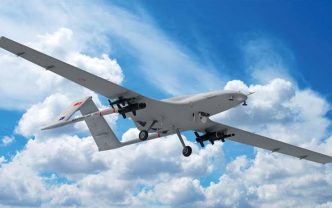
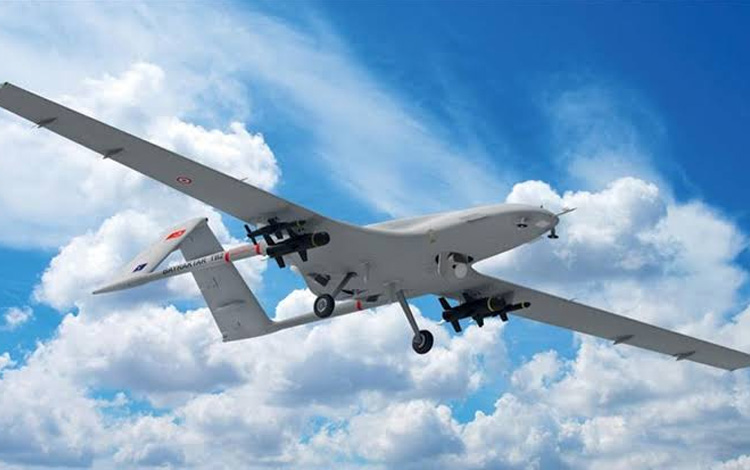
- Bayraktar TB2
- Bayraktar Akıncı
- Bayraktar Kızılelma
- Anka family UAVs
- T129 ATAK helicopters
- Hürkuş and Hürjet programs
- Naval platforms and unmanned maritime systems
- Long-range missile systems
- Indigenous electronic warfare and air-defense technologies
This expansion has reduced Turkey’s dependence on foreign suppliers in several areas while increasing its ability to export defense systems.
However, describing Turkey simply as a “rising power” remains an analytical judgment, not a measurable technical status. Spencer is presenting his own assessment of Turkey’s strategic trajectory.
From the Caucasus to a Wider Regional Role
The significance of Spencer’s comments is therefore less about one particular F-16 deployment and more about the strategic pattern he identifies.
In his interview, Spencer connected Turkey’s role in the Nagorno-Karabakh conflict with its subsequent involvement in other regional crises, arguing that Ankara seeks greater influence and is prepared to act when it identifies an opportunity.
The 2020 war provided a particularly visible example of Turkey’s alignment with Azerbaijan.
Turkey’s military support for Azerbaijan included political backing, military cooperation and defense technology. Turkish F-16s were publicly present in Azerbaijan before the war as part of joint exercises, while Turkish-made UAVs also became an important element of Azerbaijan’s military campaign.
At the same time, claims about direct Turkish F-16 combat operations remain contested and should be distinguished from the confirmed presence of Turkish fighters in Azerbaijan.
Bottom Line
John Spencer’s latest comments frame Turkey’s 2020 F-16 posture as an example of strategic signaling between regional and major powers.
The confirmed historical facts are that Turkish F-16s deployed to Azerbaijan for joint exercises in July 2020, some remained in the country during the subsequent conflict, and Azerbaijani and Turkish officials publicly discussed their presence.
Claims that Turkish F-16s actually conducted combat missions or shot down an Armenian aircraft were disputed at the time and should not be presented as established fact.
Spencer’s broader argument is analytical: Turkey’s growing military capabilities, defense-industrial capacity and diplomatic activity have given Ankara greater ability to signal its interests and pursue a more active regional role.

